
Brand Inconsistency Diagnosis Guide for Career Platforms

Diagnosing Brand Inconsistency Across Platforms: A Practical Guide to Auditing, Fixing, and Monitoring Your Brand Presence
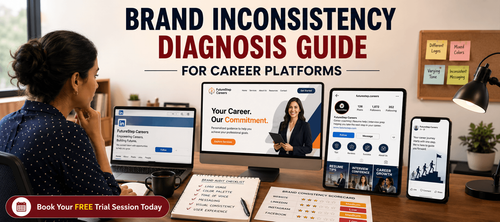
A brand does not lose consistency overnight. It usually happens gradually. One team updates the LinkedIn banner, another agency creates Instagram templates, a freelancer rewrites email copy, and an old logo remains active on a proposal deck. Individually, these issues may look minor. Together, they create confusion, weaken trust, and make the brand feel less professional.
For working professionals, brand consultants, marketers, founders, and communication teams, this is a serious business problem. When your website sounds formal but your social media feels casual, when your colours vary across platforms, or when your printed collateral does not match your digital presence, stakeholders begin to question the reliability behind the brand. Brand inconsistency is not only a visual issue. It affects perception, credibility, customer confidence, and professional positioning.
The guidebook “Diagnosing Brand Inconsistency Across Different Platforms” provides a structured template pack designed to help professionals audit, diagnose, document, prioritise, and resolve brand inconsistency across digital and physical touchpoints. Instead of relying on subjective opinions, the guidebook gives you repeatable frameworks for visual identity audits, tone-of-voice reviews, social media scorecards, stakeholder surveys, root cause analysis, readiness checks, post-rebrand verification, consultant discovery, prioritisation, and ongoing compliance tracking.
Download these resources and apply them alongside your daily work for improved clarity, productivity, and professional growth. You can also book a free trial to gain expert guidance and enhance your communication, problem-solving, and decision-making skills. The materials are designed in a clear, structured format to help professionals learn efficiently and implement insights with confidence.
Who Is This Blog For?
This blog is useful for professionals who need to protect, improve, or evaluate brand consistency across multiple platforms.
- Brand managers responsible for maintaining a unified identity across websites, social media, email, campaigns, and offline materials
- Marketing professionals managing content across multiple channels and contributors
- Founders and business owners who want their brand to look credible and consistent as they scale
- Consultants and freelancers conducting brand audits for clients
- Communication professionals improving messaging, tone, and platform alignment
- Creative teams that need a structured way to document deviations from brand guidelines
- Agencies onboarding new clients and identifying brand health issues before proposing solutions
- In-house teams preparing for a brand refresh, rebrand, or quarterly marketing review
- Working professionals who want to understand how brand consistency supports trust, recognition, and business impact
Why This Topic Matters Today?
Brands now exist across more touchpoints than ever before. A customer may discover a company through Instagram, research it on LinkedIn, visit its website, receive an email, download a brochure, and later attend an offline event. Each touchpoint silently tells the customer whether the brand is organised, reliable, and professional.
The guidebook highlights a common but overlooked problem: brand inconsistency damages trust. When a logo appears differently on LinkedIn and the website, when the tone shifts from formal in email to casual on Instagram, or when printed material uses colours that clash with digital ads, audiences register these inconsistencies even if they cannot immediately explain them.
This matters because brand perception is built through repetition. Consistent visuals, messaging, tone, typography, and platform experience make a brand easier to recognise and trust. Inconsistent presentation creates doubt. It can make a company look fragmented, outdated, poorly managed, or less credible than its competitors.
The guidebook also points out that many professionals conduct brand audits without enough structure. They review visuals but ignore tone and user experience. They assess platforms in isolation instead of comparing them across touchpoints. They treat all problems as equally urgent. They fail to document stakeholder sign-off. They begin assessments without a defined brand standard as the baseline.
In a fast-moving workplace, these gaps can lead to scattered decisions, repeated errors, and unclear ownership. A structured brand consistency assessment helps teams move from opinion to evidence, from confusion to prioritisation, and from one-time fixes to long-term governance.
What Is the Core Brand Consistency Framework Explained?
The guidebook is built around one central idea: brand consistency is not just a design problem. It is a systems problem.
That means the solution is not simply to replace a logo or update a colour. A brand may look inconsistent because the team lacks a current brand guide, because assets are stored in multiple places, because social media posts bypass approval, because external vendors do not receive updated guidelines, or because no one owns brand governance.
The template pack creates a complete brand consistency management system. It helps you move through four major phases:
Discovery
This phase focuses on identifying what is inconsistent. Templates such as the Cross-Platform Visual Identity Audit, Brand Voice and Tone Inconsistency Log, and Multi-Stakeholder Brand Perception Survey help you examine how the brand looks, sounds, and feels across platforms.
Diagnosis
This phase focuses on understanding why inconsistency is happening. The Social Media Brand Alignment Scorecard and Brand Inconsistency Root Cause Analysis help teams score platform compliance and trace recurring issues back to people, process, tools, vendors, or outdated guidelines.
Remediation Planning
This phase converts audit findings into action. The Client Brand Health Assessment and Brand Inconsistency Prioritisation Matrix help consultants, freelancers, and internal teams identify priorities, define next steps, and build a practical roadmap.
Execution and Monitoring
This phase ensures consistency is maintained over time. The New Platform Brand Readiness Checklist, Post-Rebrand Consistency Verification Report, and Brand Standards Compliance Tracker help teams launch new platforms correctly, verify post-rebrand updates, and monitor compliance monthly or quarterly.
Together, these templates form a practical workflow for auditing, correcting, and sustaining brand consistency across platforms.
How This Blog and Guidebook Help You?
This blog helps you understand how to use the guidebook as a professional brand audit system rather than a collection of isolated templates. It explains the purpose of each template, how each one contributes to brand consistency, and how professionals can apply them in real workplace scenarios.
The guidebook helps you:
- Identify visual inconsistencies in logos, colours, typography, imagery, spacing, and layouts
- Document tone-of-voice deviations across websites, social media, email, and sales collateral
- Score social media platforms against defined brand standards
- Gather internal and external stakeholder perception data
- Trace brand inconsistency to root causes such as governance gaps, missing assets, or outdated guidelines
- Prepare a brand correctly before launching on a new platform
- Verify whether all platforms reflect a new identity after a rebrand
- Conduct structured client discovery as a consultant or freelancer
- Prioritise fixes based on business impact and effort
- Track brand compliance over time through a repeatable dashboard
For professionals, the biggest outcome is clarity. Instead of saying “the brand feels inconsistent,” you can show exactly where it is inconsistent, why it matters, what caused it, what should be fixed first, who owns the action, and when progress should be reviewed.
Step-by-Step Breakdown
Step 1: Start with a Cross-Platform Visual Identity Audit
The first template helps you map and score the brand’s visual consistency across touchpoints. It is ideal for the initial phase of a brand inconsistency diagnosis project.
The audit begins with basic details such as brand name, audit owner, audit date, platforms reviewed, and the reference brand guidelines document. This baseline is important because consistency cannot be assessed fairly unless you know which brand guide version you are measuring against.
The template then defines the scope. It includes elements such as:
- Logo usage and placement
- Primary and secondary colour palette
- Typography for headlines and body copy
- Iconography and illustration style
- Image and photography style
- Spacing, layout grid, and white space usage
The platform-by-platform matrix allows you to compare visual elements across channels. For example, you may discover that Instagram uses an outdated logo, LinkedIn uses a slightly different colour value, and the website uses a different headline font. The template then calculates an overall visual consistency score based on the number of elements reviewed, the number of consistent elements, and the number of deviations.
This step gives you a clear visual diagnosis rather than a vague design opinion.
Step 2: Document Brand Voice and Tone Deviations
Brand consistency is not only about how a brand looks. It is also about how it sounds.
The Brand Voice and Tone Inconsistency Log helps you review written content across websites, social media, email campaigns, newsletters, and sales collateral. The template begins by defining the approved tone-of-voice reference and the intended brand voice.
It asks teams to document what the brand is and what the brand is never. For example, a brand may define itself as authoritative, warm, clear, and direct. It may define off-brand attributes as condescending, overly technical, or too casual.
The content sample review log then captures specific examples of tone deviation. A LinkedIn post may sound too casual. A website hero section may sound too formal. An email newsletter may use jargon that weakens clarity. Each deviation is rated by severity and linked back to the approved brand voice.
The template also asks for root causes and next steps. For example, tone inconsistency may happen because multiple writers are creating content without centralised tone training or because an agency has not received a proper tone-of-voice brief.
This step helps teams make brand communication more consistent, professional, and aligned.
Step 3: Score Social Media Brand Alignment
Social media platforms often expose brand inconsistency quickly because they involve frequent posting, multiple formats, and fast approvals.
The Social Media Brand Alignment Scorecard helps professionals rate each active platform against brand standards. It can be used for monthly brand health checks or pre-campaign audits.
The scoring system is simple:
- 1 means fully non-compliant
- 3 means partially compliant
- 5 means fully compliant
Each platform is reviewed independently. The template recommends checking the live profile, pinned content, last 10 posts, bio or about section, and visual assets. Criteria include profile or cover image, bio copy, post visual style, caption tone of voice, hashtag strategy, and link-in-bio or CTA alignment.
The total score is calculated out of 30, then converted into a compliance percentage. The guidebook sets a target of 80 percent or above. A platform scoring 80 to 100 percent is on-brand, 60 to 79 percent needs attention, and below 60 percent requires urgent fixes.
This helps social media teams move from casual review to measurable brand compliance.
Step 4: Gather Stakeholder Brand Perception
Sometimes internal teams believe the brand is consistent, while customers, partners, or clients experience it differently.
The Multi-Stakeholder Brand Perception Survey helps you collect both qualitative and quantitative input from internal team members and external stakeholders. It is useful for understanding the gap between intended brand identity and actual brand experience.
The survey includes respondent classification, such as internal team member, external client, partner, or end consumer. It asks which platforms the respondent interacts with, such as website, LinkedIn, Instagram, email, in-person material, or print.
The visual identity section includes questions about logo recognition, visual consistency, and colour recall. The tone and messaging section asks respondents whether the brand communicates in a consistent voice and whether the tone feels different across platforms. The open-ended questions invite respondents to identify the most aligned platform, describe moments of confusion, and suggest one improvement.
This step is valuable because it brings real stakeholder perception into the brand audit process.
Step 5: Identify the Root Cause of Brand Inconsistency
A strong brand audit should not stop at listing problems. It should explain why they keep happening.
The Brand Inconsistency Root Cause Analysis template helps teams trace issues back to organisational, process, or resource causes. It begins with a problem statement that describes the inconsistency clearly and specifically. For example, a brand may have three logo versions active across five platforms, colour deviations on two channels, and typography mismatches on the website and Instagram.
The guidebook then categorises causes into five areas:
- People and skills
- Process and governance
- Tools and assets
- External vendors or agencies
- Brand guidelines quality
This structure is important because different root causes require different solutions. If the problem is people and skills, the team may need training. If the problem is process and governance, the workflow may need a mandatory brand review step. If the problem is tools and assets, the team may need a centralised brand asset library. If the problem is vendor alignment, agencies may need updated guidelines and templates.
The final output is a root cause statement, corrective actions, owners, deadlines, and a review date.
Step 6: Prepare Before Launching a New Platform
Brand inconsistency often begins when a company launches on a new platform without proper preparation.
The New Platform Brand Readiness Checklist helps teams assess whether brand assets and guidelines are ready before publishing the first piece of content or making a profile public.
The checklist covers three areas:
Visual asset readiness includes platform-specific logo files, approved profile images, banners, post templates, and image or video styling.
Copy and messaging readiness includes approved bio copy, tagline or mission statement, hashtag set, handle, username, and URL destination.
Governance readiness includes sharing the brand guide with contributors, documenting platform-specific content guidelines, establishing an approval workflow, assigning admin roles, and aligning the launch announcement with other platforms.
Each item is marked as ready, in progress, or not ready. Any item marked not ready must be resolved before launch approval.
This step prevents foundational errors that become harder to fix once the platform is live.
Step 7: Verify Consistency After a Rebrand
A rebrand is only successful when the new identity is correctly applied everywhere.
The Post-Rebrand Consistency Verification Report is designed for the 30 to 90 days after a brand refresh or full rebrand. It helps teams confirm that every active platform and touchpoint reflects the new brand identity and that no old assets remain live.
The report captures the rebrand go-live date, verification date, days since rebrand, new brand guide reference, and previous brand guide reference. It then summarises key changes such as logo, primary colour, secondary colours, typography, tagline, messaging, and photography style.
The platform verification table checks whether the old brand has been removed, the new logo has been applied, new colours are active, and new copy or tagline has been updated. Platforms include website, LinkedIn, Instagram, email signature, printed collateral, business cards, brochures, proposal decks, and pitch templates.
The report ends with overall verification status and sign-off declaration. This creates accountability and ensures no outdated brand material remains unnoticed.
Step 8: Use Consultant Discovery to Assess Brand Health
For consultants and freelancers, diagnosing brand inconsistency often begins during client onboarding.
The Client Brand Health Assessment helps structure that discovery session. It captures consultant details, client brand name, client contact, session date, session format, and anticipated project scope.
The brand foundations section asks whether the client has a documented brand guide, whether it is current or outdated, who owns brand governance, how many people create branded content, and how the client describes their main brand challenge.
The platform presence overview then records whether each platform is active, when it was last updated, who manages it, and whether the manager has received the brand guide.
Finally, the consultant documents immediate red flags, recommended audit priorities, and proposed next steps. For example, the consultant may notice that the logo appears in different formats across the website, LinkedIn, and email signature. That becomes a clear starting point for a formal audit.
This template helps consultants appear more structured, professional, and outcome-focused from the first client interaction.
Step 9: Prioritise Fixes with an Impact and Effort Matrix
After the audit phase, teams often face a long list of inconsistencies. Trying to fix everything at once can slow progress and dilute focus.
The Brand Inconsistency Prioritisation Matrix helps teams rank issues by business impact and resolution effort. Impact is scored from 1 to 5. A score of 5 means the issue directly damages brand credibility, trust, or commercial outcomes. A score of 3 means it visibly undermines professionalism. A score of 1 means it is a minor internal inconsistency with no external visibility.
Effort is also scored from 1 to 5. A score of 5 means the fix requires significant resources, time, or third-party involvement. A score of 3 means moderate effort, typically one to two days of work. A score of 1 means a quick fix that can be resolved in under two hours.
The matrix helps classify issues into priority tiers:
- High impact and low effort issues should be fixed first
- High impact and high effort issues need careful planning
- Low impact and low effort issues can be filled in as minor tasks
- Low impact and high effort issues should be deprioritised
This turns audit findings into a practical remediation roadmap.
Step 10: Track Brand Standards Compliance Over Time
Brand consistency is not a one-time project. It requires ongoing monitoring.
The Brand Standards Compliance Tracker helps teams track platform-level compliance with approved guidelines weekly, monthly, or quarterly. It is ideal for brand managers, consultants, and leadership reporting.
The tracker scores each platform across five criteria:
- Logo
- Colour
- Typography
- Tone of voice
- Messaging accuracy
Each criterion carries 20 points, for a total score of 100. Platforms scoring 85 to 100 percent are compliant. Platforms scoring 65 to 84 percent are partial and should be corrected within 30 days. Platforms below 65 percent are non-compliant and require immediate escalation.
The tracker also includes period-over-period progress. Teams can compare previous and current scores, note improvements, identify the most improved platform, and flag the platform requiring urgent attention.
The executive summary section helps translate audit data into leadership-ready communication.
Common Mistakes or Pitfalls to Avoid
The guidebook highlights several common mistakes that weaken brand consistency assessments.
Auditing visuals only
Many teams focus on logos, colours, and fonts but ignore tone, messaging, and user experience. This creates an incomplete diagnosis. A brand can look consistent but still sound fragmented.
Reviewing platforms in isolation
A website may look acceptable on its own, and LinkedIn may look acceptable on its own. The real problem appears when you compare them side by side. Cross-platform comparison is essential.
Treating every issue as equally urgent
Not every inconsistency deserves immediate attention. An outdated logo on a public LinkedIn profile may require urgent correction, while an internal deck colour variation may be lower priority. Use impact and effort scoring.
Skipping stakeholder input
Internal teams may miss issues that customers or clients notice immediately. Stakeholder surveys help reveal the gap between intended and actual brand experience.
Ignoring root causes
Fixing a logo file without addressing the missing asset library means the problem may return. Sustainable consistency requires root cause analysis.
Launching new platforms without readiness checks
A new platform should not go live until visual assets, copy, messaging, governance, and approvals are ready.
Failing to verify after a rebrand
Old assets can remain active on footers, favicons, social covers, email signatures, printed materials, and pitch decks. Post-rebrand verification prevents this.
Not tracking compliance over time
A brand can become inconsistent again if there is no monitoring system. Monthly or quarterly compliance tracking keeps teams accountable.
How Should You Use This Guidebook Effectively?
Use the guidebook based on your role, objective, and available time.
If you are conducting a full brand audit, use the templates in sequence. Start with discovery templates to audit visual identity, document tone deviations, and gather stakeholder perceptions. Then move into diagnosis with the social media scorecard and root cause analysis. After that, build a remediation plan using the consultant assessment and prioritisation matrix. Finally, use the readiness checklist, post-rebrand report, and compliance tracker for execution and monitoring.
If you are an in-house marketing or brand team, begin with Templates 01, 02, and 03 as your baseline audit. These will show how consistent your visuals, voice, and social platforms are. Then use Template 05 to understand the root cause of recurring issues. Use Template 10 as a monthly or quarterly tracker for leadership reporting.
If you are a consultant, start with Template 08 during discovery. It will help you understand the client’s brand foundations, platform presence, governance structure, and immediate red flags. Then choose audit templates based on the client’s most urgent need. Use Template 09 to frame your proposal and prioritise the remediation roadmap.
If you are a freelancer, use Template 08 for client onboarding, Template 06 before launching a new platform, and Templates 01 and 03 as professional deliverables for audit projects.
For best results, set aside focused time for each stage. A simple visual or voice audit may take a few hours. A complete cross-platform assessment may require several working sessions, especially if multiple stakeholders and platforms are involved. The most effective workflow is to duplicate the template you need, replace all bracketed placeholder text, complete each section methodically, assign owners, and schedule review dates.
The guidebook is designed to be editable and practical. You can use each template independently for a specific scenario or combine them into a full brand consistency management system.
Key Takeaways
- Brand inconsistency damages trust, credibility, recognition, and professional perception
- Consistency must be assessed across visuals, tone, messaging, social media, stakeholder perception, and governance
- A defined brand standard or guideline document is essential before starting any audit
- Cross-platform comparison is more useful than reviewing platforms in isolation
- Root cause analysis helps teams fix the system behind the inconsistency, not just the visible symptom
- New platforms should not launch until visual assets, copy, messaging, and governance are ready
- Rebrands require verification within 30 to 90 days to ensure old assets are removed
- Prioritisation should be based on business impact and resolution effort
- Ongoing compliance tracking keeps brand standards visible, measurable, and accountable
- Brand consistency is not only a design responsibility; it is a professional system involving people, process, tools, governance, and communication
Your Next Step: Accelerate Your Career with PlanetSpark
Creating an impact-driven resume is not just about landing your next job—it’s about owning your professional story and presenting it with clarity, confidence, and credibility. When your resume clearly communicates value, results, and impact, opportunities follow naturally.
At PlanetSpark, we are committed to empowering working professionals with practical, outcome-focused resources that drive real career growth. From resume building and workplace communication to leadership presence and professional writing, our programs are designed to help you succeed in today’s fast-evolving job market.
Visit https://www.planetspark.in/resources to explore:
- Career and resume-building guides
- Workplace communication and professional writing resources
- Skill-development tools curated for working professionals
Want a deeper, hands-on experience?
You can also book a free trial session to learn more about PlanetSpark’s Working Professional Courses, designed to accelerate your career through personalised coaching, real-world practice, and expert guidance.
Your career deserves more than generic advice.
It deserves clarity, confidence, and measurable impact.
Personalized Communication Roadmaps
Record a video to get a AI generated personalized communication reports