
Financial Flexibility Strategy for Career Change Readiness
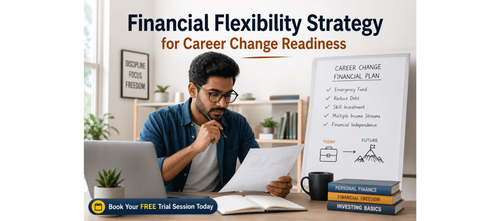

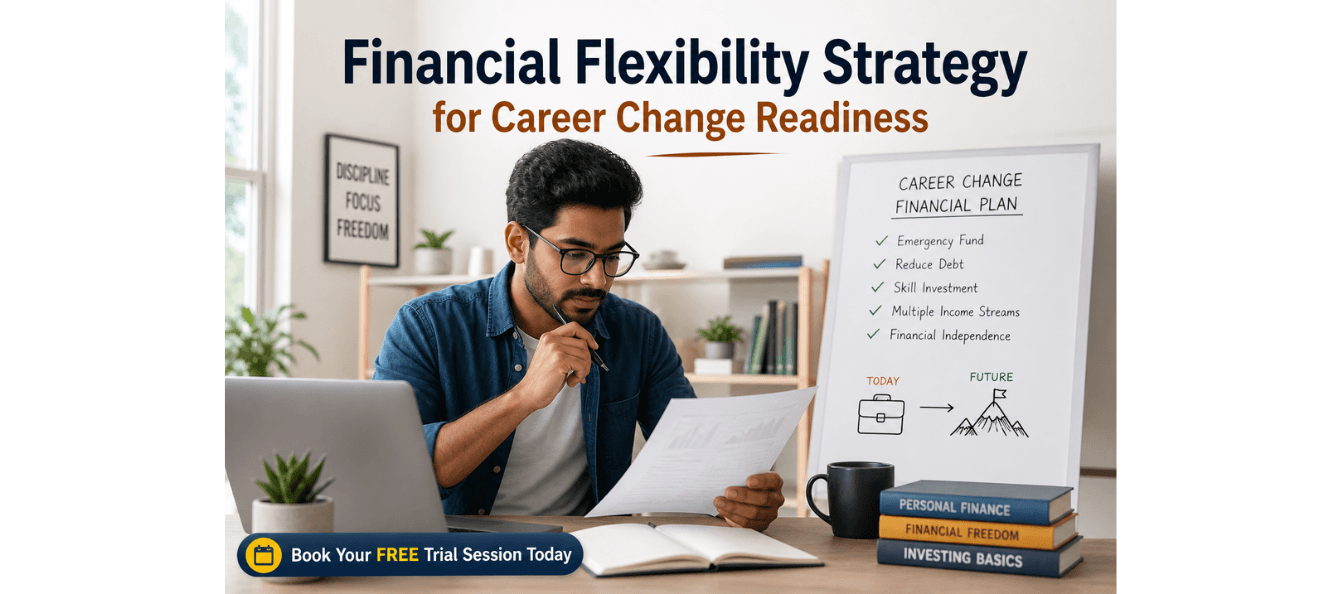
Building Financial Flexibility That Powers Confident Career Transitions
Many professionals stay in roles they have outgrown not because they lack talent or ambition, but because financial pressure makes change feel risky. Mortgage payments, EMIs, family responsibilities, and monthly expenses can create the sense that career transitions are only possible for people with large savings or privileged circumstances.
The truth is different. You do not need to be wealthy to make a career move. You need financial flexibility. When your money is structured to create breathing room, you gain the ability to switch industries, negotiate better opportunities, take time to upskill, or move into consulting without panic.
Too many career decisions are made from urgency instead of intention. Professionals remain stuck because they do not know their runway, have no transition plan, or assume they must replace their full salary immediately before making a move.
This guidebook provides a practical roadmap to build financial readiness before your next transition. It helps you assess your current reality, reduce financial drag, create runway, generate bridge income, and move forward with confidence.
Download these resources and apply them alongside your daily work for improved clarity, productivity, and professional growth. You can also book a free trial to gain expert guidance and enhance your communication, problem-solving, and decision-making skills. The materials are designed in a clear, structured format to help professionals learn efficiently and implement insights with confidence.
Who Is This Blog For?
- Working professionals considering a job change
- Mid-career employees planning industry transitions
- Professionals exploring freelancing or consulting
- Employees feeling trapped due to money pressure
- Managers seeking more career optionality
- Individuals who want a safer, smarter transition plan
Why This Topic Matters Today?
Career paths are no longer linear. Professionals change industries, pursue portfolio careers, build side income streams, and prioritise meaning alongside compensation. Yet many remain financially unprepared for transitions.
The guidebook explains that the biggest barrier is often not lack of opportunity, but lack of flexibility. Without savings, low fixed costs, or bridge income, even strong professionals feel forced to stay where they are.
This matters now because:
- Job markets shift faster than before
- Skills become outdated quickly
- Burnout is increasing across industries
- Professionals want more autonomy and purpose
- Income gaps during transitions are common
- Financial stress damages decision quality
When finances are stronger, career choices become strategic instead of reactive.
Core Concept or Framework Explained
The guidebook introduces financial flexibility as the real career superpower. It comes from three foundations:
Manageable Fixed Costs
Lower recurring commitments create room to move.
Reliable Cash Buffer
Savings runway gives time to search, learn, negotiate, or build.
Income Adaptability
The ability to earn in more than one way reduces dependence on a single employer.
The FLEX Framework
F – Face Your Numbers
Know your exact financial reality.
L – Layer Your Security
Use emergency funds, transition funds, and income layers.
E – Expand Your Income Sources
Build earnings beyond salary.
X – Execute on a Timeline
Move with milestones, not vague intentions.
How This Blog and Guidebook Help You?
This resource helps professionals:
- Calculate how prepared they really are
- Build runway before resigning
- Reduce monthly pressure intelligently
- Separate emergency and transition savings
- Generate bridge income with existing skills
- Protect themselves with insurance and planning
- Make career changes with more confidence
The result is not just financial safety, but career freedom.
Step-by-Step Breakdown
Step 1: Assess Your Current Financial Reality
You cannot plan a transition without clarity.
The guidebook recommends auditing:
- Net monthly income from all sources
- Fixed expenses such as rent, EMIs, insurance
- Variable spending such as dining or travel
- Assets and liabilities
- Net monthly surplus
Many professionals underestimate spending by 20–35 percent. Reviewing the last three months of statements creates a realistic baseline.
Step 2: Define Your Runway
Runway is the number of months you can sustain yourself if income drops or stops.
Formula:
Runway = Total Liquid Assets ÷ Monthly Expenses
The guidebook defines two types:
- Survival Runway: essentials only
- Comfort Runway: essentials plus meaningful lifestyle costs
Targets:
- Under 3 months: danger zone
- 3–6 months: caution zone
- 6–9 months: ready zone
- 9–12+ months: optimal zone
Step 3: Build a Dedicated Transition Fund
A transition fund is different from an emergency fund.
Emergency Fund:
For unexpected crises.
Transition Fund:
For planned career moves such as resigning, upskilling, freelancing, or job searching.
Useful strategies:
- Redirect 20 percent of salary increments
- Allocate bonuses intentionally
- Save windfalls using a 70/30 model
- Keep money liquid and accessible
Step 4: Reduce Financial Drag
Financial drag includes expenses that do not improve wellbeing, security, or goals.
Examples:
- Forgotten subscriptions
- High-interest debt
- Lifestyle creep after raises
- Poor-value insurance products
- Unnecessary fixed commitments :contentReference[oaicite:7]{index=7}
The guidebook notes that even ₹5,000–₹15,000 monthly savings redirected can build meaningful runway over a year.
Step 5: Generate Bridge Income
One of the most powerful mindset shifts is realising you do not need to replace your full salary immediately.
You may only need to cover essential expenses while building your next chapter.
Bridge income options include:
- Freelance consulting
- Teaching or coaching
- Content writing
- Referral-based opportunities
- Project work using current skills
Even ₹10,000–₹20,000 monthly can significantly extend runway.
Step 6: Learn From Priya’s Example
The guidebook shares Priya’s 14-month transition journey.
She:
- Reduced fixed expenses
- Built 8–10 months of runway
- Started consulting while employed
- Avoided new financial risks
- Transitioned only after side income became consistent
Her lesson was simple: she did not wait for perfect conditions. She built a system that created courage.
Step 7: Execute With Confidence
Before transitioning, confirm:
- Runway is sufficient
- Emergency fund is separate
- High-interest debt is controlled
- Insurance is active
- Income timeline is realistic
- Support system is informed
- Backup plan exists
Preparation reduces fear.
Common Mistakes or Pitfalls to Avoid
The guidebook highlights seven common mistakes.
- Using emergency savings as transition money
- Waiting for the perfect moment
- Ignoring likely income gaps
- Forgetting tax implications
- Keeping pre-transition lifestyle costs unchanged
- Losing employer insurance without replacement
- Trying to transition alone without network support
Better alternatives:
- Build separate funds
- Set milestone dates
- Budget conservatively
- Speak with a tax professional
- Use relationships proactively
How Should You Use This Guidebook Effectively?
Use it in phases.
Week 1
- Complete financial audit
- Calculate runway
- Open transition fund account
Week 2–4
- Remove financial drag
- Automate monthly contributions
- Start one bridge income test
Month 2–6
- Grow runway steadily
- Build network intentionally
- Upgrade resume, LinkedIn, and portfolio
Quarterly
- Review progress using the FLEX framework
- Update targets and timeline
Suggested time investment:
- 2–3 hours initial setup
- 30 minutes monthly review
- Quarterly strategy check-ins
Key Takeaways
- Financial flexibility matters more than high income during transitions
- Runway is the most important number in career change planning
- Emergency and transition funds should stay separate
- Lower fixed costs increase career optionality
- Bridge income reduces pressure and extends runway
- Milestones are better than waiting for perfect feelings
- Insurance and tax planning protect downside risk
- Strong systems create confident career moves
Your Next Step: Accelerate Your Career with PlanetSpark
Creating an impact-driven resume is not just about landing your next job—it’s about owning your professional story and presenting it with clarity, confidence, and credibility. When your resume clearly communicates value, results, and impact, opportunities follow naturally.
At PlanetSpark, we are committed to empowering working professionals with practical, outcome-focused resources that drive real career growth. From resume building and workplace communication to leadership presence and professional writing, our programs are designed to help you succeed in today’s fast-evolving job market.
Visit https://www.planetspark.in/resources to explore:
- Career and resume-building guides
- Workplace communication and professional writing resources
- Skill-development tools curated for working professionals
Want a deeper, hands-on experience?
You can also book a free trial session to learn more about PlanetSpark’s Working Professional Courses, designed to accelerate your career through personalised coaching, real-world practice, and expert guidance.
Your career deserves more than generic advice.
It deserves clarity, confidence, and measurable impact.
Start building that advantage today—with PlanetSpark.
Personalized Communication Roadmaps
Record a video to get a AI generated personalized communication reports