
Financial Resilience Guide for Working Professionals 2026
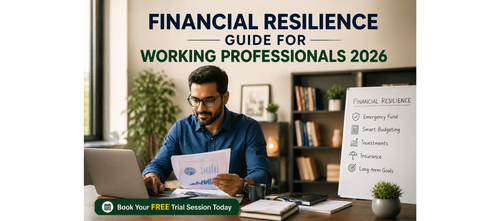

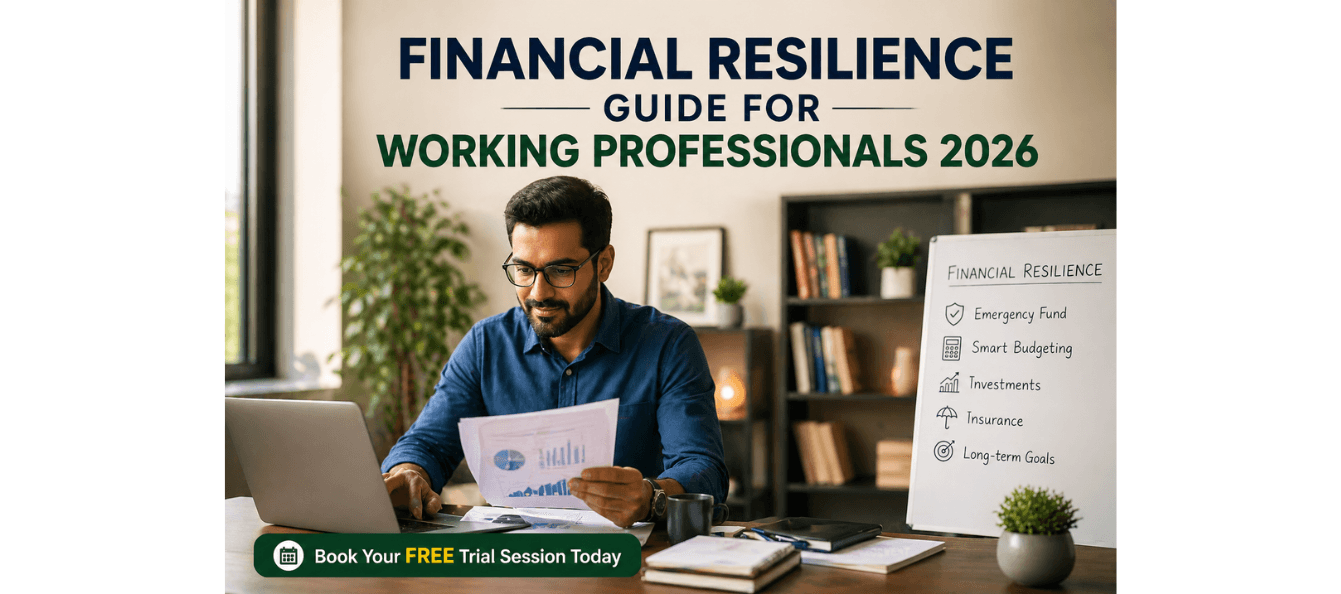
Smart Ways to Prepare for Unexpected Expenses: A Practical System for Stability and Control
You plan your career carefully. You work hard to grow your income, improve your skills, and make smarter decisions. But when an unexpected expense hits—a medical emergency, job disruption, or urgent repair—everything can feel unstable in an instant.
This is where most professionals struggle.
It is not because they lack income or ambition. It is because they lack a structured financial system that can absorb shocks without derailing their progress. Without that system, even high earners can feel financially fragile.
Financial resilience is not about being wealthy. It is about being prepared.
This guide offers a practical, step-by-step system to help you move from reacting to financial shocks to confidently handling them. Instead of relying on guesswork or generic advice, it gives you clear frameworks, tools, and action plans that work in real-world situations.
Download these resources and apply them alongside your daily work for improved clarity, productivity, and professional growth. You can also book a free trial to gain expert guidance and enhance your communication, problem-solving, and decision-making skills. The materials are designed in a clear, structured format to help professionals learn efficiently and implement insights with confidence.
Who Is This Blog For?
- Early to mid-career professionals navigating financial uncertainty
- Career changers and consultants with irregular income
- Managers handling increasing financial responsibilities
- Professionals living paycheck to paycheck without a safety buffer
- Individuals who feel unprepared for sudden financial shocks
- Anyone looking to build a structured and reliable financial system
Why This Topic Matters Today?
Financial uncertainty has become a constant in modern professional life.
Unexpected expenses are no longer rare events. They are inevitable:
- Medical emergencies can arise without warning
- Job disruptions or delayed payments can impact cash flow
- Inflation continues to increase the cost of living
- Irregular expenses often feel like sudden shocks
Many professionals operate without a buffer, which leads to:
- Panic during financial emergencies
- Reliance on high-interest credit
- Disruption of long-term financial goals
- Increased stress and poor decision-making
The reality is simple: income alone does not guarantee financial stability. Structure does.
Core Concept or Framework Explained
This guide is built around a six-module financial resilience framework. Each module builds on the previous one, creating a complete system rather than isolated actions.
The framework focuses on five key principles:
- Clarity before complexity
- Stability before growth
- Systems over willpower
- Preparation over reaction
- Consistency over perfection
The six modules include:
- Understanding your financial baseline
- Building a tiered emergency buffer
- Identifying and prioritising risk exposure
- Designing a resilience architecture
- Responding effectively to financial shocks
- Sustaining and evolving your system
This progression ensures that you move from awareness to action and eventually to long-term financial control.
How This Blog and Guidebook Help You?
This system transforms how you handle money under pressure.
You will gain:
- Clear visibility into your financial position
- A structured approach to managing unexpected expenses
- Confidence in handling financial disruptions
- Reduced reliance on debt during emergencies
- A repeatable system that adapts as your career grows
Most importantly, it helps you stay in control—even when life becomes unpredictable.
Step-by-Step Breakdown
Know Your Financial Baseline
Everything starts with clarity.
Your financial baseline includes four core components:
- Monthly net income after tax
- Fixed monthly expenses such as rent and EMIs
- Variable expenses like groceries and transport
- Liquid savings available within 48 hours
This creates your “resilience score,” which is your monthly surplus.
- 20 percent or higher indicates strong financial health
- 10 to 20 percent is workable but needs optimisation
- Below 10 percent signals the need for immediate correction
Without this baseline, all financial decisions are based on assumptions rather than facts.
Build Your Emergency Buffer
Traditional advice suggests saving three to six months of expenses. But most professionals never start because the goal feels overwhelming.
This guide introduces a tiered approach:
- Tier 1: ₹50,000 for immediate shocks
- Tier 2: Three months of expenses for stability
- Tier 3: Six months of expenses for full protection
Key principles include:
- Start small and build momentum
- Keep funds in a separate account
- Automate monthly contributions
Even completing Tier 1 significantly reduces financial stress.
Identify and Rank Your Risk Exposures
Not all financial risks are equal.
This step involves creating a personalised Risk Exposure Map by identifying:
- Health and medical risks
- Career and income disruptions
- Housing and infrastructure costs
- Transport-related expenses
- Family and dependent responsibilities
- Legal and administrative costs
Each risk is evaluated based on:
- Probability of occurrence
- Financial impact
This helps you prioritise preparation instead of reacting blindly.
Design Your Resilience Architecture
Financial resilience is a system, not a habit.
Your resilience architecture includes:
- Stable income streams
- Emergency liquidity
- Insurance coverage
- Predictable expense planning
- Structured investments
A key component here is the sinking fund strategy.
Sinking funds are dedicated savings for predictable but irregular expenses such as:
- Health-related costs
- Device replacements
- Career development
- Home maintenance
By planning these in advance, you eliminate unnecessary financial pressure.
Respond to a Financial Shock
Even with preparation, financial shocks will occur.
The Crisis Response Framework provides a structured response:
- Assess the exact cost and deadline
- Classify the type of expense
- Negotiate payment options where possible
- Activate funds in the correct order
- Rebuild your reserves within 90 days
The activation order is critical:
- Use sinking funds first
- Then Tier 1 emergency fund
- Then Tier 2
- Use credit only as a last resort
This prevents panic-driven decisions.
Sustain and Evolve Your System
Financial resilience is not a one-time setup.
It requires regular review:
- Monthly 15-minute check to track progress
- Quarterly reassessment of risks
- Annual deep financial review
- Immediate updates after major life changes
This ensures your system evolves with your career and responsibilities.
Common Mistakes or Pitfalls to Avoid
Many professionals weaken their financial system through avoidable mistakes:
- Mixing emergency funds with regular savings
- Setting unrealistic savings targets too early
- Using emergency funds for non-emergencies
- Stopping contributions after a financial setback
- Ignoring insurance as a critical protection tool
Each mistake reduces your ability to handle future shocks effectively.
How Should You Use This Guidebook Effectively?
To get the best results, follow a structured approach:
- Read the full guide to understand the system
- Complete the baseline audit with real data
- Start building Tier 1 emergency buffer immediately
- Create your Risk Exposure Map
- Set up at least three sinking funds
- Review insurance coverage and fix gaps
Follow a 30-day action plan:
- Week 1: Audit finances and set up emergency account
- Week 2: Map risks and define buffer targets
- Week 3: Strengthen insurance and planning systems
- Week 4: Set review routines and prepare crisis framework
Consistency is more important than speed.
Key Takeaways
- Financial resilience is built through systems, not income alone
- Start with clarity by understanding your financial baseline
- Build emergency buffers in achievable tiers
- Identify and prepare for your specific financial risks
- Use sinking funds to manage predictable irregular expenses
- Follow a structured framework during financial shocks
- Maintain your system through regular reviews and updates
Your Next Step: Accelerate Your Career with PlanetSpark
Creating an impact-driven resume is not just about landing your next job—it’s about owning your professional story and presenting it with clarity, confidence, and credibility. When your resume clearly communicates value, results, and impact, opportunities follow naturally.
At PlanetSpark, we are committed to empowering working professionals with practical, outcome-focused resources that drive real career growth. From resume building and workplace communication to leadership presence and professional writing, our programs are designed to help you succeed in today’s fast-evolving job market.
Visit https://www.planetspark.in/resources to explore:
- Career and resume-building guides
- Workplace communication and professional writing resources
- Skill-development tools curated for working professionals
Want a deeper, hands-on experience?
You can also book a free trial session to learn more about PlanetSpark’s Working Professional Courses, designed to accelerate your career through personalised coaching, real-world practice, and expert guidance.
Your career deserves more than generic advice.
It deserves clarity, confidence, and measurable impact.
Start building that advantage today—with PlanetSpark.
Personalized Communication Roadmaps
Record a video to get a AI generated personalized communication reports