
How to Develop Active Listening Skills for Career Growth
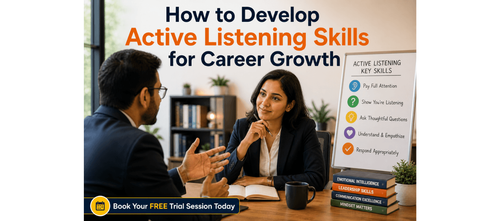

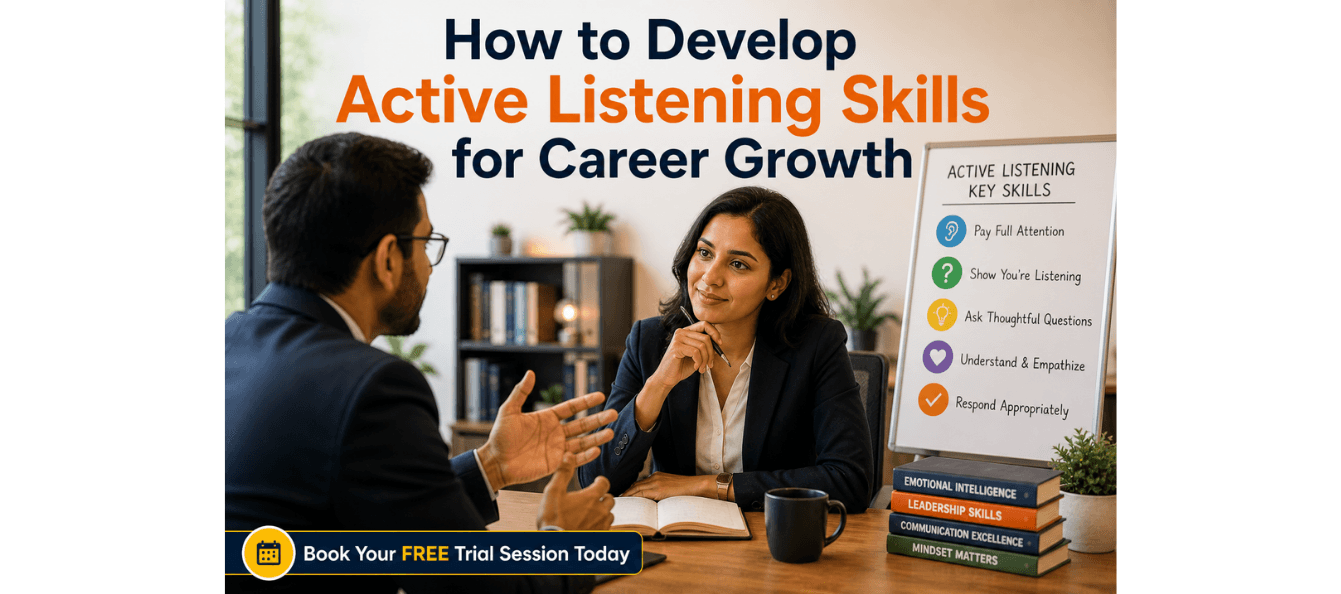
Enhancing Active Listening Skills Worksheet: A Practical Framework to Improve Communication, Build Trust, and Lead with Confidence
In most professional environments, success is often associated with how well you speak, present, or persuade. But the reality is more nuanced. Many workplace challenges—missed deadlines, unclear expectations, disengaged teams, and client dissatisfaction—don’t stem from poor speaking. They stem from poor listening.
Think about your last few meetings. How often were you fully present? How often were others truly listening to you? Research suggests that professionals retain only a fraction of what they hear in conversations, which means a significant portion of communication is lost in real time. This leads to repeated clarifications, avoidable errors, and weakened relationships.
Active listening is not just a soft skill—it is a core professional capability that directly impacts performance, trust, and leadership effectiveness. Yet, it is rarely taught in a structured, actionable way.
This is where the Active Listening Skills Worksheet becomes valuable. It provides a clear, practical system to help professionals understand, diagnose, and improve their listening habits through frameworks, reflection, and real-world application.
Download these resources and apply them alongside your daily work for improved clarity, productivity, and professional growth. You can also book a free trial to gain expert guidance and enhance your communication, problem-solving, and decision-making skills. The materials are designed in a clear, structured format to help professionals learn efficiently and implement insights with confidence.
Who Is This Blog For?
- Early-career professionals looking to improve workplace communication and confidence
- Mid-level professionals managing meetings, stakeholders, and team collaboration
- Managers and team leaders aiming to build trust and engagement within teams
- Consultants and client-facing professionals who need to understand deeper business needs
- Job seekers and career switchers preparing for interviews and networking conversations
Why This Topic Matters Today?
Modern workplaces are fast, digital, and often overloaded with information. Professionals juggle emails, meetings, and deadlines simultaneously. In this environment, listening has become fragmented.
The consequences are significant:
- Miscommunication leads to project delays and rework
- Clients feel unheard, impacting retention and trust
- Team members disengage when their inputs are overlooked
- Managers miss critical signals about performance or morale
One of the most striking insights from the worksheet is that most people retain only 25 to 50 percent of what they hear. That means up to half of every professional conversation is lost—not due to lack of intelligence, but due to lack of structured listening.
Active listening addresses this gap directly by turning listening into a conscious, repeatable process rather than a passive activity.
Core Concept
At the heart of the guidebook are two foundational ideas: the four-stage listening process and the HEAR framework.
The Four Stages of Active Listening
Active listening is not simply being silent while someone speaks. It involves a structured progression:
- Hear: The passive act of receiving sound
- Understand: Decoding the meaning of the words
- Interpret: Identifying tone, emotion, and intent
- Respond: Communicating in a way that reflects understanding
Most professionals skip directly from hearing to responding. This shortcut is the root cause of many workplace misunderstandings.
The HEAR Framework
To make listening actionable, the guide introduces the HEAR framework:
- Hold Space: Create a distraction-free environment and be fully present
- Engage with Curiosity: Replace assumptions with genuine inquiry
- Acknowledge and Reflect: Confirm understanding through paraphrasing and signals
- Respond Thoughtfully: Provide responses that address both content and emotion
This framework transforms listening from an abstract idea into a practical tool that can be applied in meetings, client calls, and everyday conversations.
How This Blog and Guidebook Help You?
This blog and the accompanying worksheet are designed to create immediate, practical improvements in how you communicate.
By applying the frameworks and exercises, you can:
- Improve clarity in conversations and reduce misunderstandings
- Build stronger professional relationships through trust and empathy
- Enhance your presence in meetings and discussions
- Handle difficult conversations with confidence and composure
- Become a more effective leader, collaborator, or advisor
The key benefit is not just better listening—it is better outcomes across every professional interaction.
Step-by-Step Breakdown
Self-Diagnostic: Where Are You Starting?
The first step is awareness. The worksheet includes a structured listening audit where you rate behaviours such as maintaining eye contact, asking clarifying questions, and avoiding interruptions.
Based on your score, you identify whether you are a developing, competent, or advanced listener. This creates a clear starting point for improvement.
Module 1: Understanding Active Listening
This section builds the foundation by explaining the difference between hearing and listening, along with the three levels of listening:
- Internal listening, where focus is on your own thoughts
- Focused listening, where attention is on the speaker
- Global listening, where you also notice context and emotional cues
The goal is to move consistently toward focused and global listening.
Module 2: Applying the HEAR Framework
This module translates theory into action.
You learn how to:
- Create presence by eliminating distractions
- Ask better questions driven by curiosity
- Reflect back what you hear to confirm understanding
- Respond in a way that demonstrates comprehension and respect
A dedicated practice worksheet helps you apply these steps after real conversations, reinforcing learning through reflection.
Module 3: The Listening Lifecycle
Active listening is not limited to the moment of conversation. It includes three phases:
- Before: Setting intention, clearing assumptions, and preparing mentally
- During: Maintaining focus, using nonverbal cues, and asking clarifying questions
- After: Capturing insights, reflecting on performance, and planning improvements
This lifecycle approach ensures that listening becomes a continuous skill rather than a one-time effort.
Module 4: Listening Under Pressure
The guide addresses real-world challenges where listening is hardest:
- When you strongly disagree with someone
- When the other person is emotional
- When conversations are unclear or rambling
- When you are receiving criticism
Each scenario includes practical scripts and strategies to maintain composure and effectiveness.
Checklist and Real-World Tools
The worksheet also includes:
- A comprehensive checklist for high-stakes conversations
- Power phrases to guide responses in different situations
- A weekly tracker to monitor progress
- A 30-day action plan to build consistent habits
Common Mistakes
Even experienced professionals fall into predictable listening traps. The guide identifies seven key patterns:
- Jumping to solutions before fully understanding the problem
- Mentally rehearsing responses while the other person speaks
- Interrupting or finishing sentences
- Losing focus during long conversations
- Filtering information based on existing assumptions
- Over-validating without probing deeper
- Multitasking during conversations
These habits reduce the quality of communication and weaken trust. The guide provides simple, actionable fixes such as pausing before responding, asking clarifying questions, and focusing on one task at a time.
How Should You Use This Guidebook Effectively?
To get the best results, this resource should be used as a working tool, not just a reading document.
A practical approach includes:
- Initial read-through to understand key concepts and frameworks
- Completing the self-diagnostic to identify improvement areas
- Focusing on one listening behaviour at a time for better retention
- Applying techniques in daily conversations, especially in meetings
- Spending 5 to 10 minutes after key conversations on reflection
- Reviewing progress weekly using the tracking sheet
- Following the 30-day action plan to build long-term habits
The time investment is minimal—around 10 to 15 minutes per day—but the impact compounds significantly over time.
Key Takeaways
- Active listening is a structured skill, not a natural trait
- Most professionals lose up to half of conversation value due to poor listening
- The HEAR framework provides a clear, actionable approach
- Listening improves across three phases: before, during, and after conversations
- Reflection is the fastest way to accelerate improvement
- Focusing on one behaviour at a time leads to better results than trying everything at once
- Consistent practice over 30 days can create lasting professional habits
Your Next Step: Accelerate Your Career with PlanetSpark
Creating an impact-driven resume is not just about landing your next job—it’s about owning your professional story and presenting it with clarity, confidence, and credibility. When your resume clearly communicates value, results, and impact, opportunities follow naturally.
At PlanetSpark, we are committed to empowering working professionals with practical, outcome-focused resources that drive real career growth. From resume building and workplace communication to leadership presence and professional writing, our programs are designed to help you succeed in today’s fast-evolving job market.
Visit https://www.planetspark.in/resources to explore:
- Career and resume-building guides
- Workplace communication and professional writing resources
- Skill-development tools curated for working professionals
Want a deeper, hands-on experience?
You can also book a free trial session to learn more about PlanetSpark’s Working Professional Courses, designed to accelerate your career through personalised coaching, real-world practice, and expert guidance.
Your career deserves more than generic advice.
It deserves clarity, confidence, and measurable impact.
Personalized Communication Roadmaps
Record a video to get a AI generated personalized communication reports