
Personal Messaging Systems for Effective Workplace Communication
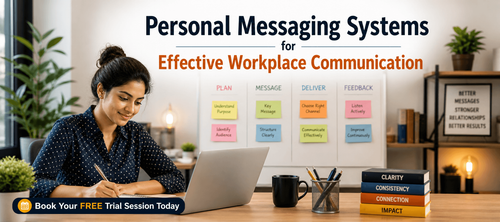

Build a Powerful Personal Messaging System for Workplace Communication and Career Growth
Every professional has experienced this at some point: you send an email that sounds confident, but your next message feels uncertain. In meetings, you speak clearly one day and struggle to articulate your thoughts the next. Over time, this inconsistency creates confusion—not just for others, but for your own professional identity.
The reality is that most professionals invest heavily in technical skills but neglect a critical career accelerator: a structured communication system. Without it, messaging becomes reactive, inconsistent, and often ineffective. This is where a personal messaging system becomes a game-changer. It provides a repeatable framework that ensures clarity, confidence, and credibility across every interaction.
The guidebook “Creating a Personal Messaging System for Workplace Communication” introduces a practical, template-driven approach to help professionals communicate with intention instead of improvisation. It equips you with structured messaging frameworks for real-world workplace scenarios—from introducing yourself to stakeholders to handling conflicts and pitching for opportunities.
Download these resources and apply them alongside your daily work for improved clarity, productivity, and professional growth. You can also book a free trial to gain expert guidance and enhance your communication, problem-solving, and decision-making skills. The materials are designed in a clear, structured format to help professionals learn efficiently and implement insights with confidence.
Who Is This Blog For?
- Job seekers who want to present themselves confidently in professional settings
- Career switchers aiming to build a consistent communication style
- Managers and team leaders who need structured, high-impact messaging
- Consultants and freelancers working across multiple stakeholders
- Working professionals looking to improve workplace communication and visibility
Why This Topic Matters Today?
In today’s fast-paced, collaborative work environment, communication is not just a soft skill—it is a core business skill. Yet, most professionals operate without a structured messaging approach.
According to the guidebook, inconsistency in communication can erode professional credibility faster than a lack of technical skills. For example:
- Over-apologising can signal low confidence
- Vague phrases like “just checking in” reduce clarity
- Lack of tone calibration leads to miscommunication
- Messages without clear outcomes create confusion
With hybrid work, cross-functional teams, and increased stakeholder visibility, professionals must communicate clearly, consistently, and purposefully. A personal messaging system ensures you always sound aligned, credible, and professional—regardless of context.
Core Concept or Framework Explained
At the heart of the guidebook is the idea of a Personal Messaging System—a structured, repeatable approach to workplace communication.
This system is built on three core elements:
- Language patterns that reflect confidence and clarity
- Structural templates for different workplace scenarios
- Situational responses tailored to context and audience
One of the most powerful frameworks introduced is the CIIA Model for upward communication:
- Context: What is the situation?
- Insight: What is your key point or recommendation?
- Impact: Why does it matter?
- Ask: What action do you need?
This framework ensures that every message is concise, relevant, and outcome-driven—especially when communicating with senior leaders.
The guidebook also emphasizes that communication is not about sounding robotic. Instead, it is about creating consistency so that your professional voice becomes recognisable and reliable across all interactions.
How This Blog and Guidebook Help You?
This blog translates the guidebook into a practical roadmap you can apply immediately. By using these templates and frameworks, you can:
- Eliminate guesswork in workplace communication
- Build a consistent and professional communication style
- Improve clarity in emails, meetings, and presentations
- Increase visibility with stakeholders and leadership
- Handle difficult situations with confidence and structure
Ultimately, this system helps you shift from reactive communication to intentional messaging—making every interaction more impactful.
Step-by-Step Breakdown
Define Your Professional Voice Baseline
The first step is to create your communication foundation. This includes:
- Your communication purpose statement
- Tone calibration across contexts
- Phrases to avoid and their replacements
For example, replacing “Sorry to bother you” with “I’m reaching out because…” immediately strengthens your tone.
Introduce Yourself to Stakeholders Effectively
When joining a new team or project, your first message sets the tone. A strong introduction should:
- Clearly state your role and purpose
- Highlight your value
- Include a specific call to action
This ensures you are perceived as proactive and professional from the start.
Master Upward Communication
When communicating with senior leaders, clarity and brevity are critical. Using the CIIA framework ensures:
- Your message is structured
- Your recommendation is clear
- Your ask is actionable
This reduces back-and-forth communication and builds credibility.
Handle Conflict with Professionalism
Conflict is inevitable, but how you communicate determines the outcome. The guidebook suggests:
- Acknowledge the issue without blame
- Share your perspective using “I” language
- Invite the other person’s viewpoint
- Focus on resolution
This approach turns conflict into collaboration.
Recover from Missed Deadlines Effectively
Mistakes happen, but communication defines your reputation. A strong recovery message includes:
- Acknowledgement of the issue
- A brief explanation
- A revised timeline
- A prevention plan
This demonstrates accountability and professionalism.
Position Yourself for Opportunities
To grow in your career, you must communicate your value. A strong internal pitch includes:
- Evidence of achievements
- Alignment with organisational goals
- A clear request for discussion
This helps you stand out without sounding boastful.
Set Boundaries Without Damaging Relationships
Boundary-setting is essential for productivity. Effective communication includes:
- Acknowledging the request
- Clearly stating your limitation
- Offering an alternative
This maintains respect while protecting your time.
Build Cross-Functional Relationships
When working across teams, clarity is key. Your message should:
- Define the shared objective
- Align priorities
- Propose a next step
This sets the foundation for successful collaboration.
Request Feedback Strategically
Instead of asking vague questions, ask specific ones like:
- What did I do well?
- What should I improve?
- Are there any blind spots?
This leads to actionable insights.
Initiate Career Growth Conversations
Don’t wait for performance reviews. Proactively:
- Request a career discussion
- Share your goals
- Ask for feedback and opportunities
This positions you as intentional and growth-oriented.
Common Mistakes or Pitfalls to Avoid
- Over-apologising instead of communicating confidently
- Using vague language without a clear purpose
- Failing to include a clear ask in messages
- Ignoring tone differences across contexts
- Avoiding difficult conversations instead of addressing them
- Sending unstructured messages to senior leaders
These mistakes reduce clarity and credibility. Replacing them with structured communication improves outcomes significantly.
How Should You Use This Guidebook Effectively?
To maximise the value of this guidebook:
- Start with the Professional Voice Baseline to define your style
- Identify 2–3 templates you will need in the next 30 days
- Personalise and save them as part of your message library
- Practice using them in real workplace scenarios
- Review and update your templates every 6 months
This structured approach ensures your communication evolves with your career.
Key Takeaways
- A personal messaging system eliminates inconsistency in communication
- Structured templates improve clarity, confidence, and professionalism
- The CIIA framework is essential for effective upward communication
- Every message should have a clear purpose and outcome
- Consistency in communication builds long-term professional credibility
- Proactive communication drives career growth and visibility
Your Next Step: Accelerate Your Career with PlanetSpark
Creating an impact-driven resume is not just about landing your next job—it’s about owning your professional story and presenting it with clarity, confidence, and credibility. When your resume clearly communicates value, results, and impact, opportunities follow naturally.
At PlanetSpark, we are committed to empowering working professionals with practical, outcome-focused resources that drive real career growth. From resume building and workplace communication to leadership presence and professional writing, our programs are designed to help you succeed in today’s fast-evolving job market.
Visit https://www.planetspark.in/resources to explore:
- Career and resume-building guides
- Workplace communication and professional writing resources
- Skill-development tools curated for working professionals
Want a deeper, hands-on experience?
You can also book a free trial session to learn more about PlanetSpark’s Working Professional Courses, designed to accelerate your career through personalised coaching, real-world practice, and expert guidance.
Your career deserves more than generic advice.
It deserves clarity, confidence, and measurable impact.
Personalized Communication Roadmaps
Record a video to get a AI generated personalized communication reports