
Staying Grounded in Workplace Conflict: A Guide for Professionals

High-Conflict Situations at Work A Practical Guide to Staying Grounded and in Control
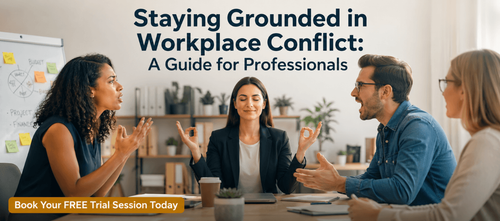
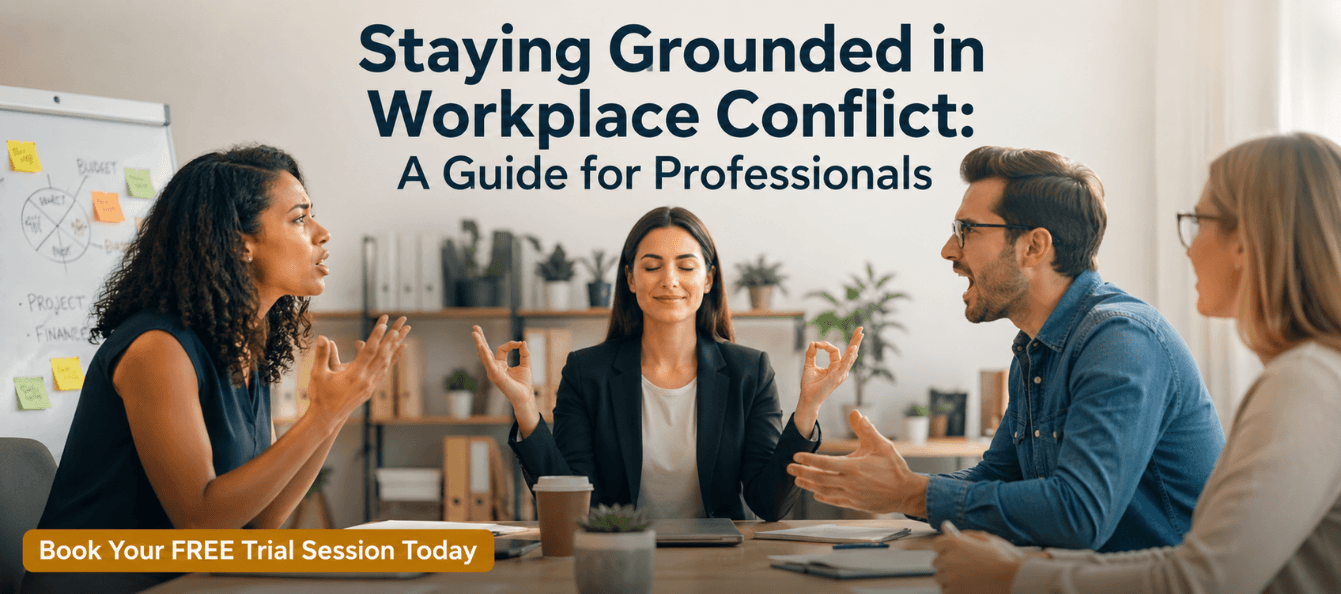
High-conflict situations at work are not rare exceptions. They are recurring realities. A heated team meeting where blame is being thrown around. A one-on-one that turns adversarial. A cross-functional project that becomes territorial. A performance review that catches you off guard.
In these moments, your technical skills take a back seat. What truly gets tested is your ability to stay composed, think clearly, and act intentionally.
Most professionals are never trained for this. They freeze, overreact, shut down, or say things they later regret. Hours later, they replay the situation, wishing they had handled it differently.
That gap between how you want to show up and how you actually show up under pressure is where most careers quietly suffer.
This guide provides a structured way to close that gap. Instead of reacting automatically, you learn how to stay grounded, regulate your responses, and act in alignment with your values—even when the situation is intense and unpredictable.
Download these resources and apply them alongside your daily work for improved clarity, productivity, and professional growth. You can also book a free trial to gain expert guidance and enhance your communication, problem-solving, and decision-making skills. The materials are designed in a clear, structured format to help professionals learn efficiently and implement insights with confidence.
Who Is This Blog For
- Professionals dealing with high-conflict workplace situations
- Managers handling difficult conversations and team tensions
- Consultants navigating high-stakes client interactions
- Early-career professionals building confidence under pressure
- Mid-level professionals aiming to improve emotional control
- Anyone who wants to respond with clarity instead of reacting
Why This Topic Matters Today
Workplace environments are becoming faster, more complex, and more emotionally demanding.
Conflict is no longer occasional—it is frequent.
According to the guide, high-conflict moments test not just professional skills but your emotional architecture. How you respond in these situations directly impacts your reputation, relationships, and long-term career growth.
Common outcomes of poor responses include:
- Saying things you regret
- Avoiding important conversations
- Escalating conflict unnecessarily
- Losing credibility under pressure
Professionals who can stay grounded are seen as:
- Reliable decision-makers
- Strong leaders under pressure
- Clear communicators
- Trustworthy professionals
This makes groundedness a critical career skill.
Core Concept or Framework Explained
Being grounded at work does not mean being calm all the time.
It means responding from your values, goals, and rational thinking instead of reacting from fear, ego, or defensiveness.
Two contrasting states define this:
Reactive behaviour
- Speaking impulsively
- Going silent when you should speak
- Matching emotional intensity
- Making decisions based on pressure
- Ruminating after the situation
Responsive behaviour
- Pausing before speaking
- Staying focused on the issue
- Expressing clearly without attacking
- Exiting unproductive conversations
- Moving forward without overthinking
The key shift is from automatic reaction to intentional response.
How This Blog and Guidebook Help You
This framework gives you control in situations where most professionals lose it.
By applying it, you will:
- Recognise when you are becoming reactive
- Regulate your emotional state quickly
- Respond with clarity and confidence
- Handle conflict without escalation
- Build a strong professional reputation
Instead of being controlled by the situation, you begin to control your response.
Step-by-Step Breakdown
Step 1: Understand Your Default Reaction Pattern
Everyone has a default response under pressure.
Common patterns include:
- Fight
Becoming aggressive or defensive - Flight
Avoiding or withdrawing - Freeze
Becoming silent or unable to respond - Fawn
Over-accommodating to reduce tension
Identifying your pattern is the first step.
Step 2: Recognise the Trigger in Real Time
High-conflict situations activate your threat response.
Triggers can include:
- Public criticism
- Feeling challenged or questioned
- Lack of control
- Unexpected feedback
Recognising the trigger allows you to pause before reacting.
Step 3: Use the Pause as a Tool
The most powerful skill in conflict is the pause.
A short pause:
- Reduces emotional intensity
- Allows rational thinking to return
- Prevents impulsive reactions
Even a few seconds can change the outcome.
Step 4: Regulate Your Internal State
Before responding, stabilise yourself.
Techniques include:
- Slowing your breathing
- Relaxing your body posture
- Focusing on the present moment
This keeps your response controlled.
Step 5: Stay Anchored to the Issue
Avoid getting pulled into emotional escalation.
Focus on:
- The actual problem
- The desired outcome
- Relevant facts
This maintains clarity in the conversation.
Step 6: Communicate with Intent
Use clear, neutral language.
Avoid:
- Blame
- Defensive explanations
- Emotional reactions
Instead:
- State your perspective
- Ask clarifying questions
- Keep communication structured
Step 7: Exit When Necessary
Not all conversations need to continue immediately.
If the situation is unproductive:
- Suggest a pause
- Revisit later
- Reset the conversation
This prevents further escalation.
Step 8: Reflect and Improve
After the situation:
- Review your response
- Identify what worked
- Adjust for future situations
This builds long-term improvement.
Common Mistakes or Pitfalls to Avoid
- Reacting immediately without pausing
- Matching the other person’s emotional intensity
- Taking things personally
- Over-explaining defensively
- Avoiding conflict completely
- Replaying situations without learning
These patterns reduce effectiveness.
How Should You Use This Guidebook Effectively
To build this skill:
- Before a high-stakes situation
Prepare your mindset and responses - During the situation
Focus on pausing and staying grounded - After the situation
Reflect and improve
You can also:
- Identify recurring triggers
- Practise response techniques
- Build awareness over time
Consistency is key.
Key Takeaways
- High-conflict situations are common in workplaces
- Your response matters more than the situation
- Groundedness means responding, not reacting
- Awareness of triggers improves control
- The pause is a powerful tool
- Clear communication reduces escalation
- Reflection builds long-term improvement
Your Next Step: Accelerate Your Career with PlanetSpark
Creating an impact-driven resume is not just about landing your next job—it’s about owning your professional story and presenting it with clarity, confidence, and credibility. When your resume clearly communicates value, results, and impact, opportunities follow naturally.
At PlanetSpark, we are committed to empowering working professionals with practical, outcome-focused resources that drive real career growth. From resume building and workplace communication to leadership presence and professional writing, our programs are designed to help you succeed in today’s fast-evolving job market.
Visit https://www.planetspark.in/resources to explore:
- Career and resume-building guides
- Workplace communication and professional writing resources
- Skill-development tools curated for working professionals
Want a deeper, hands-on experience?
You can also book a free trial session to learn more about PlanetSpark’s Working Professional Courses, designed to accelerate your career through personalised coaching, real-world practice, and expert guidance.
Your career deserves more than generic advice.
It deserves clarity, confidence, and measurable impact.
Personalized Communication Roadmaps
Record a video to get a AI generated personalized communication reports