
Step-by-Step Guide for Leading Change Management Initiatives Successfully
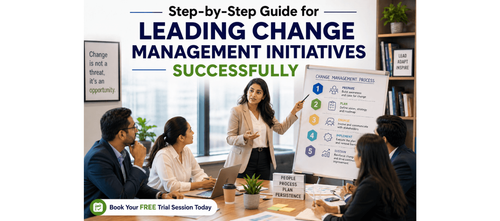

Orchestrating Change Management Initiatives: A Practical Guide to Successfully Driving Workplace Transformation
Change initiatives often start with strong intent but fail during execution. You may have seen this firsthand—new systems launched but never adopted, restructuring plans that create confusion instead of clarity, or teams resisting even well-planned transformations. Despite significant investments, most change efforts struggle because leaders focus on processes while overlooking the human side of change.
In today’s fast-paced professional environment, change is no longer occasional—it is constant. Digital transformation, evolving business models, and shifting team structures require professionals to adapt quickly and lead effectively. Yet many professionals are never taught how to lead change in a structured, repeatable way.
This is where a practical, framework-driven approach becomes critical. The Leading Change Management Initiatives Guide equips professionals with the tools, insights, and confidence to move from uncertainty to structured execution. Instead of relying on guesswork, you gain a clear roadmap to diagnose, plan, execute, and sustain change successfully.
Download these resources and apply them alongside your daily work for improved clarity, productivity, and professional growth. You can also book a free trial to gain expert guidance and enhance your communication, problem-solving, and decision-making skills. The materials are designed in a clear, structured format to help professionals learn efficiently and implement insights with confidence.
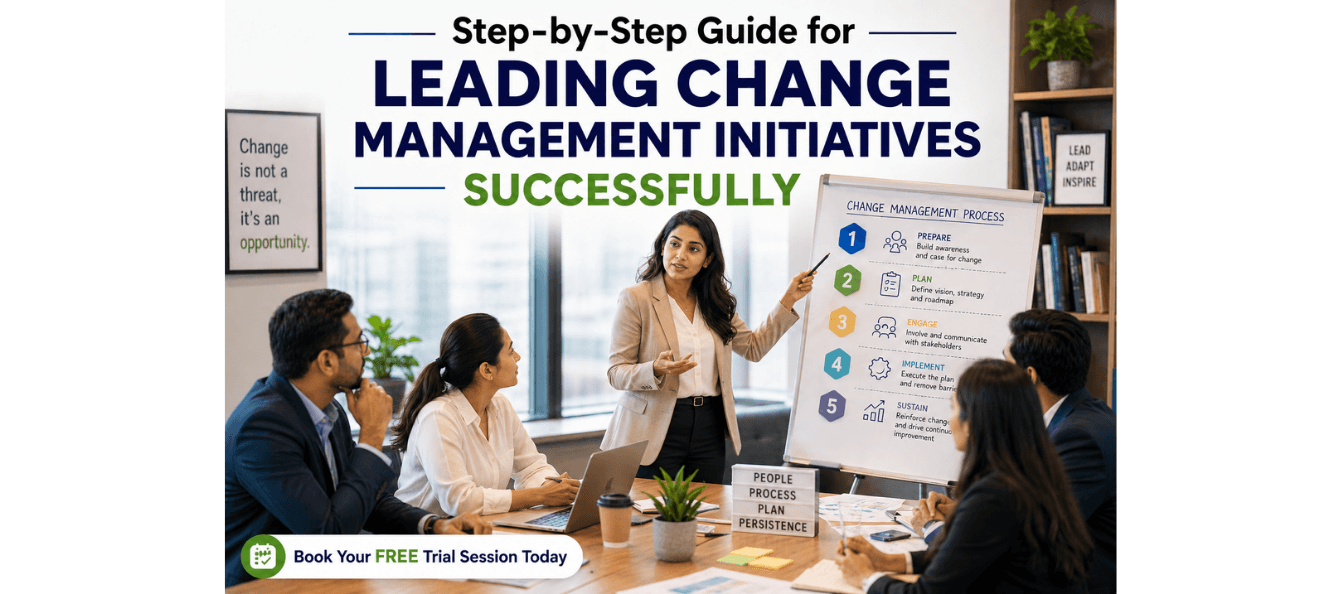
Who Is This Blog For?
- Working professionals managing change initiatives for the first time
- Managers leading teams through restructuring, technology adoption, or process changes
- Consultants responsible for driving organisational transformation
- Career switchers adapting to new roles or industries
- Early to mid-career professionals aiming to build leadership capability
Why This Topic Matters Today?
Organisations today are evolving faster than ever. Whether it is digital transformation, mergers, or cultural shifts, change is continuous rather than occasional. However, research consistently shows that nearly 70% of change initiatives fail to achieve their intended outcomes.
The primary reason is not flawed strategy—it is poor execution of the change process itself. Many leaders focus on systems, tools, and processes while ignoring the most critical factor: people.
Common challenges professionals face include:
- Lack of clarity on where to start
- Resistance from teams and stakeholders
- Poor communication strategies
- No structured roadmap from planning to execution
- Difficulty measuring whether change is actually working
This makes change management a critical skill for career growth. Professionals who can lead change effectively stand out as leaders who deliver results.
Core Concept
At the heart of effective change management lies a simple but powerful idea: change is not just technical—it is human.
The guide introduces three essential dimensions of change:
- Technical change: The systems, processes, or tools being implemented
- Organisational change: The impact on roles, workflows, and team structures
- People change: The emotional and behavioural adjustments individuals must make
Most initiatives fail because they focus only on the technical aspect while neglecting organisational and people dynamics.
Another key concept is the change curve, which explains how individuals react emotionally to change:
- Shock or denial when change is introduced
- Frustration or resistance as uncertainty increases
- Exploration as curiosity returns
- Acceptance and commitment as new behaviours stabilise
Understanding this progression helps leaders respond appropriately rather than forcing adoption prematurely.
The guide also introduces the ADKAR framework, a widely used diagnostic tool that identifies where change efforts are breaking down:
- Awareness of why change is needed
- Desire to support the change
- Knowledge of how to change
- Ability to implement the change
- Reinforcement to sustain the change
For example, in a real-world scenario, a team failed to adopt new software not due to lack of training, but due to fear of performance monitoring. Addressing this concern significantly improved adoption rates.
How This Blog and Guidebook Help You?
This blog and the guidebook provide a structured, practical approach to leading change effectively.
You will be able to:
- Diagnose problems before taking action
- Build structured change plans with clarity
- Communicate more effectively with stakeholders
- Handle resistance with confidence
- Measure success using meaningful metrics
- Sustain change beyond initial implementation
Instead of reacting to challenges, you will lead proactively with a clear strategy.
Step-by-Step Breakdown
Understanding Change Foundations
Before initiating any change, it is essential to understand how change works within organisations. This includes recognising emotional responses, identifying impacted areas, and preparing for resistance.
Diagnosing and Designing Change
The first phase focuses on preparation. Key activities include:
- Conducting a change impact assessment to identify affected teams and processes
- Mapping stakeholders based on influence and interest
- Assessing organisational readiness for change
- Creating a change charter that defines goals, scope, and success metrics
This phase ensures that change initiatives are grounded in reality rather than assumptions.
Leading and Communicating Through Change
Execution requires continuous communication and engagement. Effective leaders:
- Communicate messages multiple times across channels
- Tailor communication to specific audiences
- Address emotional concerns before introducing processes
- Build a network of change champions within teams
A structured communication framework ensures clarity by focusing on:
- Why the change is happening
- What is changing
- How it impacts individuals
- What support is available
- What actions are required next
Handling Resistance
Resistance is not a barrier but a source of insight. Common forms include:
- Past failed initiatives leading to skepticism
- Lack of involvement creating disengagement
- Increased workload concerns
- Misalignment between leadership and managers
Effective leaders address these concerns directly, involve stakeholders, and adapt strategies based on feedback.
Sustaining and Embedding Change
Many initiatives fail after implementation due to lack of follow-through. Sustaining change requires:
- Monitoring adoption rates
- Addressing ongoing challenges
- Reinforcing new behaviours
- Tracking business impact metrics
A structured 30-60-90 day review ensures that change becomes part of daily operations.
Measuring Success
Effective measurement goes beyond activity tracking. It includes:
- Activity metrics such as training sessions conducted
- Reaction metrics such as feedback and sentiment
- Adoption metrics reflecting actual usage
- Business impact metrics tied to outcomes like efficiency or revenue
Defining success early ensures accountability and clarity.
Common Mistakes
- Treating change as a one-time project instead of an ongoing process
- Overcomplicating plans without focusing on execution
- Ignoring stakeholder dynamics and organisational politics
- Skipping the diagnosis phase and jumping to solutions
- Relying on one-time communication instead of consistent messaging
- Measuring activity instead of real impact
Avoiding these mistakes significantly increases the chances of success.
How Should You Use This Guidebook Effectively?
To maximise value, use the guidebook as a practical tool rather than just reading material.
- Start by reading it fully to understand the overall framework
- Identify a current or upcoming change initiative
- Apply one tool at a time, starting with impact assessment
- Build your stakeholder map and communication plan
- Use ADKAR to diagnose ongoing challenges
- Review progress regularly using the sustainment checklist
You can also revisit specific sections based on your current challenges, making it a flexible, ongoing resource.
Key Takeaways
- Change success depends more on people than processes
- Always diagnose before implementing solutions
- Use structured frameworks like ADKAR to identify gaps
- Communication must be continuous and audience-specific
- Resistance provides valuable insights when addressed correctly
- Sustaining change is as important as launching it
- Measure adoption and business impact, not just activity
- Leadership visibility and consistency drive long-term success
Your Next Step: Accelerate Your Career with PlanetSpark
Creating an impact-driven resume is not just about landing your next job—it’s about owning your professional story and presenting it with clarity, confidence, and credibility. When your resume clearly communicates value, results, and impact, opportunities follow naturally.
At PlanetSpark, we are committed to empowering working professionals with practical, outcome-focused resources that drive real career growth. From resume building and workplace communication to leadership presence and professional writing, our programs are designed to help you succeed in today’s fast-evolving job market.
Visit https://www.planetspark.in/resources to explore:
- Career and resume-building guides
- Workplace communication and professional writing resources
- Skill-development tools curated for working professionals
Want a deeper, hands-on experience?
You can also book a free trial session to learn more about PlanetSpark’s Working Professional Courses, designed to accelerate your career through personalised coaching, real-world practice, and expert guidance.
Your career deserves more than generic advice.
It deserves clarity, confidence, and measurable impact.
Personalized Communication Roadmaps
Record a video to get a AI generated personalized communication reports