
Strategies for Staying Energized While Managing Increased Responsibilities at Work


10 Effective Strategies for Managing Energy and Scaling Responsibility at Work
In the demanding world of professional growth, many individuals find themselves trapped in a cycle of increasing responsibilities, endless meetings, and constant multitasking. While you might have been promoted for your exceptional performance, the added workload often leads to burnout. Many professionals struggle with managing their energy, and without the right framework, productivity starts to decline, and stress levels rise.
This guide, however, is designed to help you address the root cause of professional burnout—energy mismanagement. By adopting a system that optimizes your energy rather than relying on sheer willpower, you can sustain your career growth without compromising your well-being.
Download these resources and apply them alongside your daily work for improved clarity, productivity, and professional growth. You can also book a free trial to gain expert guidance and enhance your communication, problem-solving, and decision-making skills. The materials are designed in a clear, structured format to help professionals learn efficiently and implement insights with confidence.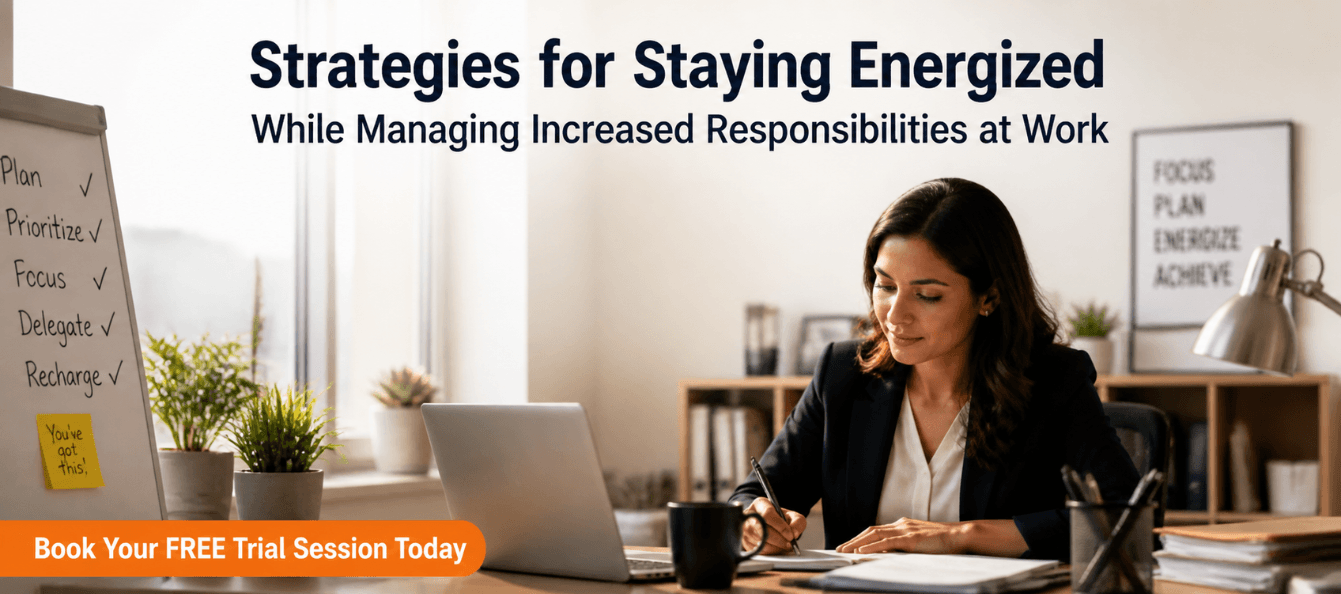
Who Is This Blog For?
- Mid-level professionals looking to take on more responsibility without burning out
- Senior leaders seeking strategies to scale their impact
- Managers juggling multiple teams and projects
- Job seekers aiming for a sustainable work-life balance
- Freelancers and consultants managing high workloads
Why This Topic Matters Today?
With modern work environments demanding more of us, it's no surprise that burnout has become a common issue. Studies show that professionals who scale their responsibilities without managing energy well are at a high risk of mental and physical exhaustion. This affects performance, relationships, and career trajectory. Learning how to sustain energy while scaling responsibility has become a critical skill in today's competitive job market.
Core Concept or Framework Explained
The 5-Phase Energy & Responsibility Framework is designed to help you build a sustainable system for scaling your responsibilities without depleting your energy reserves. It consists of:
- Audit: Assess where your energy is currently being spent and drained
-Design: Build your Personal Energy Operating System (PEOS)
- Protect: Create safeguards to preserve your energy throughout the workday
- Recover: Establish recovery mechanisms to replenish your energy
- Scale: Implement strategies to grow your responsibility without growing your exhaustion
These phases allow professionals to understand the root causes of energy depletion and take actionable steps to manage their workload strategically.
How This Blog and Guidebook Help You?
This blog equips you with a comprehensive playbook to navigate energy management and scale your responsibilities sustainably. By applying these principles, you'll be able to:
- Optimize your energy for high-value tasks
- Implement effective systems that reduce decision fatigue and energy drain
- Use recovery strategies that prevent burnout
- Make smarter decisions about what responsibilities to accept, delegate, or eliminate
Step-by-Step Breakdown
Step 1: Audit – Know Where Your Energy Is Going
The first step to managing your energy is to understand where it's being used. Start by tracking your energy levels at regular intervals throughout the day. This will help you identify patterns, such as:
- Energy vampires: Tasks or people that drain your energy
- Energy anchors: Activities that help sustain your energy
- Peak windows: Times when your energy is at its highest
Tracking these variables over the course of five working days will provide valuable insights into how to design your work schedule for maximum productivity.
Step 2: Design – Build Your Personal Energy Operating System (PEOS)
Using the data from your audit, create a framework for managing your energy. Focus on:
- Peak Alignment: Schedule your most demanding tasks during your highest energy windows
- Decision Architecture: Standardize decisions to reduce mental load
- Boundary Infrastructure: Protect your recovery time from work demands
- Fuel Inputs: Prioritize habits like sleep, movement, and nutrition to boost your energy reserves
Step 3: Protect – Implement Safeguards
Building a sustainable energy system is only half the battle. The next challenge is maintaining it amidst daily professional demands. Here’s how to protect your system:
- Say no assertively: Use clear language to set boundaries
- Manage interruptions: Control when and how you engage with low-priority tasks and people
- Delegate effectively: Free up energy by shifting tasks that don't require your
Step 4: Recover – Build Active Recovery Into Your Week
Recovery is an essential aspect of energy management. By integrating recovery practices into your daily routine, you can maintain high levels of performance without experiencing burnout. Key recovery strategies include:
- Cognitive recovery: Take breaks that allow your brain to disengage
- Physical recovery: Prioritize sleep, movement, and nutrition
- Motivational recovery: Reconnect with your purpose and values
Step 5: Scale – Manage Growing Responsibilities Without Exhaustion
As your responsibilities grow, it’s important to scale your energy system alongside. This involves:
- Leverage: Create outputs that multiply your impact without increasing effort
- Systemization: Automate or delegate recurring tasks
- Selective Amplification: Choose new responsibilities based on their energy ROI, not just career optics
Common Mistakes or Pitfalls to Avoid
Many professionals fall into these common traps:
- Reactive energy protection: Waiting until you're drained to take a break
- Treating all tasks as urgent: Not distinguishing between high- and low-energy tasks
- Confusing busyness with productivity: Filling your calendar with meetings without focusing on key outputs
- Delegating tasks, not outcomes: Failing to delegate authority and decision-making
How Should You Use This Guidebook Effectively?
To make the most out of this guide, follow these steps:
- Start with the audit: Track your energy patterns for at least five days
- Design your PEOS: Use the insights from the audit to build your personal energy framework
- Apply the phases: Focus on one phase at a time to avoid overwhelm
- Invest time in recovery: Make recovery a priority to prevent burnout
Key Takeaways
- Energy management is crucial for sustainable career growth
- Peak alignment and decision architecture can double your productivity
- Active recovery is key to maintaining long-term performance
- Leverage, systemization, and selective amplification are essential for scaling without exhaustion
- Regular reflection and adjustment lead to continuous improvement
Your Next Step: Accelerate Your Career with PlanetSpark
Creating an impact-driven resume is not just about landing your next job—it’s about owning your professional story and presenting it with clarity, confidence, and credibility. When your resume clearly communicates value, results, and impact, opportunities follow naturally.
At PlanetSpark, we are committed to empowering working professionals with practical, outcome-focused resources that drive real career growth. From resume building and workplace communication to leadership presence and professional writing, our programs are designed to help you succeed in today’s fast-evolving job market.
Visit https://www.planetspark.in/resources to explore:
- Career and resume-building guides
- Workplace communication and professional writing resources
- Skill-development tools curated for working professionals
Want a deeper, hands-on experience?
You can also book a free trial session to learn more about PlanetSpark’s Working Professional Courses, designed to accelerate your career through personalised coaching, real-world practice, and expert guidance.
Your career deserves more than generic advice.
It deserves clarity, confidence, and measurable impact.
Start building that advantage today—with PlanetSpark.
Personalized Communication Roadmaps
Record a video to get a AI generated personalized communication reports