
Track Energy Levels Across Different Work Tasks
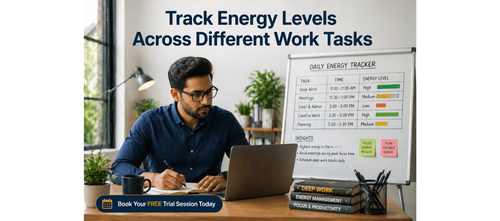

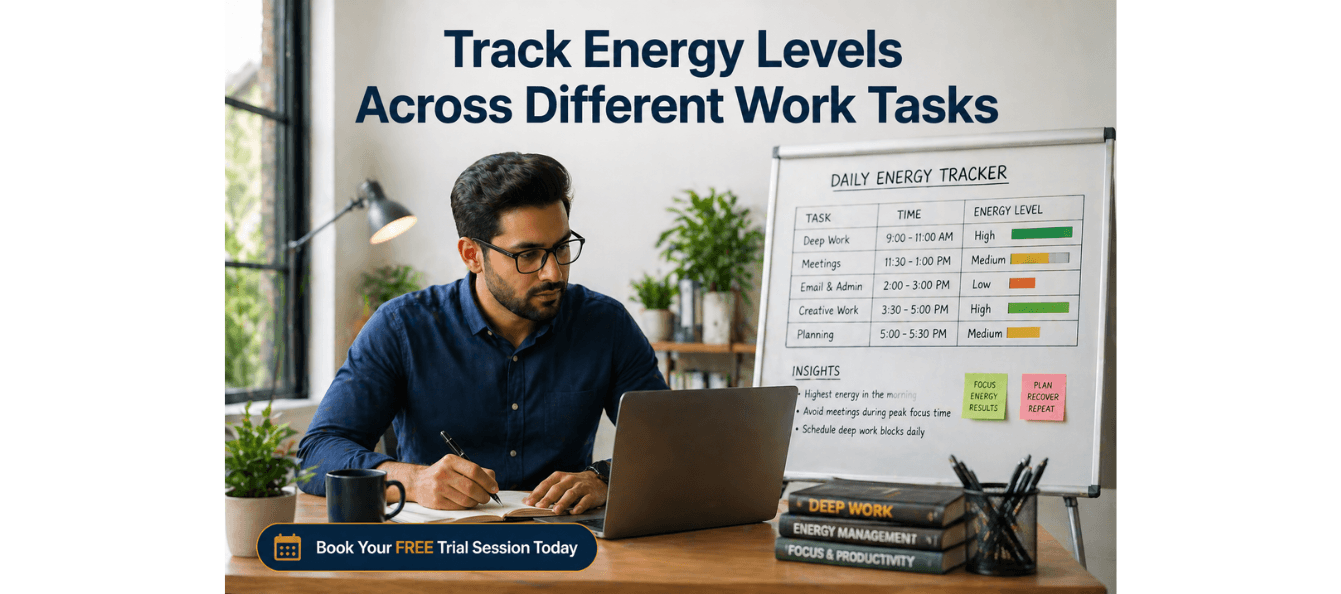
Focus on Energy, Not Just Time A Practical System to Boost Productivity and Performance at Work
You start your day with a clear plan. A full to-do list, back-to-back meetings, and deadlines that demand focus. But by mid-afternoon, your energy dips, your thinking slows, and even simple tasks feel harder than they should. You wonder: where did the day go?
The truth is, the problem isn’t your time management—it’s your energy management.
Most professionals treat all hours as equal. But not all hours—and more importantly, not all energy states—are the same. Deep thinking, decision-making, collaboration, and routine tasks all require different kinds of energy. When you mismatch your work with your energy levels, productivity drops, work quality suffers, and burnout creeps in.
This is exactly where an energy-tracking system becomes powerful. Instead of forcing productivity into fixed time slots, you begin aligning your most important work with your peak energy. The result is not just getting more done—but doing better work in less time.
Download these resources and apply them alongside your daily work for improved clarity, productivity, and professional growth. You can also book a free trial to gain expert guidance and enhance your communication, problem-solving, and decision-making skills. The materials are designed in a clear, structured format to help professionals learn efficiently and implement insights with confidence.
Who Is This Blog For?
- Working professionals with 0–15 years of experience looking to improve productivity
- Managers and consultants juggling multiple responsibilities and deadlines
- Career switchers trying to maximise output during limited focused hours
- Professionals experiencing burnout despite working long hours
- Anyone who feels their effort is high, but output quality is inconsistent
Why This Topic Matters Today?
In today’s fast-paced work environment, professionals are expected to deliver high-quality output consistently—often under tight timelines and constant interruptions. Yet, most productivity advice still focuses on managing time rather than managing energy.
This creates several common challenges:
- Chronic mismatch between high-effort tasks and low-energy periods
- Unnoticed patterns of energy peaks and dips throughout the day
- Burnout caused by continuous deep work without recovery
- Reduced quality of output despite increased effort
The result is a frustrating cycle: working longer hours without meaningful improvement in performance.
Understanding and tracking your energy breaks this cycle. It shifts your focus from “how long you work” to “how effectively you work when your energy is at its best.”
Core Concept or Framework Explained
At the heart of this system is a simple but powerful idea: energy is multi-dimensional, and each type of work draws on different energy reserves.
The Four Energy Dimensions
Energy is not just about feeling tired or alert. It consists of four distinct dimensions:
- Physical Energy: Your body’s stamina, influenced by sleep, nutrition, and movement
- Mental Energy: Your ability to think, analyse, and focus deeply
- Emotional Energy: Your capacity to handle people, conversations, and stress
- Motivational Energy: Your internal drive and sense of purpose
Each of these can be high or low independently. For example, you might feel physically energetic but mentally drained after making complex decisions.
The Four Work Types
Professional tasks can be broadly classified into four categories:
- Deep Focus Work: Strategy, analysis, writing, problem-solving
- Creative Work: Brainstorming, ideation, innovation
- Collaborative Work: Meetings, discussions, stakeholder interactions
- Administrative Work: Emails, scheduling, routine tasks
The key insight is this: each work type requires a specific kind of energy. When you align them correctly, work becomes faster, easier, and higher quality.
How This Blog and Guidebook Help You?
This system gives you a structured way to:
- Identify your peak energy windows during the day
- Understand which tasks drain you the most
- Recognise patterns in your daily performance
- Redesign your schedule based on real data—not assumptions
Instead of guessing when to do important work, you make informed decisions backed by your own energy patterns. Over time, this leads to:
- Higher quality output in less time
- Reduced mental fatigue and burnout
- Better control over your workday
- Increased confidence in your productivity system
Step-by-Step Breakdown
Step 1: Build Awareness of Your Energy
Start by understanding the four energy dimensions. Track them separately instead of assuming your energy is “high” or “low” overall.
For example:
- You may have high mental clarity in the morning but low emotional energy after a difficult conversation
- You may feel motivated but physically tired after long hours of work
This awareness is the foundation of effective energy management.
Step 2: Classify Your Work
List out all the tasks you typically perform in a week and categorise them into:
- Deep Focus
- Creative
- Collaborative
- Administrative
This step helps you see your workload clearly and understand what each task demands from you.
Step 3: Track Your Daily Energy
Use a simple daily log to record your energy levels.
Track at three key points:
- Morning
- Midday
- Late afternoon
Rate each energy dimension on a scale of 1 to 5:
- 5: Peak performance
- 4: High energy
- 3: Moderate
- 2: Low
- 1: Depleted
Also record:
- The type of work you did during each time block
- Your peak energy window
- Your biggest energy drain
- One task you would reschedule
- Your overall alignment score
Within two weeks, patterns will start to emerge.
Step 4: Identify Patterns
After consistent tracking, review your data weekly.
Look for:
- Peak energy windows where your scores are consistently high
- Crash zones where your energy drops significantly
- Misalignments between work type and energy level
For example:
- Are you doing deep work when your mental energy is low?
- Are your peak hours being consumed by meetings?
These insights reveal exactly where your schedule needs adjustment.
Step 5: Redesign Your Schedule
Use your insights to create an energy-aligned schedule.
Follow these principles:
- Schedule deep focus work during your peak mental energy window
- Batch meetings into specific time blocks
- Use low-energy periods for administrative tasks
- Avoid back-to-back deep work sessions longer than 90 minutes
- Add short recovery breaks between intensive tasks
Even small adjustments can significantly improve performance.
Step 6: Apply Recovery Strategies
Recovery is not optional—it is essential.
Use simple rituals like:
- Short walks between tasks
- Breathing exercises
- Hydration and movement breaks
- Journaling quick wins
These help reset your energy and prevent burnout.
Common Mistakes or Pitfalls to Avoid
- Starting your day with emails instead of deep work, which wastes peak mental energy
- Ignoring emotional energy and scheduling difficult conversations before critical tasks
- Treating weekends as the only recovery time instead of building daily recovery habits
- Scheduling important work during low-energy periods out of habit
- Failing to review and act on your energy data
Avoiding these mistakes ensures that your energy tracking leads to real improvements.
How Should You Use This Guidebook Effectively?
To get the best results, follow a simple routine:
- Spend one day understanding the framework
- Track your energy daily for at least two weeks
- Complete a weekly 15-minute reflection every Friday
- Gradually adjust your schedule based on patterns
Consistency matters more than perfection. Even partial tracking can reveal valuable insights.
Treat this system as a flexible tool—not a rigid rulebook. Adapt it to your work style and refine it over time.
Key Takeaways
- Energy, not time, determines the quality of your work
- Your energy has four dimensions: physical, mental, emotional, and motivational
- Different tasks require different types of energy
- Tracking your energy for two weeks reveals clear performance patterns
- Weekly reflection turns data into actionable improvements
- Recovery is a critical part of productivity—not a reward
- Small changes in scheduling can lead to significant performance gains
Your Next Step: Accelerate Your Career with PlanetSpark
Creating an impact-driven resume is not just about landing your next job—it’s about owning your professional story and presenting it with clarity, confidence, and credibility. When your resume clearly communicates value, results, and impact, opportunities follow naturally.
At PlanetSpark, we are committed to empowering working professionals with practical, outcome-focused resources that drive real career growth. From resume building and workplace communication to leadership presence and professional writing, our programs are designed to help you succeed in today’s fast-evolving job market.
Visit https://www.planetspark.in/resources to explore:
- Career and resume-building guides
- Workplace communication and professional writing resources
- Skill-development tools curated for working professionals
Want a deeper, hands-on experience?
You can also book a free trial session to learn more about PlanetSpark’s Working Professional Courses, designed to accelerate your career through personalised coaching, real-world practice, and expert guidance.
Your career deserves more than generic advice.
It deserves clarity, confidence, and measurable impact.
Start building that advantage today—with PlanetSpark.
Personalized Communication Roadmaps
Record a video to get a AI generated personalized communication reports