
Simple Conversation for Kids in English | Daily Dialogue Practice


Table of Contents
- Daily Conversation Practice That Builds Real English Skills
- Short Dialogues in English That Help Kids Speak Naturally
- 50 Conversation Starters for Kids
- 10 Common Topics to Start English Conversations
- 15 Easy Sentences for Kids to Practice
- Everyday English Conversation Examples for Kids
- Creating a Speaking-Friendly Environment
- Tips to Teach Simple English Conversation to Kids
- How PlanetSpark Makes Kids Fluent English Speakers
- Why Are Simple English Conversations Important for Kids?
- Common Challenges Children Face
- Benefits of Early English Speaking Skills
- Games to Improve English Conversations
- Conclusion
Want your child to speak English fluently, confidently, and naturally? It all begins with the basics of simple conversation for kids in English. This blog explores, how children can become expressive, improve vocabulary, build fluency, and boosts confidence at a young age.
At PlanetSpark, our Spoken English course for kids is designed specifically to make this journey enjoyable and structured. We go beyond just learning phrases we teach real-life conversations through engaging, live sessions backed by expert trainers and AI-powered feedback.
Daily Conversation Practice That Builds Real English Skills
Simple English conversations, when practiced daily, help children become comfortable expressing their thoughts in real-life situations. Using English naturally at home allows kids to pick up words, sentence patterns, and pronunciation without pressure. Starting with easy, everyday exchanges and gradually moving to longer dialogues helps children speak with confidence, clarity, and ease.
How simple daily conversations help children learn English effectively:
Builds real-life speaking ability:
Daily conversations teach children how to communicate in practical situations such as greeting others, asking questions, or sharing opinions skills that go beyond memorized answers.Creates an English-friendly home environment:
When English is used regularly at home, children begin to think and respond in English naturally instead of translating from another language.Improves sentence formation naturally:
Through repeated use of basic conversations, children understand how words fit together, strengthening grammar and structure without formal drills.Boosts confidence through short exchanges:
Short, meaningful conversations about daily activities help children speak freely and reduce fear of making mistakes.Sharpens listening and response skills:
Regular interaction improves a child’s ability to listen, understand context, and reply appropriately an essential skill for both academics and social interactions.
Consistent practice of simple conversations turns everyday moments into powerful learning opportunities and lays a strong foundation for fluent English communication.
Help Your Child Build Confidence Through Everyday English!
Start nurturing your child's communication skills with simple, real-life conversations.
Begin practicing today with a free demo class
Short Dialogues in English That Help Kids Speak Naturally
Using short dialogue for kids is one of the most effective ways to help children practice spoken English in a fun and stress-free way. A well-planned dialogue for kids allows them to understand how conversations actually flow how one sentence leads to another. When children practice dialogues in English for kids regularly, they learn correct sentence patterns, tone, and everyday expressions that improve real-life communication.
Simple and repeated dialogue for kids activities also help children overcome hesitation. Since the conversations are short and predictable, kids feel safe experimenting with new words and responses without fear of mistakes.
Examples of short dialogues for kids:
Greeting and Introduction
Child A: Hello! What is your name?
Child B: My name is Aarav. What about you?
Child A: I am Riya. Nice to meet you.At Home Conversation
Child: Mom, may I have some water?
Mother: Yes, here you are.
Child: Thank you, Mom.At School
Child A: Do you like English class?
Child B: Yes, I like it very much.
Child A: Me too. It is fun.Sharing Feelings
Child: I am feeling tired today.
Parent: Do you want to rest for some time?
Child: Yes, that will help.
Practicing such short dialogues in English for kids daily helps improve fluency, pronunciation, and confidence while making learning enjoyable and interactive. Also, check here the list of 150+ Daily Use English Sentences for Everyday Conversations to begin with.
50 Conversation Starters for Kids
Here are a few simple English conversation starters your child can practice:
What’s your favorite cartoon?
Do you like mangoes or apples?
What do you do on Sundays?
Can I sit with you?
Which game do you play the most?
What is your favorite color?
Who is your best friend?
What is your favorite food?
Do you like drawing or coloring?
What did you eat for breakfast today?
What is your favorite toy?
Do you like animals? Which one?
What is your favorite subject in school?
What makes you happy?
What do you do after school?
Do you like to sing or dance?
What is your favorite story?
Can you help me, please?
What is your teacher’s name?
Do you like watching movies?
Which is your favorite fruit?
What game do you play with your friends?
Do you like to read books?
What is your favorite festival?
What do you like to eat at home?
Can we play together?
What is your favorite animal?
Do you like ice cream? Which flavor?
What do you do in the evening?
What is your favorite place to visit?
Do you like school? Why?
What is your favorite song?
Who do you play with at home?
What makes you laugh?
Do you like cartoons or movies more?
What is your favorite sport?
Can you tell me a story?
What do you like to do on holidays?
Who is your favorite teacher?
Do you like puzzles or games?
What is your favorite snack?
What do you do before bedtime?
Do you like playing outside?
What is your favorite animal sound?
Can I be your friend?
What makes you feel excited?
Do you like rain or sunshine?
What is your favorite dress?
What do you want to be when you grow up?
What did you learn at school today?
These starters help children initiate and maintain a conversation naturally.
10 Common Topics to Start English Conversations
Here are ten child-friendly topics that help spark English dialogues:
Family members
Pets
Colors and shapes
Favorite food
School subjects
Games and sports
Holidays and festivals
Feelings and emotions
Weather
Daily routine
Make English Their Superpower!
From greetings to full conversations watch your child grow into a confident communicator
Enroll for a Free Demo Class Today
15 Easy Sentences for Kids to Practice
My name is Arjun.
I am six years old.
I like chocolate ice cream.
I go to school by bus.
My best friend is Neha.
I have a pet cat.
My father is a doctor.
I play football in the evening.
I love to read books.
My birthday is in March.
I wear a red cap.
The sun is bright today.
I am happy today.
I brush my teeth in the morning.
Let’s play together!
Practicing these sentences daily helps build fluency in English over time.
English Conversation Practice for Kids: Simple Ways to Build Speaking Skills
Regular English conversation practice for kids helps transform passive understanding into confident speaking. Instead of focusing on long lessons, small, intentional conversation moments throughout the day make learning effective and enjoyable. Starting with basic English conversation practice for kids allows children to speak freely without pressure, while gradually improving clarity, vocabulary, and fluency.
Unique and practical tips for effective conversation practice:
Use the “repeat and extend” method:
When a child says, “I like apples,” respond with, “Yes, you like apples because they are sweet.” This gently improves sentence structure without correction pressure.Fix a daily conversation trigger:
Choose one daily moment—morning greetings, mealtime, or bedtime for English conversation practice. Predictable routines make speaking a habit.Limit corrections, model instead:
Instead of pointing out mistakes, repeat the sentence correctly in your reply. This keeps basic English conversation practice for kids positive and stress-free.Ask open-ended questions:
Replace yes/no questions with prompts like “Why did you like your class today?” to encourage longer responses.Role-play real-life situations:
Practice ordering food, asking for help, or greeting a teacher. These scenarios make English practical and relatable.Track progress with confidence, not accuracy:
Celebrate effort and clarity rather than perfect grammar. Confidence leads to fluency faster than constant correction.
Consistent, supportive conversation practice helps chil
Everyday English Conversation Examples for Kids
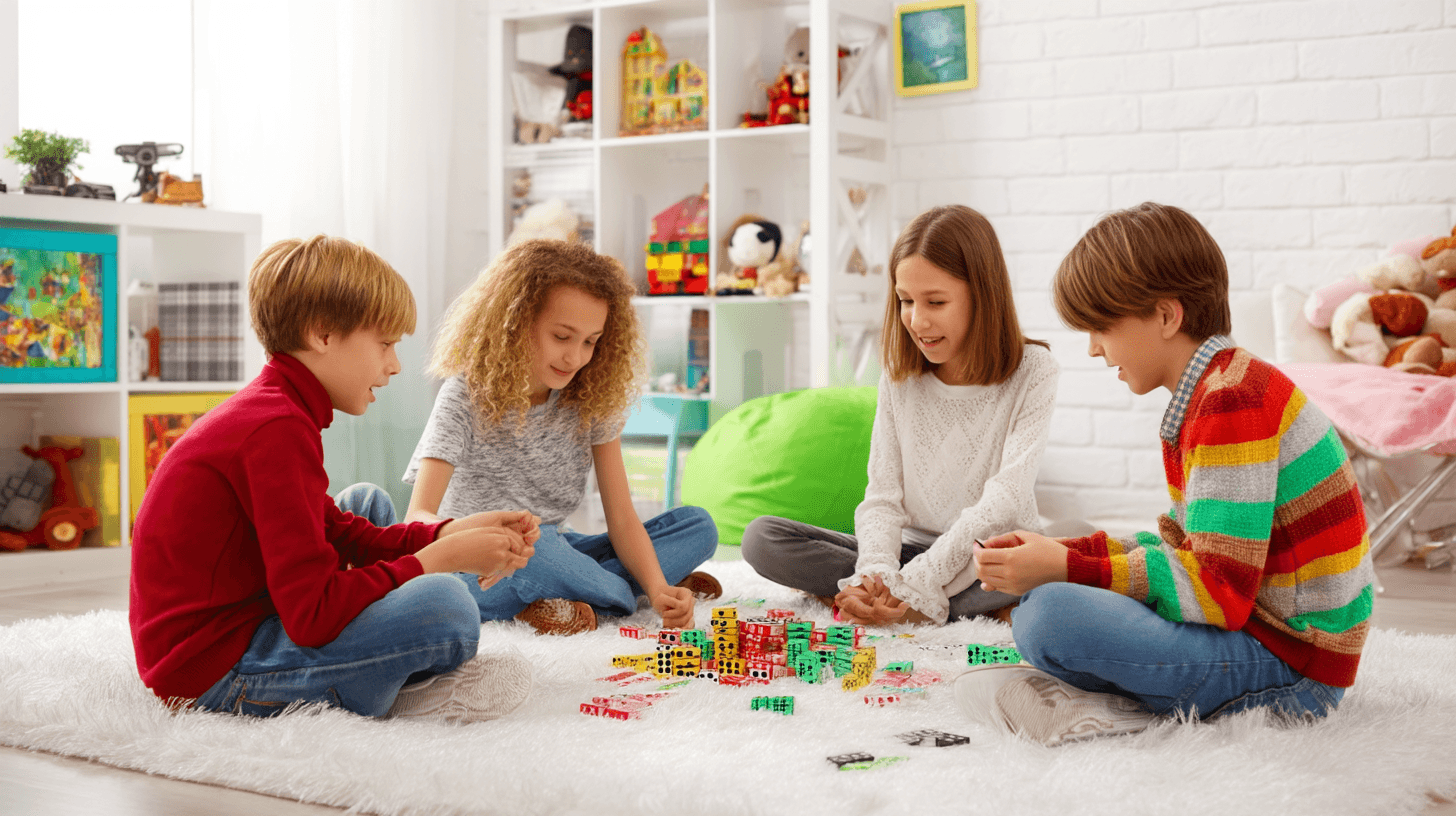
Below are examples of simple English conversation covering different daily scenarios:
- Morning Routine
Good morning, Mom!
Good morning, dear. Did you sleep well?
Yes. I had a nice dream!
- At the Playground
What game should we play today?
Let’s play tag!
Okay! You’re it!
- Asking for Help
Can you help me with my homework?
Sure! Let’s start with the first question.
- Meeting a New Friend
Hi! I’m Arjun. What’s your name?
Hi Arjun, I’m Manya. Nice to meet you!
Nice to meet you too!
- Ordering Food
Can I have a burger and a lemonade, please?
Sure! Would you like fries too?
Yes, please!
Creating a Speaking-Friendly Environment
Even outside class, you can build a supportive environment that encourages English conversations:
Ask open-ended questions in English: “What did you play today?”
Celebrate small wins: Compliment efforts, not just accuracy.
Use flashcards or picture books to spark discussions.
Introduce English rhymes and songs to build rhythm and pronunciation.
Create a Home Where English Flows Naturally
Your child’s confidence starts with simple, everyday conversations and PlanetSpark makes it easy.
Book a Free Spoken English Class Now
Tips to Teach Simple English Conversation to Kids

Teaching kids to speak fluent English doesn’t require a classroom it starts right at home. Here’s how:
1. Daily Role-Play
Set 10 minutes daily for role-playing simple scenes like:
Visiting the doctor
Buying groceries
Talking to a friend
2. Use English Around the House
Encourage kids to use phrases like:
Can I drink water?
Where is my book?
I am hungry.
3. Read Aloud
Read simple storybooks and act out characters. This builds vocabulary and intonation.
4. Ask Open-Ended Questions
Instead of “Did you have fun?”, ask “What did you do today?” This encourages detailed answers.
5. Watch English Shows
Watch age-appropriate English cartoons or videos with subtitles. Pause and repeat sentences together.
How PlanetSpark Makes Kids Fluent English Speakers
PlanetSpark’s Spoken English Program is not just about repeating phrases it’s about making kids confident speakers through structured, real-life English communication training.
- Live, Interactive Conversations Every Day: Unlike passive apps, our sessions involve daily live conversations based on real situations school, travel, interviews, family, etc.
- Accent Neutralization & Clear Speech: We focus on reducing mother tongue influence, teaching phonetics, and training pronunciation from an early stage.
- Lexical Resource Building: Kids learn vocabulary in context not in isolation. They master word groups, idioms, and phrases through natural dialogue.
- Instant Feedback & AI Fluency Reports: With AI-backed analysis, your child gets real-time feedback on grammar, tone, and sentence fluency after every session.
- Speaking Confidence Trackers: Progress is tracked and shared with parents, making growth visible and motivating
Why Are Simple English Conversations Important for Kids?
English conversation for kids helps children learn how to express their thoughts confidently in everyday situations. Regular conversation for kids builds vocabulary, improves pronunciation, and strengthens sentence formation. Practicing daily conversation for kids from an early age makes English feel natural and boosts long-term fluency.
1. Builds Vocabulary and Sentence Structure
Children grasp new words faster when they use them in context. Through repeated conversations, they naturally learn how to frame sentences correctly. Conversing in English naturally exposes children to learn sentence structures, correct pronunciation & new types of vocabulary. With repetition, these elements become second nature.
2. Boosts Confidence
The more a child speaks, the more comfortable they become. Short and simple conversations help reduce hesitation and build public speaking confidence. When children engage in simple dialogues, they learn to express themselves clearly and confidently. A child who can say, “Hello! My name is Riya. What’s your name?” has already taken the first step toward social independence.
3. Improves Pronunciation and Listening
Speaking English daily sharpens listening skills and teaches correct pronunciation something that formal grammar lessons often miss. Communication is two-way. Practicing conversations improves not only speaking but also listening comprehension, helping children follow instructions and ask questions.
4. Lays the Foundation for Fluency
Children who start early with everyday dialogue tend to develop better fluency, accent clarity, and communication skills from the early years of their growth.
Common Challenges Children Face
Shyness or fear of making mistakes
Limited vocabulary
Inconsistent grammar
Lack of practice partners
That’s where structured spoken English classes come in handy. PlanetSpark offers personalized, interactive classes that address each of these concerns.
Benefits of Early English Speaking Skills
When children develop English speaking skills early, they enjoy:
Better performance in school
Improved social interactions
Increased self-esteem
Stronger future academic and career prospects
Games to Improve English Conversations

“What Am I?” Game: One player describes an object; the other guesses.
“Finish the Sentence”: Start a sentence like “I like to…” and let your child complete it.
“Would You Rather”: Ask fun choices like “Would you rather fly or be invisible?”
“Story Chain”: Build a story together, one line at a time.
From greetings to full conversations watch your child grow into a confident communicator.

Conclusion
Developing the ability to carry out a simple conversation for kids in English is not just about learning a language it's about building confidence, clarity, and connection.
Whether your child is a complete beginner or already has a base, the right support can make a world of difference. With PlanetSpark’s expert-led Spoken English Course, your child gets structured guidance, live interactions, and measurable outcomes all from the comfort of home.
Frequently Asked Questions
A. Easy conversation topics for kids are familiar, everyday subjects that children feel comfortable talking about. These topics help them speak without fear or hesitation. Some easy conversation topics include:
- Favorite cartoons, toys, or games
- Food they like or dislike
- School, teachers, and friends
- Family members and pets
- Daily routines like morning or bedtime
- Hobbies such as drawing, dancing, or singing
These topics encourage natural speaking and make English conversations fun and stress-free for kids.
Here are 10 simple and commonly used English words that kids can learn and use in daily conversations:
- Hello
- Thank you
- Please
- Sorry
- Yes
- No
- Happy
- Play
- Eat
- Help
These basic words form the foundation of everyday English communication for children.
To start an English conversation with kids, keep it friendly, simple, and relatable. Begin with short sentences and familiar topics.
You can start with:
- “Hello! How are you?”
- “What is your name?”
- “What did you do today?”
- “Do you like this game?”
Using a warm tone and encouraging responses without correcting mistakes helps children feel confident and willing to speak more.
A. Example 1: Greeting
Adult: Hello! What is your name?
Child: My name is Riya.
Adult: Nice to meet you, Riya.
Child: Nice to meet you too.
Example 2: At School
Adult: Do you like your school?
Child: Yes, I like my school.
Adult: What do you like the most?
Child: I like playing with my friends.
A. Making English a part of daily life helps children learn naturally and speak with confidence over time. Here are the simpler ways to talk with kids in English effectively:
- Use short and clear sentences
- Speak slowly and repeat important words
- Use daily-life situations like meals or playtime
- Ask open-ended questions instead of yes/no questions
- Encourage speaking without correcting every mistake
Great topics include greetings, daily routine, school activities, hobbies, family, weather, and favorite foods. These topics are familiar and help children relate language to real-life experiences.
Children can start learning spoken English as early as 3 to 4 years old. At this age, they are naturally curious and absorb language quickly through play and interaction.
Use role-plays, English storybooks, interactive games, songs, and cartoons. Ask open-ended questions and encourage your child to describe things around them in English.