
Quantity and Plurals Worksheet for Grade 1 Kids
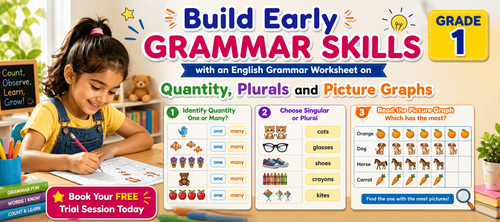

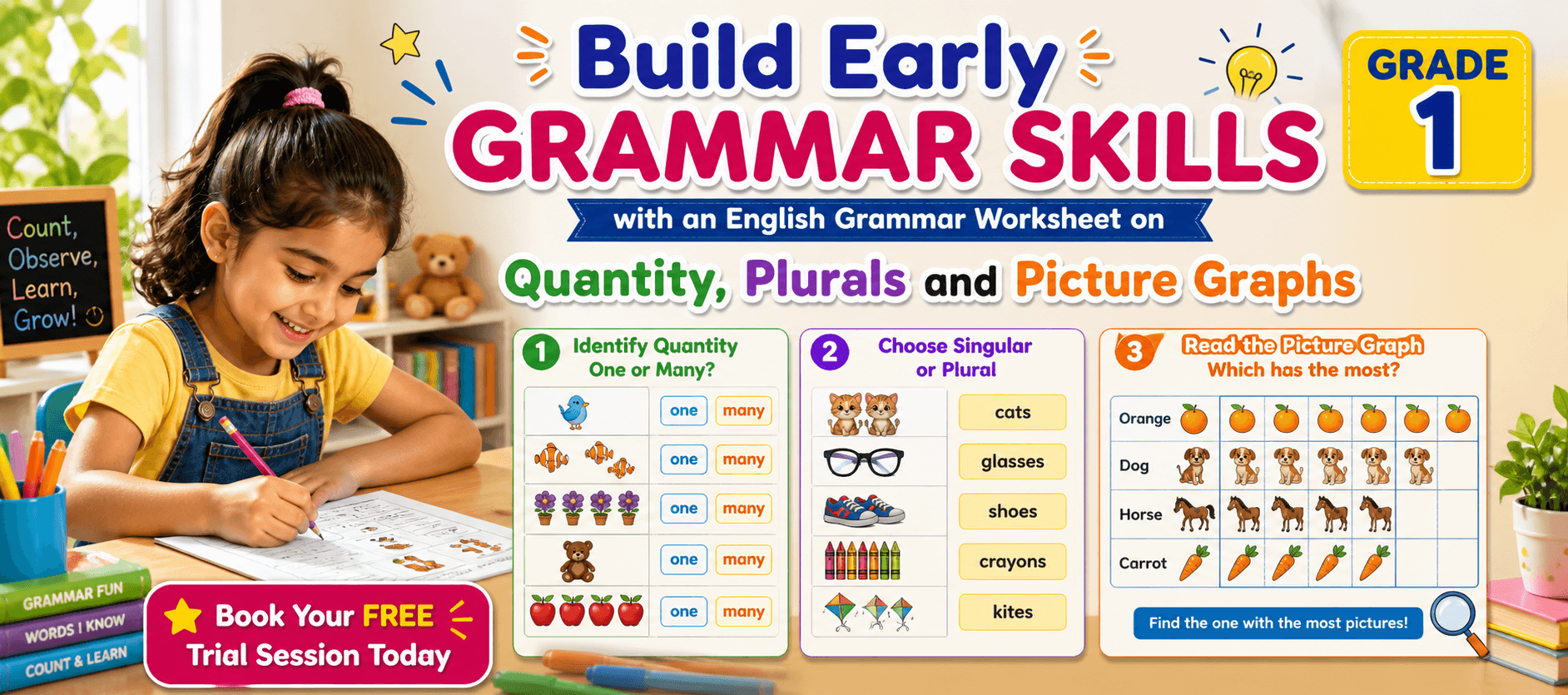
Build Early Grammar Skills with an English grammar worksheet for Grade 1 on Quantity, Plurals and Picture Graphs
Learning grammar becomes exciting when young learners explore language through pictures, counting activities, and fun visual exercises. In Grade 1, children begin understanding how to describe numbers, identify singular and plural objects, and read simple picture graphs. These foundational skills help students connect language learning with observation and logical thinking.
This English grammar worksheet for Grade 1 on Quantity, Plurals and Picture Graphs introduces learners to real-life visual situations. Students look at pictures, count objects, identify whether items are one or many, choose correct singular or plural words, and interpret basic picture graphs. Such activities make grammar meaningful because children learn by seeing, thinking, and answering rather than memorizing rules.
Download these English grammar worksheets and practice regularly to strengthen your language skills and build a strong foundation. You can also book a free trial to get expert guidance and improve your reading, writing, and comprehension abilities. The worksheets are designed in a simple and structured way to help K–8 students learn grammar concepts easily and use them confidently in everyday communication.
What Is the Topic?
The topic Quantity, Plurals and Picture Graphs helps Grade 1 students understand how language connects with numbers and visual information.
Students learn how to identify quantity words such as one and many by observing pictures carefully. They also practice recognizing singular and plural forms of nouns. A singular noun refers to one object, while a plural noun refers to more than one object.
Another important part of the worksheet introduces picture graphs. Picture graphs help children read information visually and answer questions by comparing images. Instead of reading long text, students learn to observe pictures and identify which item appears the most.
By completing this worksheet, students learn to count, describe quantities, recognize plural words, and interpret simple visual data.
What’s in This Worksheet?
1. Identifying quantity from pictures where students decide whether objects shown are one or many.
2. Choosing singular or plural words based on picture clues.
3. Reading simple picture graphs and identifying items with the most pictures.
4. Multiple-choice questions that encourage observation and logical thinking.
5. Visual learning activities that strengthen early grammar and comprehension skills.
6. Structured exercises arranged step by step to support independent practice and exam readiness.
Definitions, Examples, Techniques, and Tips
Definitions
Quantity refers to how many objects are present in a picture.
Singular means one object.
Plural means more than one object.
A picture graph is a visual chart that uses images to represent information.
Examples from the worksheet
Students observe pictures showing birds, fish, teddy bears, balls, and oranges to identify quantity.
Pictures of objects such as cats, glasses, shoes, crayons, and kites help learners choose between singular and plural words.
Picture graphs of fruits, pets, flowers, and vegetables help students determine which item appears the most.
Techniques
Carefully observe each picture before choosing an answer.
Count the number of objects shown.
Look for clues that show whether an object is single or multiple.
Compare picture groups carefully when reading graphs.
Quick learning tips
Always count before answering.
Look closely at small details in pictures.
Read all answer choices before selecting one.
Take time to compare images when finding the most pictures.
Why Is It Important to Learn This?
Learning quantity and plurals builds the foundation of grammar understanding in early grades. When children understand the difference between one and many, they can form correct sentences and describe objects accurately.
Picture graph reading develops observation and comparison skills. These abilities help students organize information and improve comprehension. Early exposure to visual data also prepares children for future learning in mathematics, language, and environmental studies.
This topic strengthens vocabulary, improves sentence formation, and supports confident communication.
Where Will This Knowledge Help You?
Students use these skills while answering grammar questions in school exams.
They help children describe objects correctly during speaking activities.
Picture graph reading improves classroom participation when teachers discuss visual information.
These concepts also help students understand instructions, worksheets, and classroom discussions more easily.
How to Use This Worksheet?
1. Attempt all questions independently by carefully observing each picture.
2. Read each question slowly and count objects before selecting answers.
3. Review the completed worksheet using the answer key provided below.
4. Compare answers carefully because solutions follow the exact worksheet order.
5. Practice regularly to build confidence in identifying quantity, plurals, and picture graphs.
Important Tips and Tricks
1. Do not guess answers without counting the objects.
2. Remember that singular words describe one item and plural words describe many items.
3. When reading picture graphs, compare all options before choosing the one with the most pictures.
4. Read every option carefully even if the answer seems obvious.
5. Focus on observation skills because picture-based questions test attention to detail.
Complete Answer Key
Exercise No. 1
Identifying Quantity From Pictures
1. one
2. many
3. many
4. one
5. many
Exercise No. 2
Choose Singular Or Plural From Pictures
1. cats
2. glasses
3. shoes
4. crayons
5. kites
Exercise No. 3
Reading A Simple Picture Graph
1. Orange
2. Dog
3. Horse
4. carrot
Practicing with this English grammar worksheet for Grade 1 on Quantity, Plurals and Picture Graphs helps young learners become confident observers and accurate language users. By regularly working with picture-based exercises, students strengthen counting skills, vocabulary understanding, and grammar accuracy at an early stage. Consistent practice encourages curiosity, improves classroom performance, and builds strong learning habits that support future academic success.