
Class 5 English Worksheet on Character Traits

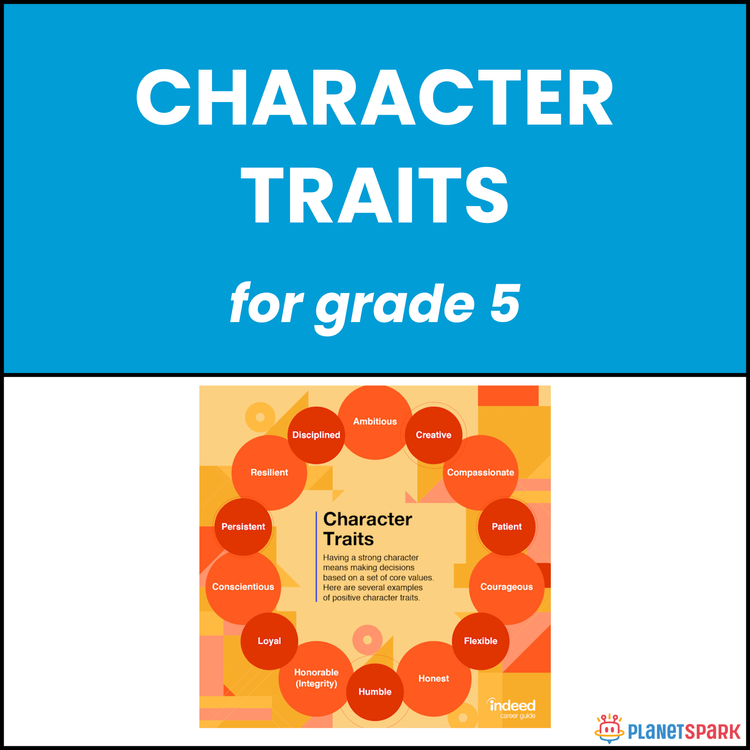
Class 5 English Worksheet on Character Traits
See Beneath the Surface: Character Traits Exploration for Class 5
This Class 5 character traits worksheet helps students understand how authors reveal a character’s personality through actions, thoughts, feelings, and appearance.
Using a clear explanation on page 3 and a detailed story about Maya on page 4, learners discover the difference between *internal traits* (brave, patient, hardworking, honest) and *external traits* (appearance-based).
The worksheet includes five structured exercises: reading comprehension with trait identification, matching traits, choosing the correct personality trait, describing how traits appear in behaviour, and writing a character description.
Students learn to:
• Identify personality traits from stories
• Use context clues to justify trait choices
• Understand internal vs. external traits
• Describe how traits influence actions
• Build rich character descriptions for stories
This worksheet builds strong reading comprehension, inference skills, and expressive writing abilities.
------------------------------------
ANSWER KEY (Included for Parents & Teachers)
Exercise 1 – Answer the Questions (Based on Maya’s Story)
1. She shows *helpfulness* when she helps her classmates.
2. Her patient explanations show she is *patient* and *kind*.
3. Feeling excited shows she is *enthusiastic* and loves challenges.
4. Practising puzzles daily shows she is *hardworking*.
5. When she keeps trying, she shows *determination* / *perseverance*.
6. Her calm reaction shows she is *patient* and *emotionally balanced*.
7. The sentence: “She felt proud of her effort and determination.”
8. She feels proud because she values *effort* more than winning.
9. “Maya kept experimenting with new ideas” indicates determination.
10. “She practised different puzzles every evening” shows she is hardworking.
Exercise 2 – Match Each Sentence to the Correct Trait
1. Riya waited calmly… → Patient
2. Aarav returned the wallet… → Honest
3. Meena practiced daily… → Hardworking
4. Devansh shared snacks… → Generous
5. Tara uses good manners… → Polite
6. Kabir assists the teacher… → Helpful
7. Noor believes she can solve it… → Confident
8. Arjun faced the climbing wall… → Brave
9. Asha feeds her pet on time… → Responsible
10. Sia stays after class… → Kind / Helpful (worksheet key implies Helpful, but Kind also fits)
Exercise 3 – Choose the Correct Character Trait
1. adventurous
2. honest
3. patient
4. helpful
5. empathetic
6. responsible
7. kind
8. trustworthy
9. friendly
10. patient
Exercise 4 – Describe How Each Trait Might Look (Samples)
1. Brave: Faces challenges without fear; stands up for others.
2. Helpful: Offers assistance without being asked.
3. Selfish: Puts own needs first; doesn’t like sharing.
4. Kind: Speaks gently; does small acts of care.
5. Responsible: Completes tasks on time; keeps promises.
6. Lazy: Avoids work; delays tasks.
7. Honest: Tells the truth even when difficult.
8. Kind: Helps others feel included and safe.
9. Curious: Asks many questions; loves exploring new ideas.
10. Confident: Believes in abilities; speaks clearly.
Exercise 5 – Describe a Character (Sample Paragraph)
My character is Aarya. She has bright brown eyes and a warm smile. Aarya is *brave* and *kind*, always standing up for friends and helping anyone in need. One afternoon, when a classmate felt scared during a storm drill, Aarya stayed beside her and comforted her until she felt safe again. Her calm voice and thoughtful actions show how caring she truly is.
------------------------------------
Help your child build stronger reading comprehension and character analysis skills with engaging, story-based learning!
Unlock deeper understanding of stories and personalities through expert-guided exercises—start today!
🔖Book a free trial!
Frequently Asked Questions
Character traits describe how a character thinks, feels, and behaves, helping students understand motivation and personality in stories.
Recognizing traits helps children predict actions, analyze conflicts, and interpret the deeper meaning of a narrative.
Internal traits show a character’s emotions and values, while external traits describe appearance or actions that others can observe.