
Class 5 Writing Worksheet on Personal Narratives

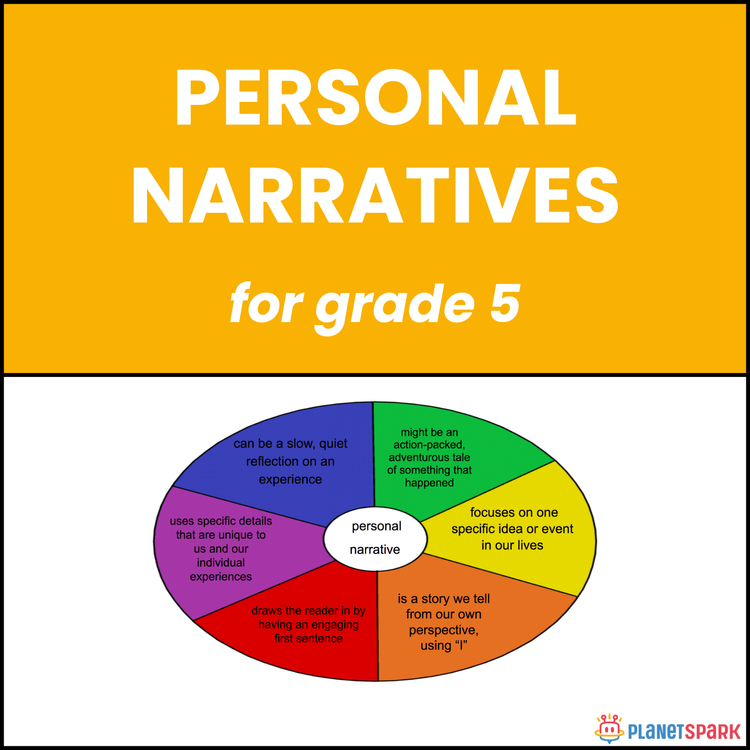
Class 5 Writing Worksheet on Personal Narratives
Moments That Matter: Personal Narrative Writing for Class 5
This Class 5 worksheet helps students turn real-life experiences into vivid personal narratives.
Pages 3–8 guide learners through a complete narrative-writing journey using strong starters, sensory details, dialogue practice, meaningful endings, and moment descriptions.
Students learn how to develop a story based on their own memories, using clear structure, emotions, actions, thoughts, and descriptive language.
Students learn to:
• Continue story starters into full narrative paragraphs
• Add sensory detail (sight, sound, smell, taste, touch)
• Strengthen writing with inner thoughts and outer dialogue
• Craft meaningful narrative endings
• Describe personal moments vividly and reflectively
This worksheet builds expressive writing, emotional insight, sequencing skills, and narrative creativity.
------------------------------------
ANSWER KEY (Included for Parents & Teachers)
Exercise 1 – Story Continuations
(Open-ended; sample completions provided for reference)
Sample for Starter 1:
The moment I stepped onto the stage, I felt my hands shake…
…but when I spotted my parents smiling in the front row, courage rushed back. I took a deep breath, spoke my first line, and the whole auditorium grew quiet. By the end, the applause made every second worth it.
Sample for Starter 4:
The loud crash made me jump, and then I ran to see what happened…
…I found my cat sitting proudly beside a broken flower vase. I wanted to scold her, but her confused little face made me laugh instead.
(Any five starters may be chosen; answers will vary.)
Exercise 2 – Add Sensory Details (Sample answers)
1. I walked into the old library.
→ Dusty shelves lined the walls, and the faint smell of worn paper filled the silent room.
2. The first day of school made me nervous.
→ My palms felt sweaty as voices buzzed around me and new faces stared curiously.
3. We opened the picnic basket.
→ The aroma of fresh sandwiches and sweet mango juice drifted into the warm air.
4. I tried my first roller coaster ride.
→ The wind roared in my ears as the world blurred past in dizzy loops.
5. The power went out suddenly.
→ Darkness swallowed the room, and the hum of the fan faded into silence.
6. My cousin surprised me at the airport.
→ I heard my name shouted across the hall before I saw her waving excitedly.
7. The waves crashed on the beach.
→ Cool droplets sprayed my face as the salty breeze filled my nose.
8. I entered the school science fair.
→ Bright lights, colorful posters, and excited chatter surrounded me.
9. The rain started without warning.
→ Cold drops hit my skin, and the smell of wet earth rose instantly.
10. I tasted a dessert I had never eaten before.
→ The creamy sweetness melted on my tongue with a hint of cinnamon.
Exercise 3 – Add Inner Thoughts + Dialogue (Samples)
1. I lost my notebook.
→ “Where did I keep it?” I muttered. *I hope the teacher doesn’t ask for homework today.*
2. I finally finished my project.
→ “Yes! I did it!” I shouted. *All those late nights were worth it.*
3. I slipped during the race.
→ “Ouch!” I cried. *Get up… keep running… you can still finish!*
4. I found a tiny puppy near my house.
→ “Hey there, little one,” I whispered. *I can’t leave you alone out here.*
5. I forgot my lunch at home.
→ “Mom is going to laugh at me,” I sighed. *Maybe I can share with a friend.*
6. I heard someone call my name.
→ “Who’s there?” I asked. *That voice sounded familiar…*
7. I won a small prize in class.
→ “Thank you!” I said proudly. *I can’t wait to show this to Mom.*
8. I made a new friend on the bus.
→ “Want to sit together tomorrow?” I asked. *I think this will be a great friendship.*
9. My kite got stuck in a tree.
→ “Not again!” I groaned. *How am I going to reach it?*
10. I broke my favorite pencil.
→ “Oh no!” I said softly. *That pencil meant so much to me.*
Exercise 4 – Choose or Create Endings (Sample responses)
1. You got lost in the mall. How did it end?
→ A kind security guard helped me locate my parents.
2. You tried cooking something new. How did it end?
→ It burned a little, but my family still enjoyed it.
3. You rescued an animal. How did it end?
→ The animal was safely taken to a shelter.
4. You had an argument with a friend. How did it end?
→ We apologized and decided to listen better next time.
(Students may create their own endings for all 10.)
Exercise 5 – Describe the Moment (Samples)
1. Your first day in a new class
→ My heart raced as I stepped inside. Everyone looked at me, but a girl smiled and invited me to sit beside her, making the day feel lighter.
2. A time you helped someone
→ I held the heavy door for an elderly man. He thanked me warmly, and I felt proud of my small act of kindness.
3. A moment when you lost something important
→ Panic rushed through me when I couldn’t find my wallet. After retracing my steps, I spotted it under a bench and felt relief wash over me.
------------------------------------
Help your child write meaningful stories from real-life experiences with confidence and clarity!
Build narrative depth and expressive writing skills with expert-led guidance—start your journey today!
🔖Book a free trial!
Frequently Asked Questions
A personal narrative is based on real experiences and is written in first person using “I.”
Encouraging them to describe thoughts, feelings, and reactions helps make their stories more meaningful.
A structured sequence helps readers follow the event and understand how the experience changed the writer.