
Online Vs Offline Education for Communication Skills for Kids | PlanetSpark
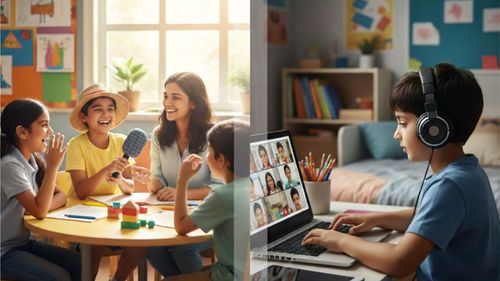

Table of Contents
- Offline Education vs Online Education for Kids
- Online Vs Offline Education: Core Differences Explained
- Pros and Cons of Offline vs Online Education
- Why PlanetSpark Is a Smart Choice for Online Communication S
- Confidence Turned Talent into Award-Winning Expression
- Types of Online Classes PlanetSpark Provides
- Role of Parents in Online Communication Learning
- PlanetSpark: The Leading Hub for Powerful Communication Skil
- Empowering Young Voices for a Confident Future with PlanetSp
Unsure whether online or offline education will truly help your child become a confident communicator?
Online vs offline education influences how effectively children build communication skills in today’s learning environment. This guidance explains the core differences, benefits, and limitations of both approaches to help parents make informed choices. It highlights what kids need to develop confidence, clarity, and expression. It also shows how PlanetSpark supports children through structured lessons, expert mentors, and engaging activities that strengthen speaking, storytelling, and presentation skills for real-life success.
Offline Education vs Online Education for Kids
Understanding offline and online education helps parents choose the right learning mode for children’s communication skills by comparing structure, interaction levels, flexibility, and personalised speaking practice opportunities.
What Is Offline Education for Communication Skills?
Offline education refers to the traditional classroom-based learning system where children attend school or coaching centres in person. Lessons are delivered face-to-face by teachers, usually following a fixed curriculum and schedule.
Key Characteristics of Offline Education
Physical classrooms with peers and teachers.
Fixed timetables and locations.
Group-based learning.
Standardised teaching pace.
Limited individual attention
How Offline Education Builds Communication Skills
Offline education helps children develop communication skills through:
Classroom discussions
Group activities
Oral presentations
Daily peer interactions
Children learn social cues, body language, and turn-taking naturally. However, large class sizes often mean less personalised speaking practice, especially for shy or introverted children.
What Is Online Education for Communication Skills?
Online education uses digital platforms to deliver learning through the internet. Classes can be live or recorded and are accessible from home using laptops, tablets, or smartphones.
In recent years, modern online education platforms like PlanetSpark have redefined how children learn spoken English and communication skills by combining live interactive sessions, personalised coaching, and smart digital tools to offer an engaging and flexible learning experience at home.
Key Characteristics of Online Education
Live or recorded virtual classes.
Learning from anywhere.
Flexible scheduling.
Small group or one-to-one sessions.
Technology-enabled feedback and practice.
How Online Education Supports Communication Skills
Online learning focuses heavily on:
One-on-one speaking time.
Structured speaking activities.
Instant feedback.
Confidence-building through guided practice
Unlike traditional classrooms, many online programs are designed specifically for communication skills, rather than treating speaking as a secondary subject.
Online Vs Offline Education: Core Differences Explained
Understanding the difference between online education and offline education helps parents make informed choices.
1. Learning Environment
Offline education: Physical classroom with many students
Online education: Virtual classrooms, often with fewer students
Want your child to practise real conversations instead of just listening? Explore PlanetSpark’s interactive communication programmes!
2. Personal Attention
Offline: Limited due to large class sizes
Online: High, especially on platforms offering small groups or one-on-one classes
3. Flexibility
Offline: Fixed schedules, travel required
Online: Learn anytime, anywhere
4. Communication Practice
Offline: Shared speaking time, less individual focus
Online: Dedicated speaking turns for every child
5. Use of Technology
Offline: Minimal tech integration
Online: AI tools, recordings, interactive activities
When comparing online or offline learning, communication skills often flourish faster in environments where children get more speaking time and personalised guidance.
Pros and Cons of Offline vs Online Education
Weighing the advantages and limitations of offline and online education helps parents understand how each learning mode impacts children’s communication skills, confidence, practice opportunities, and overall speaking development.
Pros of Offline Education for Communication Skills
Offline education has several strengths, especially for younger learners.
Face-to-Face Social Interaction: Children naturally learn body language, expressions, and social cues through in-person interactions.
Structured Discipline: Fixed schedules encourage routine and consistency.
Peer Learning: Kids observe and learn from classmates during group discussions and activities.
School Culture: Assemblies, debates, and stage events provide exposure to public speaking.
Limitations of Offline Education
Despite these benefits, offline education often struggles with:
Large class sizes.
Limited individual speaking time.
One-size-fits-all teaching.
Less focus on spoken English as a skill.
See how personalised feedback helps children speak clearly and confidently in PlanetSpark’s live classes!
Pros of Online Education for Communication Skills
When designed well, online education offers powerful advantages.
Personalised Speaking Practice: Leading online platforms like PlanetSpark use live, real-time classes with expert mentors, guided conversations, and AI-powered pronunciation feedback by making practice more personalised than typical classroom drills.
Flexible Learning Anywhere: Children can attend classes from any city or town without traveling. This is especially helpful for busy families or those living in areas with limited quality coaching options.
Confidence for Shy Children: Many kids feel less anxious speaking online than in crowded classrooms, allowing confidence to build gradually.
Customised Learning Pace: PlanetSpark’s structured curriculum adapts to each child’s level, ensuring no child feels rushed or left behind.
Use of Smart Technology: Online education platforms use recordings, feedback tools, and interactive exercises to reinforce learning beyond class time.
Cons of Online Education (And How Good Platforms Solve Them)
Screen Time Concerns: Excessive screen time worries parents. However, high-quality platforms keep sessions interactive, short, and engaging rather than passive.
Reduced Physical Interaction: While physical presence is missing, platforms like PlanetSpark focus on live discussions, debates, and role-play to maintain human connection.
Self-Discipline Required: Good platforms support parents with progress tracking, reminders, and mentor feedback.
Why PlanetSpark Is a Smart Choice for Online Communication Skills
Among various online education platforms, PlanetSpark stands out as a focused, child-centric solution for developing strong communication skills in children.
What Makes PlanetSpark Different?
Live one-to-one or small-group classes with certified communication coaches: PlanetSpark conducts live, interactive sessions where every child actively speaks in each class, helping them build clarity, confidence, and effective communication habits.
Customised learning paths: The curriculum is tailored to a child’s age, skill level, and communication goals, ensuring steady progress in speaking, listening, and expression.
Looking for flexible learning that fits your child’s routine? Experience PlanetSpark’s expert-led online communication sessions!
AI-supported communication practice and instant feedback: Children receive real-time feedback on pronunciation, fluency, vocabulary, and sentence structure, allowing them to improve communication skills quickly and accurately.
Interactive clubs and activities: Storytelling, debates, role-plays, presentations, and communication challenges provide practical opportunities for children to express ideas confidently and creatively.
Structured communication and confidence-building programs: PlanetSpark’s programs are specially designed for kids aged 4–14, focusing on spoken English, public speaking, critical thinking, and overall communication development.
Free demo session: Parents can experience PlanetSpark’s communication-focused teaching approach, class interaction, and learning outcomes before enrolling their child.
Online or Offline: Which Is Better for Communication Skills?
There’s no one-size-fits-all answer. Offline learning suits children who enjoy group settings and small class interactions. Online programs like PlanetSpark work better for focused communication development, offering expert-led classes, personalised attention, flexible schedules, and structured spoken English practice that traditional classrooms often lack.
Confidence Turned Talent into Award-Winning Expression
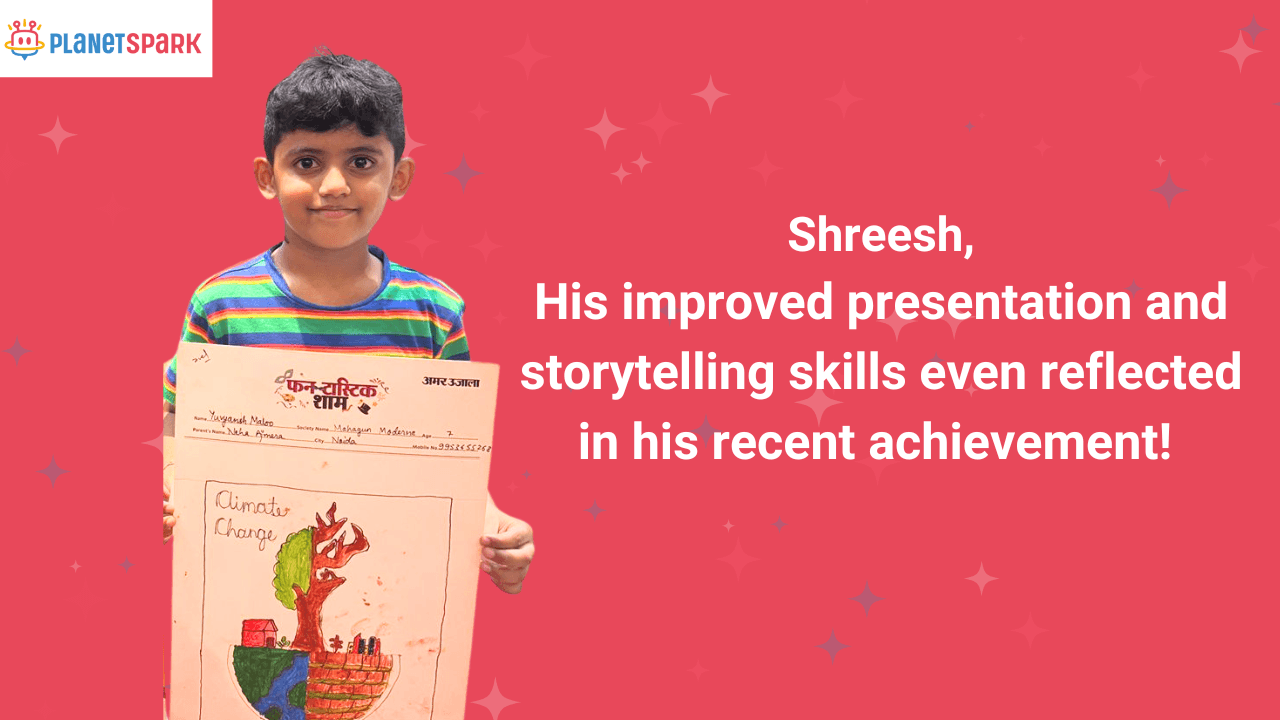
PlanetSpark has helped Shreesh express his ideas creatively and confidently. His improved presentation and storytelling skills even reflected in his recent achievement — winning second place in the Junior Category of a drawing competition on ‘Climate Change’ organized by the Amar Ujala team.
Inspired by Shreesh’s journey? Help your child build confidence, creativity, and strong communication skills to join PlanetSpark and watch their potential shine.
Types of Online Classes PlanetSpark Provides
PlanetSpark offers a wide range of online communication skill classes, including:
1. Spoken English Classes: Focused on fluency, pronunciation, vocabulary, and sentence formation.
2. Public Speaking Classes: Kids learn presentations, speeches, debates, and stage confidence.
3. Creative Writing & Storytelling: Helps children express ideas clearly and creatively.
4. Personality Development Programs: Build confidence, leadership, and social communication.
5. Competitive Exam & Performance Preparation: Supports kids preparing for competitions, interviews, and showcases.
Each class is interactive, live, and led by trained experts, not pre-recorded videos.
Role of Parents in Online Communication Learning
Parents play an important role in maximizing online education benefits by:
Encouraging practice: Parents motivate children to practice speaking daily, helping build confidence, fluency, and clear communication habits.
Attending demo sessions: By attending demo sessions, parents understand teaching methods and support their child’s communication journey effectively.
Reviewing progress reports: Regularly checking progress reports helps parents track improvement and identify areas needing additional communication practice.
Creating a supportive speaking environment at home: Parents create opportunities for conversations at home, encouraging children to express ideas freely without fear.
PlanetSpark actively involves parents through regular feedback, performance updates, and guidance to support consistent communication skill development.
PlanetSpark: The Leading Hub for Powerful Communication Skills
PlanetSpark empowers children to become clear, confident, and effective communicators through personalised training and interactive learning methods. With expert mentors and engaging practice modules, students develop articulation, fluency, active listening, and expressive skills that shape their communication for life.
Why PlanetSpark Is the Best Choice for Communication Skills Training
1:1 personalised communication coaching focused on improving clarity, tone, expression, and confident interaction.
Certified communication coaches guide children through structured, engaging, and practical learning sessions.
Conversation-building and expression modules that help students communicate ideas confidently in both formal and informal settings.
Live discussions, dialogues, and group interactions that enhance listening skills, quick thinking, and respectful communication habits.
SparkX AI video-based feedback offering detailed insights on voice, tone, pace, and clarity for continuous improvement.
Gamified communication learning with SparkBee to strengthen vocabulary, sentence formation, and linguistic accuracy.
AI-led speaking and conversation practice sessions to help students improve articulation and expression independently anytime.
Creative clubs, storytelling events, and communication showcases give children real platforms to practise interaction and express ideas effortlessly.
Empowering Young Voices for a Confident Future with PlanetSpark
Strong communication shapes how children express ideas, build relationships, and succeed academically and socially. When learning environments encourage regular speaking, thoughtful feedback, and confidence-building activities, children naturally grow into clear, expressive, and self-assured communicators who are ready to face real-world challenges.
PlanetSpark brings this vision to life through expert-led live classes, personalised guidance, and engaging practice that keeps children motivated. With a supportive learning ecosystem for both kids and parents, PlanetSpark helps young learners find their voice, speak with confidence, and step into a brighter, more expressive future.
Also Read:
Intelligibility in Communication: Speak Clearly with PlanetSpark
Polyphonic Skills: Elevate Your Voice With PlanetSpark Coaching
Frequently Asked Questions
Communication skills help children express ideas, build relationships, and develop confidence. They lay the foundation for success in both academics and social interactions.
Children begin learning communication naturally from age 2 onwards. By ages 5 to 7, parents should actively help them express complete thoughts.
Online classes provide focused speaking opportunities, personalised feedback, and guided practice in small groups or one-to-one settings, allowing children to speak more frequently, gain confidence, and improve fluency faster than crowded classrooms.
PlanetSpark offers live interactive classes with certified coaches, personalised learning paths, and engaging speaking activities like storytelling and debates, ensuring every child practices regularly and develops confidence, clarity, and effective communication skills.
Yes, structured communication programs help shy children gradually build confidence through supportive environments, guided speaking practice, positive feedback, and activities designed to encourage expression without fear or pressure.
Parents trust PlanetSpark for its expert mentors, interactive live classes, customised curriculum, AI-supported feedback, and regular progress updates that ensure visible improvement in their child’s confidence and communication abilities.