
Learn Ordinal Numbers Easily and Build Strong Math Basics with PlanetSpark
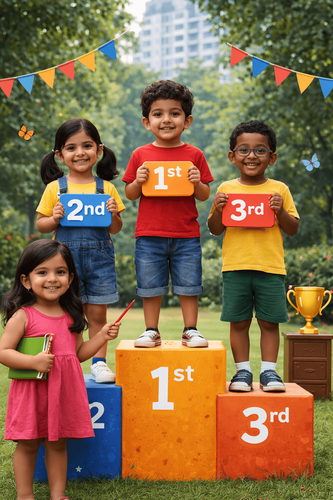

Numbers help children understand the world around them. Kids use numbers when they count toys, line up for games, or talk about who finished first in a race.
One important concept children learn early in math is ordinal numbers. But what are ordinal numbers and how do we use them?
Ordinal numbers show the position or order of things in a sequence. For example, in a race, the person who finishes first is in the 1st position, and the next person is 2nd.
Learning ordinal numbers helps children understand order, ranking, and sequences, which are important skills in both math and daily life.
What Is an Ordinal Number?
An ordinal number shows the position of an object in a sequence rather than the quantity.
For example:
- The first student in line
- The second chapter in a book
- The third player in a game
Ordinal numbers help answer the question:
“Which position?”
Examples:
| Position | Ordinal Number |
|---|---|
| 1 | First (1st) |
| 2 | Second (2nd) |
| 3 | Third (3rd) |
| 4 | Fourth (4th) |
Children use ordinal numbers in everyday situations such as races, competitions, and classroom activities.

Ordinal Number List (1–10)
Here are the first ten ordinal numbers that children usually learn first.
1 – First (1st)
2 – Second (2nd)
3 – Third (3rd)
4 – Fourth (4th)
5 – Fifth (5th)
6 – Sixth (6th)
7 – Seventh (7th)
8 – Eighth (8th)
9 – Ninth (9th)
10 – Tenth (10th)
These numbers help children describe order and ranking.
Example sentences:
- She finished first in the race.
- My classroom is on the second floor.
- He is the third student in the line.
How to Write Ordinal Numbers
Many students ask how to write ordinal numbers correctly.
Ordinal numbers are written by adding letter endings to numbers.
Common endings include:
• 1st – First
• 2nd – Second
• 3rd – Third
• 4th – Fourth
Most ordinal numbers end with “th”, except for a few special cases.
Examples:
- 5th – Fifth
- 6th – Sixth
- 7th – Seventh
- 8th – Eighth
- 9th – Ninth
- 10th – Tenth
Practicing these forms helps children understand how numbers are written in different contexts.
Make maths fun and easy for your child!
With PlanetSpark’s interactive learning, your child can master numbers with confidence.
Book a free trial class today and start their learning journey!
Ordinal Numbers 1-20
After learning the first ten ordinal numbers, children can continue to ordinal numbers 1–20.
11 – Eleventh (11th)
12 – Twelfth (12th)
13 – Thirteenth (13th)
14 – Fourteenth (14th)
15 – Fifteenth (15th)
16 – Sixteenth (16th)
17 – Seventeenth (17th)
18 – Eighteenth (18th)
19 – Nineteenth (19th)
20 – Twentieth (20th)
Understanding these numbers helps children describe longer sequences.
Example:
If twenty students participate in a race, the student who finishes last will be in the 20th position.
Cardinal and Ordinal Numbers
Students often confuse cardinal and ordinal numbers, but they have different purposes.
Cardinal Numbers
Cardinal numbers show quantity.
Examples:
- 3 books
- 5 pencils
- 10 apples
These numbers answer the question:
“How many?”
Ordinal Numbers
Ordinal numbers show position or order.
Examples:
- 1st place
- 4th student in line
- 10th chapter in a book
These numbers answer the question:
“Which one?”
Both types of numbers are important for children learning mathematics and help build a strong foundation in early math concepts.
Common Uses of Ordinal Numbers
Ordinal numbers are not just used in textbooks—they are a part of our everyday life. They help us understand position, order, and sequence in different situations. From competitions to daily routines, ordinal numbers make communication clearer and more structured.
Let’s explore how ordinal numbers are used in real life:
1. Races and Competitions
In sports and competitions, ordinal numbers are used to describe rankings and positions. They help us understand who finished first, second, or third.
Examples:
1st place – winner
2nd place – runner-up
3rd place – third position
You’ll often hear statements like:
“She came first in the race.”
“He secured second position in the competition.”
Why it matters:
Ordinal numbers help clearly identify performance and ranking, making results easy to understand.
2. Dates and Calendars
Ordinal numbers are commonly used when we talk about dates. They help us indicate the exact day of the month.
Examples:
January 1st
July 4th
December 25th
We use them in sentences like:
“My birthday is on the 10th of May.”
“The meeting is scheduled for the 21st.”
Why it matters:
Using ordinal numbers makes dates sound more natural and correct in spoken and written English.
3. Floors in Buildings
When we talk about levels in buildings, we use ordinal numbers to describe the position of each floor.
Examples:
First floor
Second floor
Third floor
You may hear:
“My office is on the 5th floor.”
“The restaurant is on the 2nd floor.”
Why it matters:
Ordinal numbers help people easily locate places and directions inside buildings.
4. Instructions and Step-by-Step Processes
Ordinal numbers are very useful when giving instructions or explaining steps in order.
Example:
First, open the book
Second, read the question
Third, write the answer
Other daily examples:
Cooking recipes
Assembly instructions
Study routines
Why it matters:
They help organize tasks clearly and ensure that steps are followed in the correct order.
5. School and Academic Use
Ordinal numbers are widely used in education.
Examples:
First chapter
Second question
Third lesson
Teachers often say:
“Read the first paragraph.”
“Solve the second problem.”
This helps students understand sequence and structure in learning.
6. Events and Celebrations
Ordinal numbers are used to describe recurring events or special occasions.
Examples:
1st anniversary
10th birthday
25th celebration
Example sentence:
“We celebrated our 5th anniversary.”
Why it matters:
They help express milestones and important events.
7. Daily Conversations
We use ordinal numbers naturally in everyday conversations.
Examples:
“This is my first job.”
“She is the second child in the family.”
“That was the best day of my life—the first time I won.”
This shows how ordinal numbers are deeply connected to real-life communication.
Struggling to make your child understand numbers clearly?
PlanetSpark uses games, activities, and expert guidance to simplify maths concepts.
Join a free trial session and see the difference yourself!
Common Mistakes Children Make While Learning Ordinal Numbers
While learning ordinal numbers, children often get confused between position and quantity. Identifying these mistakes early helps improve understanding.
1. Confusing Cardinal and Ordinal Numbers
Children may say:
“There are 3 students” instead of “He is the 3rd student”
This happens because they mix up “how many” vs “which position”.
2. Incorrect Number Endings
Many children struggle with suffixes like:
Writing 2th instead of 2nd
Writing 3th instead of 3rd
These small errors are common but need regular practice.
3. Difficulty in Understanding Sequence
Some children find it hard to identify:
What comes before or after a number
Who is first, second, or last
This affects their ability to understand order.
4. Memorizing Without Understanding
Children sometimes memorize:
1st, 2nd, 3rd…
But may not understand:
What these numbers actually represent in real life.
How to Avoid These Mistakes
Use real-life examples (race, queue, stairs)
Practice with visual aids and objects
Encourage daily usage in conversations
Use interactive activities instead of rote learning
Correcting these early builds a strong foundation in maths.
Fun Activities to Practice Ordinal Numbers at Home
Learning ordinal numbers becomes more effective when children practice them regularly in a fun way.
1. Line-Up Game
Ask children to stand in a line and ask:
Who is first?
Who is third?
Helps understand real positions.
2. Toy Ranking Activity
Use toys and arrange them:
Ask: “Which toy is second?”
Ask: “Which one is last?”
Makes learning visual and interactive.
3. Stair Counting Activity
While climbing stairs:
“You are on the first step”
“Now the second step”
Helps connect numbers to real movement.
4. Drawing and Coloring
Ask children to:
Color the first object red
Color the third object blue
Improves understanding through creativity.
5. Daily Conversation Practice
Use ordinal numbers in daily life:
“You are the first to finish your homework”
“This is your second attempt”
Reinforces learning naturally.
Pro Tips for Parents and Teachers
To help children master ordinal numbers faster:
Use visual learning tools
Encourage hands-on activities
Avoid pressure—make learning fun
Practice regularly in daily life
Combine math with storytelling and games
When children enjoy learning, they understand concepts better and remember them longer.

How Learning Ordinal Numbers Helps Children
Helps Children Understand Order and Position
Children often learn numbers by counting, but ordinal numbers teach them something different — position and order. Instead of asking “how many,” children begin asking “which one comes first?” or “who is second?”
This shift helps children think about sequences and arrangements, which is an important step in early mathematical thinking.
For example, children begin to understand ideas like:
- Who is first in line
- Which book is the third on the shelf
- Who finished second in a race
Understanding order helps children organize information more clearly.
Builds a Foundation for Future Math Concepts
Ordinal numbers are not just used in simple classroom activities. They support many mathematical concepts that children learn later in school, such as:
- Number patterns
- Sequences
- Skip counting
- Measurement
- Dates and calendars
- Ranking and comparisons
When children understand ordinal numbers early, they find it easier to understand these concepts in higher grades.
Encourages Logical Thinking
Learning ordinal numbers also improves children's logical reasoning skills. They start recognizing relationships between numbers and positions.
For example, children begin thinking about questions like:
- Which number comes before fifth?
- What comes after seventh?
- Who is last in the race?
These small observations strengthen a child’s ability to think logically and solve problems independently.
Give your child a strong foundation in maths and confidence for the future.
With PlanetSpark, learning numbers becomes engaging and effective.
Book a FREE trial now and help your child succeed!
Why Choose PlanetSpark for Maths Learning
PlanetSpark makes early math learning engaging through interactive and concept-based learning methods. Instead of memorizing numbers, children learn to understand how numbers work in real situations.
Concepts like ordinal numbers, counting, and number sequences become easier when children learn through fun activities, games, and guided practice.
What Makes PlanetSpark Ideal for Early Maths Learning
• Children learn numbers through visual and interactive activities
• Math concepts are taught using games and engaging exercises
• Teachers provide personalized guidance for every child
• Real-life examples help children relate math to everyday situations
• Lessons focus on understanding concepts instead of memorization
• Children gain confidence as they begin solving problems independently
With the right guidance and engaging activities, children can develop a strong foundation in mathematics and enjoy learning numbers.
Ordinal Numbers: A Small Concept That Builds Strong Maths Thinking
Ordinal numbers are more than just words like first, second, or third. They help children understand order, position, and sequences, which are important skills in early mathematics. From lining up in class to identifying positions in games or races, kids begin to see how numbers describe the world around them.
When students practise recognising and writing ordinal numbers, they develop stronger logical thinking and better problem-solving abilities. These skills also support other math concepts such as patterns, sequences, and number relationships.
With engaging activities, visual learning, and structured guidance like the programs offered at PlanetSpark, children can build a clear understanding of numbers and develop the confidence needed for future maths learning.
Frequently Asked Questions
An ordinal number tells us the position or order of something in a sequence. Words like first, second, third, and fourth are examples of ordinal numbers. Children often use ordinal numbers to describe positions in a race, a line, or a list.
The ordinal numbers from 1 to 10 are: 1st (first), 2nd (second), 3rd (third), 4th (fourth), 5th (fifth), 6th (sixth), 7th (seventh), 8th (eighth), 9th (ninth), and 10th (tenth). These numbers help children understand the order of objects or people in a sequence.
The first 20 ordinal numbers include: first, second, third, fourth, fifth, sixth, seventh, eighth, ninth, tenth, eleventh, twelfth, thirteenth, fourteenth, fifteenth, sixteenth, seventeenth, eighteenth, nineteenth, and twentieth. Learning these helps children describe longer sequences and positions.
The ordinal numbers from 1 to 100 describe positions from first to one hundredth. They are written with endings like st, nd, rd, or th, such as 1st, 2nd, 3rd, 4th, and so on. These numbers are used to show order in rankings, dates, and steps in instructions.
To write ordinal numbers from 1 to 30, we add special endings to numbers such as st, nd, rd, or th. For example, 1st, 2nd, 3rd, 4th, 5th, 10th, 21st, 22nd, and 23rd. These endings help children understand the position of a number in a sequence.
PlanetSpark helps children understand ordinal numbers and other math concepts through engaging and interactive learning methods. Students learn using visual examples, activities, and guided practice that make numbers easier to understand. This approach helps children build confidence and stronger math foundations.
PlanetSpark offers structured learning programs designed to build strong numeracy and problem-solving skills in children. With interactive lessons, personalized guidance, and engaging activities, students develop confidence while learning foundational math concepts like cardinal numbers.