
Class 2 English Worksheet on Feelings and Emotions

Class 2 English Worksheet on Feelings and Emotions
Feel It, Name It: Feelings and Emotions Vocabulary for Class 2
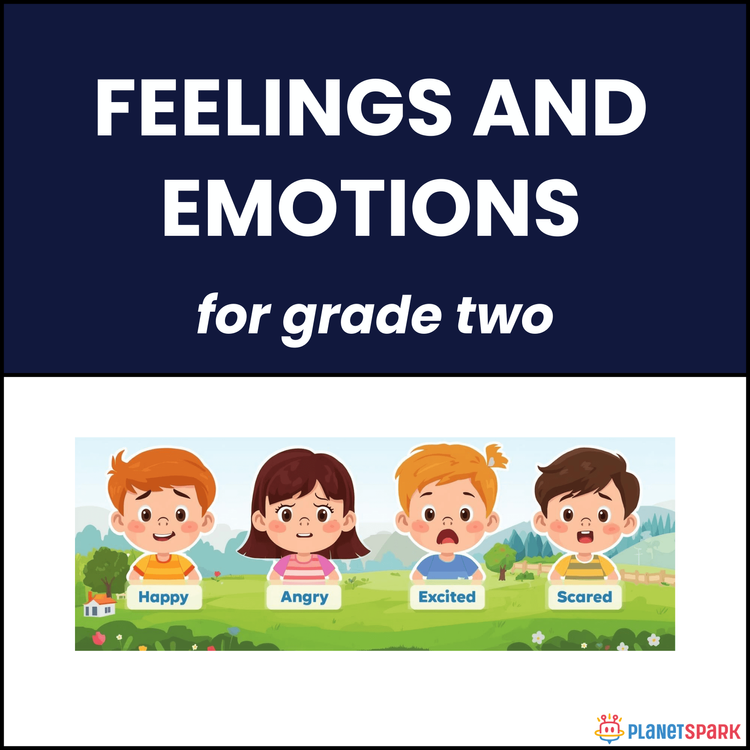
This Class 2 worksheet helps young learners identify, understand, and correctly name feelings and emotions using simple, age-appropriate vocabulary. Through engaging multiple-choice activities, picture-based prompts, and real-life situations, students learn to recognize emotions in themselves and others, building emotional awareness alongside strong language skills.
Why Feelings and Emotions Matter in Grammar?
This worksheet helps learners:
1. Recognize and name common feelings and emotions.
2. Differentiate between objects, actions, and feeling words.
3. Understand mood words that describe emotions over time.
4. Apply emotion vocabulary correctly in everyday situations and stories.
What’s Inside This Worksheet?
This worksheet includes four emotion-focused activities:
Exercise 1 – Identifying Feeling Words
Students choose the correct feeling word from mixed options, such as happy, sad, angry, shy, and tired, helping them separate emotions from objects.
Exercise 2 – Strong Feelings and Emotions
Learners identify deeper emotions like worried, embarrassed, jealous, nervous, and disappointed, expanding emotional vocabulary.
Exercise 3 – Mood Words
Students choose words that describe moods over a period of time, such as cheerful, calm, lonely, peaceful, and nervous, strengthening emotional expression.
Exercise 4 – Feelings in Real-Life Situations
Using short situations, learners choose the correct emotion, like happy, scared, confused, or proud, connecting vocabulary to real experiences.
✅ Answer Key (For Parents & Educators)
Exercise 1 – Feeling Words
1. excited
2. happy
3. sad
4. angry
5. clever
6. scared
7. tired
8. calm
9. shy
10. proud
Exercise 2 – Strong Feelings and Emotions
1. worried
2. proud
3. confused
4. excited
5. nervous
6. embarrassed
7. surprised
8. jealous
9. calm
10. disappointed
Exercise 3 – Mood Words
1. cheerful
2. upset
3. curious
4. grateful
5. excited
6. calm
7. nervous
8. joyful
9. lonely
10. peaceful
Exercise 4 – Feelings in Situations
1. happy
2. sad
3. scared
4. excited
5. confused
6. proud
7. scared
8. worried
9. relieved
10. disappointed
Help your child build emotional vocabulary and confident communication by learning how to name and express feelings correctly.
🔖Book a free trial!
Frequently Asked Questions
They learn by linking emotion words to situations and expressions in a Class 2 English worksheet.
It helps children express thoughts clearly and understand reading passages better.
Structured activities guide children to identify and use feelings words confidently.