
Important Days in August for Kids 2025 | Fun & Learn


August in India is packed with meaningful, Important days in August - cultural festivals, national celebrations, environmental themes, and fun food days. This guide is crafted specifically for kids, helping them learn, celebrate, and grow through hands-on activities, stories, and reflection.
Why Celebrate Important Days in August in India
Celebrating Important days in August in India teaches children:
Cultural awareness (like Raksha Bandhan and Independence Day).
Scientific curiosity (like World Biofuel Day).
Empathy and responsibility (through days such as World Humanitarian Day).
These celebrations help children connect with their heritage while developing creativity, confidence, and global citizenship. Boost creativity and expression with PlanetSpark’s Creative Writing Programs, enabling kids to write imaginative English stories for kids linked to each day.
Key Important Days in August 2025 in India
| Date | Day Name | Kid-Friendly Activity |
|---|---|---|
| Aug 1 | Raksha Bandhan | Make handmade rakhi bracelets and explore sibling bonds. |
| Aug 3 | World Calamity, Fainting & 3D Printer Day | 3D-print a model or learn about emergency first aid. |
| Aug 4 | World Indigenous Peoples Day & National Chocolate Chip Cookie Day | Share cookies & learn tribal history in India (e.g., Bhil, Gond). |
| Aug 9 | Quit India Day | Role-play independence leaders and freedom stories. |
| Aug 10 | Indian Soldier Martyrdom Day | Draw thank-you cards for Indian soldiers. |
| Aug 12 | World Elephant Day & Youth Day | Make elephant masks and hold youth voice presentations. |
| Aug 15 | Independence Day (India) | Flag-making, patriotic songs, and quiz games. |
| Aug 19 | Humanitarian Day | Write letters to nonprofits and perform small acts of kindness. |
| Aug 20 | World Mosquito Day | Puppet show about preventing mosquito breeding. |
| Aug 29 | National Sports Day (Birth of Hockey Legend M.D. V.*) | Organize a mini sports event at home or in class. |
| Aug 31 | International Day for People with Disabilities | Learn sign language and design inclusive posters. |
Activity Ideas for Each Day
Cultural Celebrations
Raksha Bandhan: Craft rakhis using thread and beads, and have siblings share stories of support.
Independence Day: Write a short English story for kids about the heroic acts of freedom fighters.
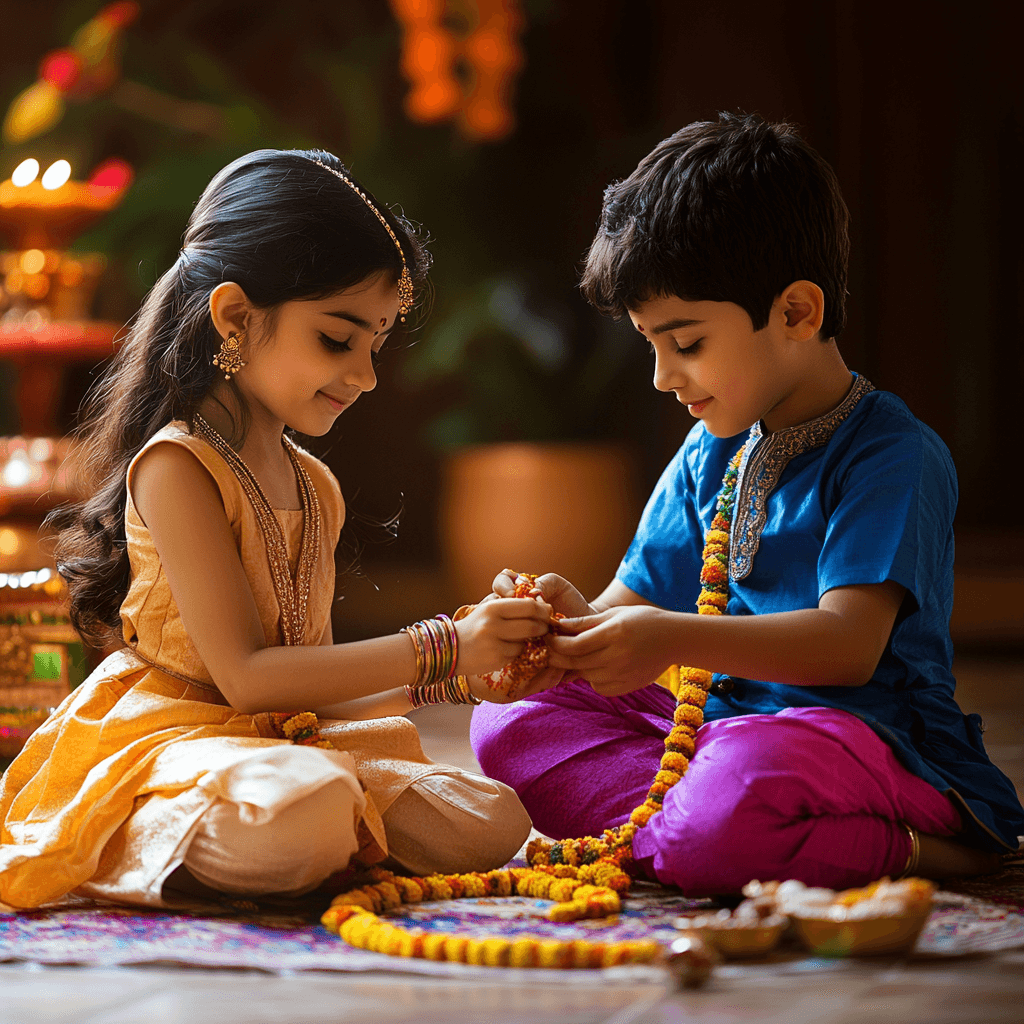
Siblings Celebrating Rakhsha Bandhan
Environmental & Science Days
World Elephant Day: DIY elephant masks, watch documentaries, and discuss conservation.
World Mosquito Day: Learn about mosquito habitats, build paper models, and share prevention tips.
Health & Human Solidarity
Humanitarian Day: Kids perform "kindness missions" at home or school.
People with Disabilities Day: Practice basic sign language and promote inclusion.
Sports & Skill Building
National Sports Day: Family mini-Olympics with simple jumps, races, and board games.
Interactive Learning through Important Days in August
Expanding beyond crafts and simple storytelling, deepen the learning experience by connecting each day to meaningful concepts that resonate with children.
Raksha Bandhan – Bonding & Responsibility (Aug 1)
Explain the cultural importance of siblings protecting each other. Ask children to reflect: “What can I do to support my brother or sister this year?” Encourage them to write a short note or rhyme about responsibility, enhancing writing and emotional awareness.
World Indigenous Peoples Day + Cookie Day (Aug 4)
Pair sweet treats with social lessons. Share a small English story for kids featuring an indigenous hero from India, such as a Gond storyteller or Bhil artisan. After reading, have children bake cookies, decorate them, and share them while discussing indigenous crafts, supporting cross-cultural learning.
Quit India Day (Aug 9)
Teach freedom history through a puppet show or short play. Kids can play freedom fighters, sharing a few lines about why they fought. This helps build public speaking confidence and historical curiosity.
World Elephant Day (Aug 12)
After elephant-mask crafting, challenge kids to collect data: How many elephants live in India today? What threats do they face? Present findings through small posters - combining crafting, research, and presentation skills.
Independence Day (Aug 15)
Extend celebrations with a writing contest: “If I could talk to the founding leaders, I would say…” Encourage public speeches in class, helping kids practice structure: introduction, body, conclusion, conclusion - essential public-speaking training.
World Mosquito Day (Aug 20)
Conduct a tiny science fair! Let kids create posters showing the mosquito life cycle and ways to prevent breeding. Present research findings to peers - engaging both science skills and communication.
National Sports Day (Aug 29)
Host a mini media team to cover the day: kids report on each event, interview participants, and write a short “sports news” piece. This merges physical activity with writing, speaking, and journalism basics.
Classroom & Family Integration
August Fun Chart: Sticker board celebrating each day’s theme.
Storytime & Drama: Kids act as freedom heroes or elephants, boosting empathy and public speaking.
Creative Writing Prompts: Use PlanetSpark guided worksheets on August themes to develop writing skills and confidence.
Building Skills Through Important Days
Language & Literacy: Vocabulary, writing letters or stories, reading historical anecdotes.
Critical Thinking: Understanding cultural context, ecological science, and social empathy.
Communication: Presenting projects, expressing opinions, practicing new languages like sign or tribal dialect words.
Teamwork & Creativity: Group activities, DIY crafts, role-play.
Why These Days Matter for Kids
Cultural Roots: Fostering pride in local traditions and national history.
Global Awareness: Understanding human rights, ecology, and disability inclusion.
Skill Enhancement: Strengthening writing, speaking, and civic knowledge.
Empathy & Values: Encouraging kindness, gratitude, and respect for diverse communities.
By celebrating Important days in August with intention, kids grow both personally and intellectually. Enroll in PlanetSpark’s Public Speaking Course - perfect for kids to present confidently on days like Independence Day or Youth Day.
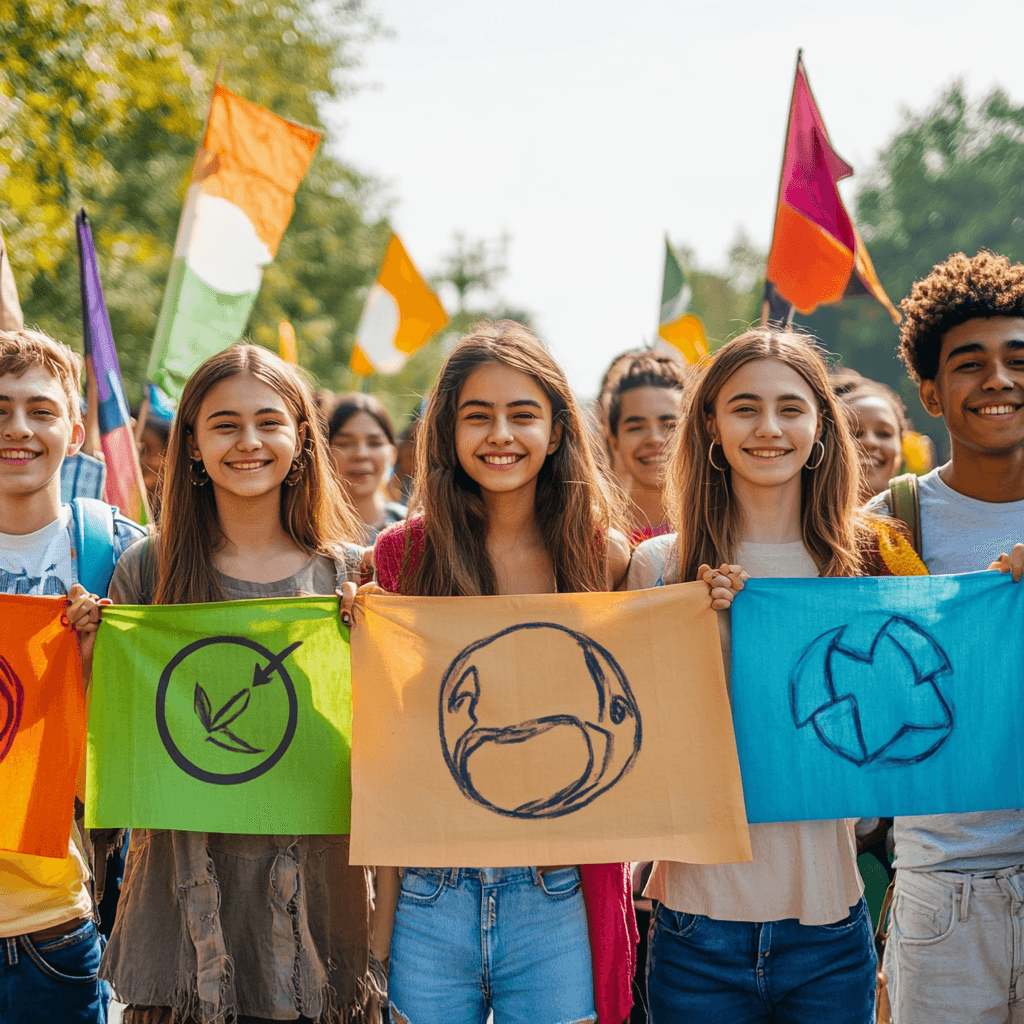
Planning a Whole-Month Festival
Weekend Fun: Combine multiple themed days into a weekend event (e.g., Independence + Humanitarian Day).
Daily Reflection: Short journal questions like, "What did you learn?" or "How did you help today?"
Family Sharing Night: Share crafts, stories, and performances linked to August days.
Thematic Weekly Challenges
Instead of daily events, consider structuring August into Important days in August themed weeks:
- Week 1 (Aug 1–7): Bonds & Heritage
Activities: Rakhi-making, Indigenous stories, family history tree. - Week 2 (Aug 8–14): Courage & Compassion
Puppet shows, freedom-writing, Hero profiles, and Elephant Day science. - Week 3 (Aug 15–21): Nation & Nature
Flag crafts, patriotic speeches, mosquito awareness, and environmental posters. - Week 4 (Aug 22–31): Equality & Expression
Sports journalism, sign-language lessons, mental wellness check-ins.
This structure ensures deeper engagement and fosters multi-skill learning - writing, public speaking, empathy, and research.
Integrating PlanetSpark for Student Growth
Why PlanetSpark fits perfectly with this setup:
- Their public speaking program teaches structure and confidence, ideal for speeches on Independence Day, Quit India Day, and more.
- The creative writing course guides students to write about elephants, siblings, and sports - perfect for themed weeks.
Using certificate prompts such as "Write a 200‑word essay on Quit India Day" blends historical education with writing practice.
Using Technology Responsibly
Digital tools can help amplify these learnings without replacing traditional methods:
- Quizzes & Polls: Create Kahoot! quizzes about key dates.
- Templates & Printables: Worksheets focused on writing about Rakhi or elephants reinforce literacy.
- Online Presentations: Students can record their speeches and review with teachers or parents, building reflection.
Engaging Families & Communities
Extend learning beyond the classroom:
- Family Panels: Invite parents to share childhood August memories, fostering intergenerational bonding.
- Community Drives: For World Mosquito Day, distribute information pamphlets in the neighborhood - practical community engagement.
- Cultural Fairs: Host events celebrating Raksha Bandhan or Elephant Day, displaying crafts, poems, and presentations.
Checklist: Bringing It All Together
| Step | Action |
|---|---|
| 1. Calendar | Mark key days with engaging themes. |
| 2. Prep | Gather materials: craft supplies, writing sheets. |
| 3. Teach | Introduce the day's importance and context. |
| 4. Create | Arts, stories, speeches, or posters. |
| 5. Present | Kids showcase work in class or at home. |
| 6. Reflect | Ask questions like “What did you learn?” |
| 7. Celebrate | Share accomplishments with family or peers. |
| 8. Extend | Use PlanetSpark courses to deepen skills. |
This method ensures rich learning and joyful celebration of important days in August.
Holistic Impact on Children
Celebrating thoughtfully designed Important days in August transforms them into:
- Better communicators: Through crafts, speeches, and writing presentations.
- Empathetic citizens: Understanding culture, environment, and responsibility.
- Confident learners: Public speaking builds poise; writing builds fluency.
- Critical thinkers: Researching elephant conservation or mosquito life cycles develops inquiry-based learning.
By weaving these days into a broader educational tapestry, kids gain more than celebration - they grow holistically.
Conclusion
August presents a unique chance to celebrate Important days in August, combining learning, creativity, and personal growth. With structured learning, reflective thinking, and expressive opportunities, these days become transformative experiences. Enrich this journey by incorporating PlantSpark’s writing and speaking courses, ensuring children are equipped with both knowledge and articulate expression. Make this August an unforgettable chapter in their learning journey!
FAQ's
1. What are the most accessible Important days in August for kids?
Ans. Days like Raksha Bandhan, Chocolate Chip Cookie Day, Elephant Day, Mosquito Day, and Sports Day all allow easy, hands-on participation for young kids.
2. How do these days tie into learning?
Ans. They offer practical lessons in history, science, language arts, and social skills.
3. Can celebrating these days help my child speak confidently?
Ans. Yes! Encouraging kids to present crafts, poems, or essays builds public speaking skills. Courses like PlanetSpark are ideal for practice.
4. How can schools incorporate these themes?
Ans. Use them in morning assembly talks, handwriting assignments, craft sessions, and parent-student sharing programs.
5. How do these celebrations benefit empathy and value-building?
Ans. Kids learn about gratitude (Humanitarian Day), respect (Disabled People’s Day), and co-operation (Raksha Bandhan), fostering positive character traits.