
Make Learning Fun for Kids with Creative and Engaging Techniques
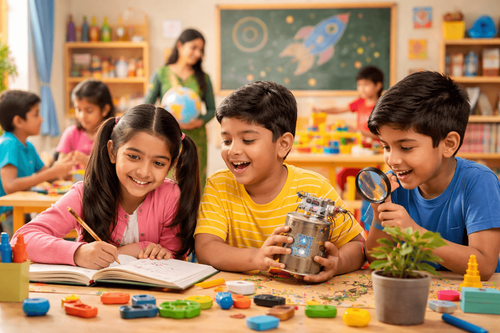

Table of Contents
- Why Fun Learning Matters for Child Development?
- Key Strategies to Make Learning Fun for Kids
- Engaging Activities by Age Group
- Key Tips for Parents and Teachers
- Additional Strategies to Enhance Fun Learning
- How PlanetSpark Helps Make Learning Fun and Effective?
- Conclusion: Turning Learning into a Joyful Journey
Learning doesn’t have to feel like a chore. When done right, it becomes something children look forward to every day. If you’re wondering how to make learning fun for kids, the answer lies in blending creativity, movement, and meaningful engagement that keeps them curious and involved.
Modern education is moving beyond textbooks. Today, what makes learning fun is not just what children learn, but how they experience it. From storytelling to hands-on activities, the right approach can turn even reluctant learners into active participants. With platforms like PlanetSpark, this engaging, skill-based learning becomes structured, interactive, and truly impactful.
Why Fun Learning Matters for Child Development?
Before diving into strategies, it’s important to understand what makes learning fun and why it matters.
When children enjoy learning:
- Their attention span improves
- They retain information longer
- They develop confidence and curiosity
- Learning becomes a self-driven habit
Unlike traditional methods, fun learning focuses on experience over memorization. This is especially important in personality development, where communication, creativity, and confidence play a key role.
Key Strategies to Make Learning Fun for Kids
If you’re exploring how to make learning interesting, these proven strategies, along with real-life examples, can make a significant difference.
1. Gamify Lessons
Turning lessons into games is one of the most effective fun learning activities for kids.
- Use quizzes, points, and rewards
- Create challenges and levels
- Introduce friendly competition
Examples:
- Turn a spelling test into a “word treasure hunt” where kids earn points for each correct word
- Use a math leaderboard where children level up after solving problems
- Create a quiz buzzer game for general knowledge
Gamification increases motivation and makes even complex topics enjoyable.
2. Active and Hands-On Activities
Children learn best when they do, not just listen.
- Science experiments
- DIY crafts
- Building models
Examples:
- Demonstrate volcano reactions using baking soda and vinegar
- Build a solar system model using clay or thermocol
- Create a paper bridge to understand basic engineering concepts
These activities help children understand concepts deeply while making learning interactive.
3. Move and Learn
Physical activity boosts brain function and memory.
- Use action-based learning (jump for answers, act out concepts)
- Combine movement with memory exercises
Examples:
- Ask kids to jump to the correct answer placed around the room
- Act out verbs like “run,” “climb,” or “think” to understand meanings
- Use clapping patterns to memorize multiplication tables
This is one of the most underrated yet simple ways to make learning fun.
Book a free demo today at PlanetSpark to explore how expert-led, interactive sessions can make learning fun, structured, and growth focused for your child.
4. Utilize Technology and Creative Arts
Technology can enhance engagement when used wisely.
- Educational apps and games
- Drawing, painting, and music
- Interactive videos
Examples:
- Use apps for interactive math puzzles or vocabulary games
- Ask kids to draw a story scene after reading a lesson
- Turn a topic into a song or rap for easy memorization
Creative expression helps children connect emotionally with learning.
5. Create Engaging Learning Environments
A stimulating environment can transform focus and interest.
- Use colorful visuals and charts
- Set up a dedicated learning space
- Keep materials easily accessible
Examples:
- Create a “learning corner” with books, flashcards, and art supplies
- Use wall charts for grammar rules or math formulas
- Add a reward board to track progress
Environment plays a major role in what makes learning fun.
6. Incorporate Storytelling
Stories make information more relatable and memorable.
- Turn lessons into narratives
- Use characters and scenarios
- Encourage kids to create their own stories
Examples:
- Explain history through a character’s journey or diary entry
- Turn a science topic into a story about a curious explorer
- Ask kids to rewrite a lesson as a short story
Storytelling improves imagination and communication skills.
7. Connect Learning to Real Life
Children engage more when learning feels useful and relevant.
- Use real-life examples
- Encourage problem solving
- Relate concepts to daily experiences
Examples:
- Teach math through shopping calculations or budgeting
- Explain fractions using pizza slices or chocolate bars
- Use daily conversations to practice new vocabulary words
This is a powerful way to show how to make learning interesting in a practical and meaningful way.
Make These Strategies Work in Real Life
When these strategies are applied consistently, learning becomes natural and enjoyable. The key is to blend structure with creativity so children stay engaged without feeling pressured.
Engaging Activities by Age Group
Different age groups require different approaches. To truly understand how to make learning fun for kids, it’s important to match activities with their developmental stage and interests.
For Preschoolers (Ages 3–5)
At this stage, learning should be playful, sensory-rich, and focused on exploration rather than outcomes.
- Alphabet games with objects (match letters with everyday items)
- Rhymes and action songs to build rhythm and memory
- Sensory play (sand, clay, water) to develop motor skills
- Picture storytelling to boost imagination and early language
You can also:
- Use flashcards, puppets, and colorful visuals
- Encourage repetition through fun routines
- Keep sessions short and interactive (10–15 minutes)
These activities help build foundational skills like vocabulary, coordination, and listening, while ensuring children associate learning with joy.
For Primary School Children (Ages 6–10)
Children at this stage are ready for more structured learning, but engagement remains key to maintaining interest.
- DIY science experiments to explore concepts hands-on
- Puzzle-solving and quizzes to improve logic and recall
- Role-play scenarios for communication and confidence
- Creative writing prompts to encourage expression
You can also:
- Introduce simple projects and goal-based tasks
- Use storytelling to explain complex topics
- Combine learning with real-life applications (math in shopping, science in daily life)
At this stage, children benefit from a balance of structure and creativity—helping them understand how to make learning interesting while building critical thinking and problem-solving skills.
Make Learning Age-Appropriate and Impactful
The right activities at the right age can significantly improve engagement and confidence. When guided effectively, these experiences go beyond academics and contribute to overall personality development.
Book a free trial today to discover how structured, age-specific programs can turn fun activities into powerful personality development for your child.
Key Tips for Parents and Teachers
If you’re still thinking about how to make learning fun for kids, these mindset shifts go beyond techniques—they shape how children experience learning every day.
1. Model Enthusiasm
Children naturally mirror the energy and attitude of adults around them. When you show genuine excitement toward learning, it becomes contagious.
- Show curiosity by asking questions
- Celebrate small wins and efforts, not just results
- Use expressive tone, gestures, and storytelling
Your enthusiasm signals that learning is something to enjoy, not fear. Over time, this builds a positive association with learning that lasts beyond the classroom.
2. Give Freedom to Explore
One of the most effective ways to understand what makes learning fun is to allow children to take ownership of their learning journey.
- Let kids choose topics or activities they enjoy
- Encourage open-ended questions and exploration
- Allow room for trial, error, and discovery
When children feel in control, they become more engaged and motivated. This not only improves learning outcomes but also strengthens independence and decision making skills.
3. Be Patient and Positive
Every child learns at a different pace, and comparison or pressure can quickly reduce interest. A supportive approach is essential when exploring how to make learning interesting.
- Replace criticism with constructive feedback
- Focus on progress rather than perfection
- Encourage effort, even when results are not immediate
A positive environment helps children feel safe to express themselves, make mistakes, and grow confidently.
The 3-2-1 Method of Learning (Simple & Effective)
One of the most practical simple ways to make learning fun is the 3-2-1 method.
| Step | Description | Example |
|---|---|---|
| 3 | List 3 things learned | 3 facts about planets |
| 2 | Share 2 interesting ideas | 2 fun space discoveries |
| 1 | Ask 1 question | Why is Mars red? |
This method encourages reflection, curiosity, and active participation.
Additional Strategies to Enhance Fun Learning
Beyond the basics, these advanced techniques help deepen engagement and make learning more meaningful. If you’re exploring simple ways to make learning fun, these methods bring structure, creativity, and real-world application together.
Role Play and Simulation
Role play turns abstract concepts into real experiences, making it easier for children to understand and remember.
- Act out real-life scenarios (shopping, interviews, storytelling scenes)
- Practice conversations and problem-solving in a safe environment
- Encourage kids to take on different roles and perspectives
This not only improves comprehension but also builds communication skills and confidence—key elements of personality development.
Social and Collaborative Learning
Children learn better when they interact, share ideas, and learn from peers.
- Group discussions and brainstorming sessions
- Peer learning activities and team challenges
- Collaborative projects that require shared responsibility
Such interactions improve teamwork, listening skills, and emotional intelligence—helping children understand what makes learning fun in a social setting.
Schedule a free trial today to explore how expert-led, strategy based sessions can turn fun learning into real personality growth for your child.
Multisensory Brain Breaks and Games
Short, engaging breaks can refresh the mind and improve focus during longer learning sessions.
- Quick games between lessons (word games, memory challenges)
- Activities involving touch, sound, and movement
- Energizers like stretching, clapping patterns, or rhythm-based tasks
These breaks prevent burnout and keep energy levels high, making it easier to sustain attention and interest.
Integration of Art and Music
Creative integration makes learning more expressive and enjoyable.
- Turn lessons into songs or rhymes for better recall
- Use drawing, doodling, or visual mapping to explain concepts
- Encourage creative projects like posters, skits, or storytelling
Art and music tap into emotions, making concepts easier to understand and remember.
Strategy-Based Learning
Instead of just focusing on content, teaching children how to think can make learning more engaging and effective.
- Introduce simple thinking frameworks (compare, analyze, reflect)
- Encourage decision making through problem-based tasks
- Ask open-ended questions to build critical thinking
This approach helps children become independent learners and prepares them for real-world challenges.
Make These Strategies Work Consistently
While these techniques are powerful, consistency is key. When guided by the right structure and expert support, children can fully benefit from these methods.
How PlanetSpark Helps Make Learning Fun and Effective?
Making learning enjoyable is not just about activities: it’s about building confidence, communication, and creativity.
PlanetSpark’s personality development programs focus on:
- Interactive, activity-based learning
- 1:1 personalized coaching
- Real-world communication practice
- Creative expression through storytelling and speaking
These approaches ensure children don’t just learn—they enjoy learning and grow with it.

Conclusion: Turning Learning into a Joyful Journey
Understanding how to make learning fun for kids is not about adding entertainment: it’s about creating meaningful, engaging experiences. When children enjoy the process, learning becomes natural, effective, and long lasting.
By combining creativity, structure, and the right mindset, you can transform everyday learning into something exciting. Whether through storytelling, games, or real life connections, the goal is simple: make children love the process of learning.
And when that happens, growth follows effortlessly.
Frequently Asked Questions
You can make learning fun by using games, storytelling, hands-on activities, and real-life examples. Keeping sessions interactive and allowing children to participate actively increases engagement and interest.
Learning becomes fun when it is interactive, creative, and meaningful. It includes activities, movement, and real-life connections. A positive environment, supportive guidance, and freedom to explore also play a key role in making learning enjoyable.
To help children enjoy learning, focus on their interests, use creative methods like role play and games, and avoid pressure. Encouragement and variety in activities keep them motivated and curious.
Simple ways include using flashcards, quizzes, storytelling, and short games. Adding visuals, music, and real-life examples can make lessons more engaging and easier to understand.
Fun learning encourages self-expression, boosts confidence, and improves communication skills. It helps children become more curious, independent, and socially aware—key aspects of strong personality development.
PlanetSpark uses interactive sessions, storytelling, and activity-based learning to build confidence, communication, and creativity. These methods ensure children enjoy learning while developing essential personality skills.