

Pronunciation for Spoken English – Speak Clearly and Confidently
Learn how to pronounce words clearly, master rhythm and intonation, and speak English confidently in every conversation.
 4.8/5
4.8/5 1 Lakh+
Pronunciation is the bridge between knowing English and speaking it fluently. You might know hundreds of words and grammar rules, but if your pronunciation is unclear, your message can easily get lost.
Good pronunciation isn’t about copying a foreign accent, it’s about clarity, rhythm, and confidence. It helps you sound natural, ensures that listeners understand you, and makes conversations effortless. By improving your pronunciation, you not only enhance your speech but also build the confidence to express yourself freely in any situation.
Why Pronunciation Matters in Spoken English
Pronunciation plays a vital role in making your spoken English effective and engaging. Here’s why it matters:
Improves understanding: Clear pronunciation ensures that listeners grasp your ideas easily without confusion.
Boosts confidence: When you pronounce words correctly, you speak more naturally and confidently.
Enhances professionalism: Good pronunciation makes you sound polished and credible in academic or work settings.
Builds natural rhythm: Correct stress and intonation help your speech sound fluent and conversational.
Strengthens communication: With clear sounds and tone, you can express emotions and meaning accurately.
Key Elements of Good Pronunciation
To speak English fluently and naturally, focus on mastering these essential pronunciation elements:
1. Sounds and Phonemes
Each English sound (or phoneme) makes a difference in meaning. For example:
“fan” vs. “van”
“ship” vs. “sheep”
Learning these subtle differences helps you speak more accurately.
2. Stress Patterns
English words have specific syllables that are stressed. Saying them correctly helps your speech sound natural.
For instance, in “TAble” (not taBLE), stressing the first syllable creates the right rhythm.
3. Intonation
Intonation is the rise and fall of your voice that adds emotion and meaning.
Rising tone → for questions: “Are you coming?”
Falling tone → for statements: “I am ready.”
4. Word Linking
Native speakers connect words smoothly.
For example: “What are you doing?” often sounds like “Whatcha doin?”
Practicing word linking makes your speech sound fluent and connected.
5. Pace and Clarity
Balance your speed, neither too fast nor too slow. Speak clearly and give each sound its space to ensure understanding.
Common Pronunciation Problems in Spoken English
Many learners face similar pronunciation challenges. Recognizing them is the first step to improvement:
Mixing up similar sounds: like ship/sheep, live/leave, fan/van.
Ignoring word stress: stressing wrong syllables makes speech sound unnatural.
Flat intonation: speaking without rhythm makes sentences sound mechanical.
Speaking too fast: reduces clarity and increases errors.
Mother tongue interference: native language sounds influence English pronunciation patterns.
How to Improve English Pronunciation
Improving pronunciation takes consistent practice and awareness. Try these effective methods:
Listen and repeat daily
Imitate native speakers through movies, audiobooks, or podcasts.
Focus on how they form sounds, pause, and emphasize words.
Record yourself
Record short speeches or conversations.
Compare with native audio and identify unclear words or pacing issues.
Practice with tongue twisters and rhyming words
Example: “She sells seashells by the seashore.”
These help strengthen your mouth muscles and articulation.
Use pronunciation tools
Online dictionaries (like Cambridge or Oxford) provide audio examples for every word.
Apps like Elsa Speak or YouGlish can help you hear real usage.
Focus on mouth movement and tongue position
For example, the “th” sound requires placing your tongue lightly between your teeth.
Watch videos or mirror your mouth movements while practicing.
Learn how improving English pronunciation can boost clarity and confidence.
Pronunciation Exercises and Practice Ideas
Turn learning into an engaging routine with these practical exercises:
1. Minimal Pairs Practice
Train your ears and tongue using word pairs that differ by one sound.
Examples:
ship / sheep
bit / beat
pen / pan
2. Sentence Stress Practice
Read short paragraphs aloud and emphasize content words.
Example:
I went to the market this morning.
3. Intonation Drills
Practice questions, statements, and emotions using varied tone patterns.
Example:
Rising tone: Are you okay?
Falling tone: I’m fine.
4. Mirror-Speaking
Stand in front of a mirror and mimic a speaker’s mouth movement, tone, and pace.
This builds confidence and helps you correct articulation in real time
Practice What You Learn
Listening as a Tool for Better Pronunciation
Listening is one of the most effective ways to improve pronunciation. When you listen carefully, you start to recognize the rhythm, stress, and tone that make English sound natural. The more you expose yourself to correct speech patterns, the easier it becomes to imitate them accurately.
Identify rhythm and stress: Listening helps you understand which syllables are emphasized and how sentences flow in natural speech.
Try “shadowing”: This technique involves listening to a native speaker and repeating instantly, matching their pronunciation, tone, and pace. It’s a powerful way to train your mouth and ear simultaneously.
Use quality resources: Audiobooks, English news clips, and YouTube learning channels are great for practicing. Choose speakers with clear, standard accents and try to repeat short phrases until they sound natural.
Regular listening builds familiarity with authentic English sounds, helping you speak more clearly, confidently, and fluently.

The Science Behind Pronunciation
Pronunciation is not just about knowing how a word sounds, it’s about how your mouth, tongue, and vocal cords work together to produce those sounds. Every language uses different muscle movements, which is why some English sounds feel unfamiliar or difficult to pronounce at first.
When you speak, your tongue position, lip shape, and airflow all influence the sound produced. For example, to pronounce the /θ/ sound in “think,” your tongue touches your upper teeth lightly while air passes through. Similarly, vowel sounds change based on how open or closed your mouth is.
Understanding these basics of articulation and phonetics helps you consciously train your mouth for accuracy. With regular practice, using tongue placement guides, phonetic charts, or mirror exercises — you can build muscle memory for correct English pronunciation. Over time, clear and natural speech will become effortless.
Difference Between Accent and Pronunciation
Accent and pronunciation are often confused, but they’re not the same. Accent reflects where a person is from, it’s shaped by your native language and region. A British speaker, an American speaker, and an Indian speaker may all pronounce words slightly differently, and that’s completely natural.
Pronunciation, on the other hand, is about clarity and correctness, ensuring your words are easily understood, regardless of your accent. You don’t need to sound “foreign” to sound fluent; you just need to pronounce words clearly and confidently.
The goal isn’t to eliminate your accent but to speak with precision and confidence so that people across the world can understand you easily. Focus on speaking clearly rather than imitating a particular accent, and your communication will always sound natural and professional.
Pronunciation Practice for Non-Native Speakers
Many Indian learners face specific pronunciation challenges due to the influence of their mother tongue. Here are common issues and targeted exercises to fix them:
Mixing /v/ and /w/
Problem: Saying vine like wine or west like vest.
Exercise: Practice minimal pairs (e.g., vine/wine, vest/west) and exaggerate the tongue and lip placement.
Omitting ending consonants
Problem: Dropping sounds at the end of words, e.g., saying ca instead of cat.
Exercise: Read aloud words ending with -t, -d, -k, -s, and emphasize the final consonant clearly.
Flat intonation
Problem: Speaking in a monotone that makes sentences sound unnatural.
Exercise: Practice rising and falling tones in questions and statements; exaggerate the pitch initially to train your voice.
Confusing short and long vowels
Problem: Saying ship like sheep or bit like beat.
Exercise: Repeat minimal pairs focusing on mouth opening and tongue position.
Difficulty with “th” sounds (/θ/ and /ð/)
Problem: Saying think like sink or this like dis.
Exercise: Place your tongue lightly between your teeth and blow air for /θ/; vibrate for /ð/. Practice with tongue twisters.
Over-reliance on native language pronunciation patterns
Problem: Translating words directly from Hindi or other Indian languages.
Exercise: Listen to native speakers and mimic their mouth movements, stress, and rhythm. Use shadowing exercises daily.
PlanetSpark’s Spoken English Course for Kids
For children, learning spoken English is more than just picking up a language. It is about building confidence, communication skills, and a strong academic foundation. PlanetSpark’s spoken English classes for kids are designed to make learning interactive, fun, and practical.
Key Highlights of Our Spoken English Training for Kids
Confidence in Communication – Kids practice public speaking, presentations, and everyday conversations to express themselves clearly.
Strong Grammar & Vocabulary – Simplified lessons in grammar, sentence formation, and vocabulary-building to strengthen basics.
Creative Expression – Activities like storytelling, debates, and group discussions that enhance imagination and English composition skills.
Academic Advantage – Spoken English courses support better writing, reading comprehension, and performance in school exams.
Future Readiness – Early exposure to spoken English helps children develop skills they’ll carry into higher education and careers.
By blending fun with structured learning, PlanetSpark ensures that kids not only learn English speaking but also grow into confident, fluent communicators from a young age.
To build word power and express ideas clearly, explore our Vocabulary page.
To strengthen comprehension, fluency, and language skills, explore our Reading page.
Meet Our Star Tutors
Top 1% certified experts who make learning engaging and impactful

 Aanchal Soni
 10+ Years
 Ankita Singh8+ Years
 Banani Garai30+ YearsBanani Garai30+ Years
 Maria Antony8+ Years
PlanetSpark’s Spoken English Course for Adults and Professionals
For adults and working professionals, spoken English is more than a skill. It is a career accelerator. Whether it’s preparing for interviews, delivering impactful presentations, or collaborating with international teams, strong English communication makes all the difference.
Key Benefits of English Speaking Training for Adults and Professionals
Career Growth & Global Opportunities – Learn business English and communication strategies to stand out in meetings, interviews, and professional networks.
Practical Communication Skills – Role plays, mock interviews, and workplace conversations that build confidence in real scenarios.
Advanced Grammar & Vocabulary – Targeted lessons to refine written and spoken English for emails, reports, and presentations.
Public Speaking & Leadership Skills – Training to deliver ideas persuasively, lead discussions, and influence teams.
Flexible Learning – Online spoken English classes that adapt to busy schedules, ensuring consistent progress without disruption.
PlanetSpark empowers professionals with the confidence to communicate clearly, think critically, and succeed in a global workplace. With structured spoken English training, learners move beyond hesitation to become fluent, persuasive, and effective communicators.
Our Impact!
Empowering individuals with the confidence and communication skills to speak clearly, influence others, and lead with impact.

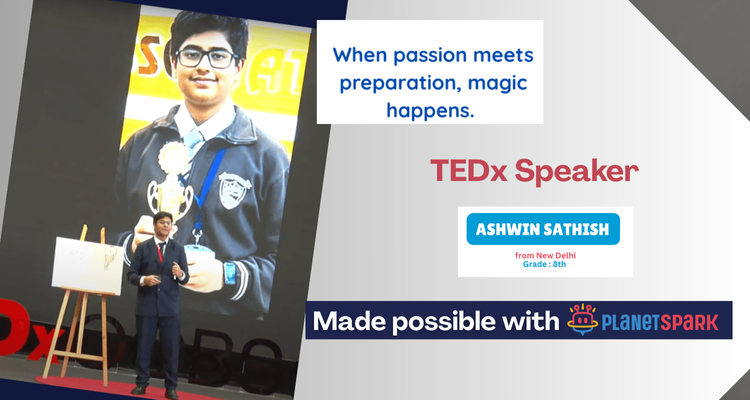



Voice of Happy Parents
Hear from families who’ve seen remarkable growth in their children’s confidence, communication, and personality through our expert-led online soft skill classes.
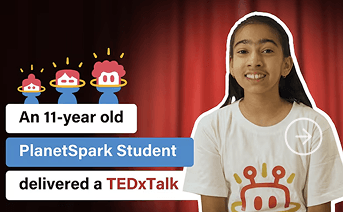
Oviya Singh, a PlanetSpark student, spoke about ‘Soil Conservation’ in her TEDxTalk by addressing the status quo and questioning, ‘Is the world running out of food?’
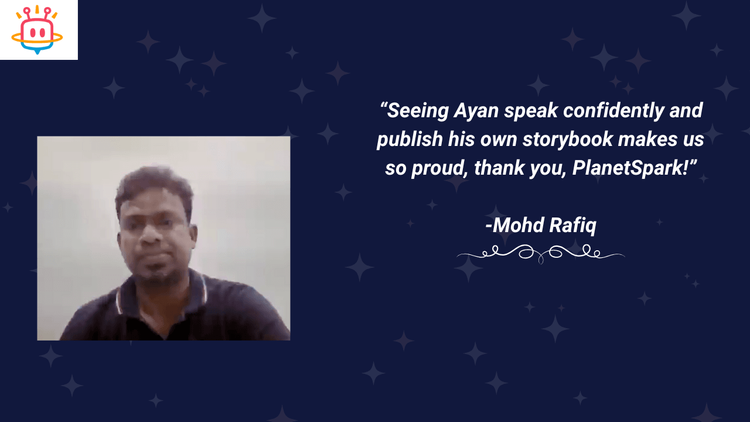
Thanks to PlanetSpark and his teacher’s guidance, Ayan now speaks confidently, participates actively, and has published his first storybook.

PlanetSpark helped my son Ahan find his voice and confidence. From stage speaking to being published in Pearls of Poetry, his growth has been remarkable.

PlanetSpark’s Public Speaking program has boosted Sristi’s confidence and clarity, her school performance speaks for itself.

My daughter has transformed from a shy kid to a confident speaker in just 6 months. The personalized attention and structured curriculum made all the difference.
Making Headlines Nationwide
Featured in leading media for transforming individuals into confident, expressive, and stage-ready public speakers.



For a complete guide to building fluency, confidence, and clarity, explore our main Spoken English pillar page.
For a complete understanding of rules, usage, and examples, explore our English Grammar pillar page.
For techniques, practice tips, and confidence building strategies, explore our Public Speaking pillar page.
For a complete guide to clear, confident, and effective communication, explore our Communication Skills pillar page.
For workplace ready communication, confidence, and people skills, explore our Soft Skills pillar page for working professionals.
Frequently Asked Questions
Regular listening, speaking practice, and feedback on pronunciation are key. PlanetSpark offers live classes where learners get real-time guidance to speak clearly.
PlanetSpark’s 1:1 live trainers provide personalized exercises, correct common mistakes, and help learners build confidence in speaking English.
Yes, tools like dictionaries with audio help, but consistent practice with a trainer, like on PlanetSpark, ensures correct mouth movement, stress, and intonation.
Tongue twisters, minimal pairs, sentence stress practice, and shadowing native speakers are effective. PlanetSpark classes guide learners through these exercises interactively.
With daily practice and expert guidance, learners usually notice clarity improvements in a few weeks. PlanetSpark tracks progress and gives personalized feedback to accelerate learning.