

Master Visual Communication: The Complete Guide for Learners
Discover how visual communication shapes the way we share ideas and information. Understand its meaning, types, and role in creating effective, lasting impact.
 4.8/5
4.8/5 1 Lakh+
“We remember what we see.”
In today’s visually driven world, images, symbols, and colors often speak louder than words.
From infographics to emojis, visual communication shapes how we share ideas, express emotions, and understand information. It simplifies learning, strengthens memory, and bridges language barriers - making it an essential skill for students, professionals, and creators alike.
What is Visual Communication?
Visual communication is the process of sharing information through visual elements like images, symbols, diagrams, videos, and design. In simple words, it means expressing ideas through visuals instead of - or alongside - words. The definition of visual communication highlights how visuals help people understand messages quickly and effectively.
Whether it’s a presentation slide, a logo, or a classroom chart, each serves as an example of visual communication - turning complex information into something easy to grasp. The meaning of visual communication lies in its ability to make learning interactive and messages memorable.
It’s one of the core components of communication skills, complementing verbal and non-verbal communication. In every field - from education to business - strong visual communication skills enhance clarity, engagement, and connection.
Understand how children develop visual communication skills with this age wise guide.
Importance and Significance of Visual Communication
In every aspect of life - learning, business, or everyday interaction - the significance of visual communication cannot be overstated. Visuals make complex information easier to understand and remember. When you see an image, a chart, or a video, your brain processes it faster than text, leading to better comprehension and retention.
In education, visuals help children grasp abstract ideas and boost curiosity. In business, they enhance presentations, marketing materials, and reports, ensuring messages are clear and persuasive. Even in daily communication, visuals like signs, emojis, and infographics simplify expression and create emotional connections.
That’s what the significance of visual communication truly is, it allows people to connect universally through visuals that speak a shared language beyond words. This makes it an essential skill for effective communication in today’s fast-paced digital world.
Types of Visual Communication
Visual communication takes many forms, each with its own purpose and impact. Understanding the types of visual communication helps you use them effectively in different contexts.
Images and Illustrations: Photographs and drawings visually represent ideas or emotions. For example, a photo in a brochure can instantly convey a company’s message or mood.
Infographics and Charts: These combine text and visuals to present data clearly. A simple bar chart can make complex statistics easy to understand.
Videos and Animations: Moving visuals are powerful tools for storytelling and education, keeping audiences engaged while simplifying concepts.
Symbols and Signs: Icons, logos, and traffic symbols communicate messages quickly, even without words.
Presentations and Visual Storytelling: Slides and visual narratives help share ideas in an engaging, memorable way during meetings or classrooms.
Each of these examples of visual communication plays a key role in making messages more interactive, relatable, and impactful - bridging the gap between information and understanding.
Explore the types of visual communication with meanings, examples, and best uses.
Advantages of Visual Communication
The advantages of visual communication extend far beyond aesthetics - visuals make learning, sharing, and understanding information faster and more effective. When ideas are presented through visuals, they’re easier to grasp and remember.
One major advantage is enhanced understanding. Complex data or abstract concepts become simpler when shown through images, charts, or infographics. Visuals also help people retain information longer, as the brain processes and stores images more effectively than text.
Another benefit is that visuals cross language barriers. A symbol, color, or picture can communicate meaning universally, making visual communication inclusive and accessible to people of all backgrounds. Finally, visuals make communication more engaging and memorable, holding attention longer than plain text and encouraging interaction.
In classrooms, workplaces, and media, the advantages of visual communication lie in its power to make ideas clear, relatable, and emotionally resonant.
Discover the advantages of visual communication with real life examples.
Core Elements of Effective Visual Communication
To communicate effectively through visuals, it’s important to understand the core elements of visual communication. These design principles determine how your audience perceives and processes visual content.
Color: Colors set the tone and evoke emotions. For example, blue often conveys trust, while red signals urgency or passion.
Contrast: Using light and dark or opposite hues helps highlight key information and improve readability.
Layout: A well-structured layout ensures that visuals flow logically, guiding the viewer’s eye smoothly across the content.
Typography: The style, size, and spacing of fonts affect clarity and mood. Clear typography makes text easier to read and more appealing.
Symbols: Icons and imagery provide quick recognition and universal meaning, strengthening the overall message.
Together, these visual communication elements create visuals that are not just attractive but also meaningful. When used thoughtfully, they transform information into impactful, easy-to-understand stories that connect with every audience.
Learn the key elements of visual communication in this simple student friendly guide.

Role of Visual Communication in Daily Life and Education
The role of visual communication extends to nearly every part of our daily lives. From classroom learning to professional presentations and even social media, visuals help us absorb information faster and more effectively.
In education, teachers use images, videos, and infographics to make lessons interactive and engaging. This helps children and teens understand complex ideas and retain information longer. For adults, visuals simplify data-heavy presentations, making them clearer and more persuasive.
On social media, visual storytelling through photos and graphics strengthens emotional connection and engagement. Whether you’re learning, teaching, or presenting, visual communication bridges understanding and makes every message more memorable.
Visual Communication in the Digital Era
In today’s fast-paced world, the significance of visual communication has grown with the rise of technology. Digital tools, apps, and platforms now rely heavily on visuals to attract, inform, and connect audiences.
From social media posts and advertising campaigns to virtual classrooms and e-learning modules, visuals make digital communication more impactful. Interactive infographics, explainer videos, and dynamic presentations have replaced traditional text-heavy formats.
This evolution shows that effective visual communication is no longer optional, it’s essential for success in a world where attention spans are shorter and visual storytelling rules engagement.
Explore fun visual communication activities for kids in this complete guide.
Developing Strong Visual Communication Skills
Learning how to develop communication skills visually starts with awareness and practice. Begin by observing visual design around you, posters, apps, and social media layouts reveal how color, contrast, and balance influence perception.
Next, learn basic visual principles like alignment, hierarchy, and consistency to create clear and appealing visuals. Experiment with digital tools such as Canva or PowerPoint to design visuals that support your message.
The goal isn’t just to make something look good, it’s to make ideas easy to understand. Developing strong visual communication skills helps learners of all ages express creativity, clarity, and confidence through visuals.
Learn how verbal communication improves clarity, confidence, and impact.
Explore written communication skills for clear and professional expression.
Understand how non-verbal communication helps present ideas clearly and effectively.
PlanetSpark Communication Skills Course for Kids
The PlanetSpark Communication Skills Course for Kids is designed to make learning communication fun, engaging, and practical. Through live interactive sessions, children learn to express ideas confidently, improve vocabulary, and develop public speaking and presentation skills.
The program focuses on verbal communication, non-verbal communication, storytelling, and creative thinking, helping kids overcome stage fear and become articulate speakers. Each session includes hands-on practice, feedback, and real-world speaking tasks that make learning effective and enjoyable.
PlanetSpark’s structured curriculum helps kids not only speak better but also listen actively, think critically, and express emotions clearly. It lays the foundation for future leadership and success in academics and beyond.
Get Acquainted with Our Top Educators
Get Acquainted with Our Top Educators

 Aanchal Soni
 10+ Years
 Anisha Gupta16+ Years
 Ankita Singh8+ Years
 Ankur Bhardwaj10+ Years
 Anshul Gupta5+ Years
 Banani Garai30+ Years
 Roohi Kalra
 Divya Khangarot4+ Years
 Divya Solanki11+ Years
 Ranjana Pathania
 Priya Badotiya7+ Years
 Priya Shukla10+ Years
 Mariya Ali
 Mariyam Farhana B
PlanetSpark Communication Skills Course for Adults and Professionals
The PlanetSpark Communication Skills Course for Adults is designed to help professionals, educators, and learners refine their speaking, listening, and presentation abilities. The course focuses on practical improvement in verbal and non-verbal communication, business communication skills, and public speaking, helping adults express ideas clearly and confidently in any environment.
Through interactive sessions, real-time feedback, and engaging activities, learners build essential workplace and social communication skills. The program also emphasizes English communication skills, including tone, pronunciation, vocabulary, and fluency.
PlanetSpark’s online platform makes it easy for adults to learn at their own pace while getting personalized guidance from expert mentors. Each session helps learners become better speakers, leaders, and collaborators, preparing them for both professional success
Our Impact!





Parent Testimonials That Speak Volumes
Real stories of learners becoming confident English speakers through our master courses.
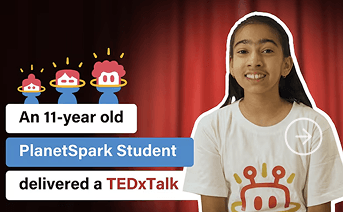
Oviya Singh, a PlanetSpark student, spoke about ‘Soil Conservation’ in her TEDxTalk by addressing the status quo and questioning, ‘Is the world running out of food?’

Thanks to PlanetSpark and his teacher’s guidance, Ayan now speaks confidently, participates actively, and has published his first storybook.

PlanetSpark helped my son Ahan find his voice and confidence. From stage speaking to being published in Pearls of Poetry, his growth has been remarkable.

PlanetSpark’s Public Speaking program has boosted Sristi’s confidence and clarity, her school performance speaks for itself.

My daughter has transformed from a shy kid to a confident speaker in just 6 months. The personalized attention and structured curriculum made all the difference.
Making Headlines Nationwide
Featured in leading media for transforming individuals into confident, expressive, and stage-ready public speakers.



For a complete guide to building fluency, confidence, and clarity, explore our main Spoken English pillar page.
For a complete understanding of rules, usage, and examples, explore our English Grammar pillar page.
For techniques, practice tips, and confidence building strategies, explore our Public Speaking pillar page.
For a complete guide to clear, confident, and effective communication, explore our Communication Skills pillar page.
For workplace ready communication, confidence, and people skills, explore our Soft Skills pillar page for working professionals.
Frequently Asked Questions
Visual communication is the process of conveying information through visuals such as images, videos, charts, or symbols. It helps make messages clearer and easier to understand, especially when words alone are not enough. Visual communication plays a key role in education, business, and digital media today.
The significance of visual communication lies in its ability to simplify complex ideas and connect with people across languages and cultures. Whether through traffic signs, infographics, or presentations, visuals help us learn, remember, and respond more effectively in everyday situations.
The key types of visual communication include images, infographics, videos, animations, charts, and symbols. Each type serves a unique purpose — from explaining data to inspiring emotions — making visuals a powerful tool in both learning and professional communication.
The advantages of visual communication include better understanding, longer information retention, and the ability to cross language barriers. Visuals also make learning and presentations more engaging, which is why they’re widely used in classrooms, workplaces, and online platforms.
In education, visual communication helps students grasp new concepts faster by combining words and visuals. Teachers use diagrams, videos, and charts to enhance understanding and memory. This approach benefits visual learners and makes lessons more interactive and enjoyable.
You can learn how to develop communication skills visually by observing good design examples, learning basic design principles, and using digital tools effectively. Practice creating visual content like infographics or presentations to build confidence and creativity in your communication.
An example of visual communication can be a company logo, a road sign, an infographic, or even a social media post that uses images and text together. These visuals quickly share information or emotions without needing long explanations.
In the digital world, visual communication drives engagement and understanding. From online advertisements to e-learning platforms, visuals capture attention and make content more accessible. They help brands and individuals share their messages effectively across screens and platforms.